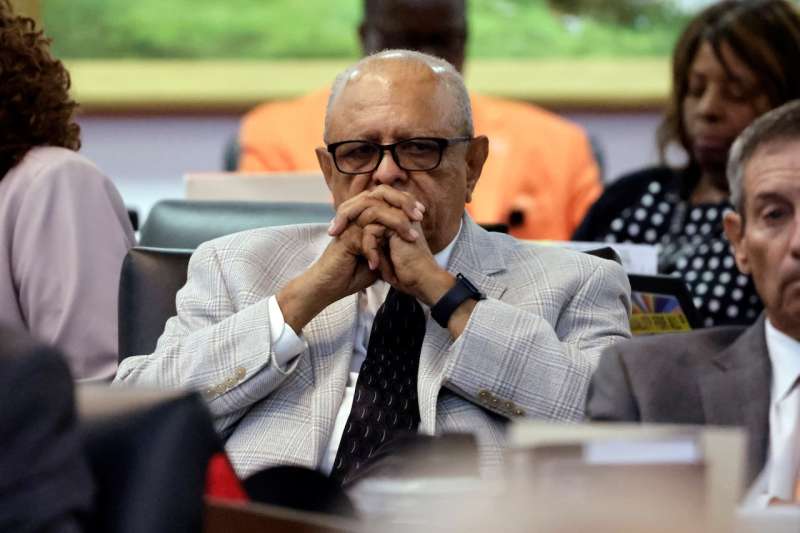
Two former Democrats who lost their primary elections this spring voted with Republicans in the North Carolina House on Wednesday to override Gov. Josh Stein’s veto of a bill that helps wealthy parents save money on private school.
The bill, House Bill 87, opts North Carolina into a federal program that will reimburse up to $1,700 for donations made to private school scholarship programs. No state money will be used toward the tax credits, but reports estimate that federal revenue will fall $3 billion to $4 billion each year as a result, reductions that Stein and state educators warn will eventually reduce the amount of money provided to North Carolina public schools, already among the worst funded in the country.
The override passed, 73-46. The override bill will now go to the Senate where it is all but certain to pass on a party line vote.
The two former Democrats, Reps. Carla Cunningham and Nasif Majeed, both of whom represent Mecklenburg County, lost their primary elections by huge margins in March and changed their party affiliation to unaffiliated soon after that. Cunningham voted for the original version of the bill when the House passed it last July, but Majeed voted against it. The bill Majeed voted for on Wednesday is no different than the bill he voted against 10 months ago.
When Stein vetoed HB 87, he said he was open to the idea behind the tax credits, which were included in the “One Big Beautiful Bill” passed by Congress last year at President Trump’s insistence. But Stein said he wanted to wait for more federal guidance to ensure that the program did not come at the expense of public schools.
That is the chief concern among most Democrats and public school teachers.
The North Carolina Association of Educators, the state’s teachers’ union, criticized the bill last year, saying that it would “drain public funding from our classrooms and send it to private schools—most of which are unaccountable to the public and already serve families who can afford tuition.”
The effect on public schools might be somewhat indirect, but it could still be profound.
In an analysis of the bill last year, the North Carolina Tax and Budget Center said that “while NC state revenue isn’t impacted, participation in this tax credit program would provide new avenues for high-income families, donors, and families with high educational expenses to get a tax break that has the potential to grow and balloon the costs of the One Big Beautiful Bill, forcing additional cuts over time.”
Public school teachers in North Carolina are among the lowest paid in the nation and the state ranks dead last in school funding effort. More than 10,000 public school teachers and educators held a march in Raleigh this month to protest the funding and demand legislators pay attention.
Republicans in the legislature, however, have drastically increased the amount of money provided for private school vouchers in the state. But recent studies show that more than 90% of the families that took advantage of the vouchers already had children in private school, bolstering educators’ criticism that public funds are being taken from public schools to help wealthy parents save money on their private school tuition.