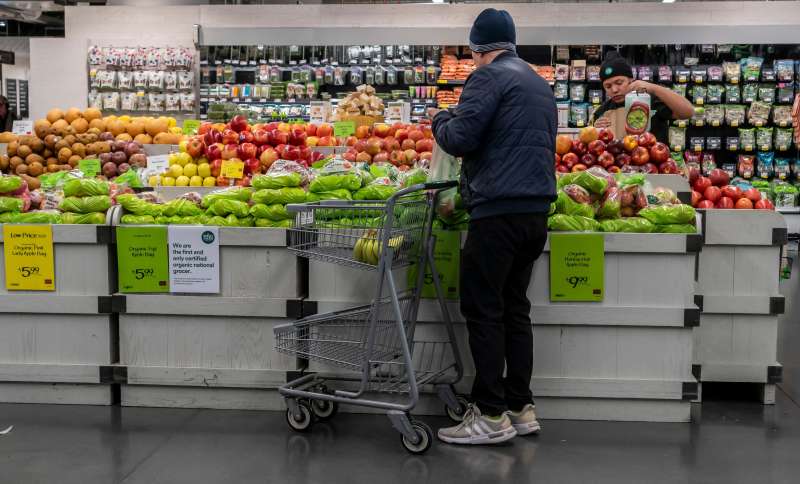
House Bill 1071 would help cover administrative gaps, but counties face a $191 million cost shift starting in October.
As North Carolina prepares for the major federal cost shift in how SNAP benefits are administered, Democratic lawmakers are pushing an $85 million funding bill to prevent counties from shouldering the full burden alone.
House Bill 1071, introduced by Rep. Jordan Lopez (D-Charlotte), would use recurring state funds to replace federal SNAP administrative dollars that a Republican-majority Congress cut through President Trump’s “One Big Beautiful Bill” Act (H.R. 1), passed last year. The bill would send $16 million to the state Department of Health and Human Service and $69 million to counties, which run SNAP in North Carolina.
The federal government currently covers 50% of SNAP administrative costs, but that share will drop to 25% in October, leaving counties to absorb the difference. Without full state support, counties would face difficult budget choices at a time when they’re also being asked to process more SNAP applications under new federal work requirements and recertification rules.
READ MORE: Trump says millions are ‘lifted’ off SNAP. A Charlotte nonprofit says hunger hasn’t gone away in NC
Lopez said with this bill, he’s expecting a lot of counties to have “some difficult conversations” with their staff, teams, elected officials, and community members as they navigate these financial changes.
“I wanted this bill to highlight the fact that the state could do more, and while we’re pushing more responsibility down to local governments, the people who ultimately will bear the brunt of that are folks who rely on SNAP benefits,” Lopez said. “Because if local governments can’t afford to keep their lights on and their water running, speaking metaphorically, SNAP ends up on the chopping block. And that is a real consequence that we could see in some counties that just don’t have the revenue to keep up with the rising cost of expenses.”
Why administrative funding matters
SNAP administrative costs aren’t the benefits themselves. They cover the county staff who process applications, the computer systems that track eligibility, and the caseworkers who make sure families’ information is entered correctly.
North Carolina has 100 counties and is one of 10 states where local governments, not the state, administer the SNAP program. Some rural counties with smaller budgets and fewer revenue streams will be hit harder than wealthier urban counties, potentially creating unequal access to SNAP depending on where a family lives.
“If you have a water system, you know we’re not talking about the water itself,” Lopez said, breaking down the administrative funding problem. “We’re talking about the pipes, we’re talking about the pumps, we’re talking about the faucets, we’re talking about everything that gets water from its treatment center to your home, that’s what the administrative costs are going to support,”
Kate Hanson, founder and executive director of Meals4Families, a statewide organization that works with partners to expand SNAP access, said the federal changes put North Carolina counties in a bind: more work with less money.
“H.R. 1 puts stress on our county budgets, and at the same time is asking county DSS teams to do more work,” Hanson said. “We’re making it harder for those county DSS teams to run their program smoothly to meet their program goals and to keep customer service on track.”
WATCH: Video: Leaving SNAP doesn’t mean North Carolina families no longer need help
Nearly 1.4 million North Carolinians receive SNAP each month, including 600,000 children. If counties can’t process applications quickly or maintain enough staff, families could face delays that ripple into other parts of their lives, including school meals.
School meals
Children who receive SNAP are automatically eligible for free school breakfast and lunch through a system called direct certification. It’s the link that makes sure children receive food to eat when families are navigating benefit applications.
In North Carolina, more than 850,000 students rely on nutritious meals and snacks served during the school year through school breakfast, lunch, and after-school programs, according to the NC Department of Public Instruction. Most of those students qualify for free meals because their families participate in SNAP.
RELATED: SNAP cuts and ICE raids leave North Carolina children hungry
“If those benefits are lost or restricted, families will be forced to navigate complex applications and income verification processes just to access school meals,” Tamara Baker, project and communications director at Carolina Hunger Initiative, told reporters at EdNC. “The result? Children fall through the cracks.”
North Carolina children who qualify for free school meals during the school year are also automatically eligible for SUN Bucks, which provides $120 per child in grocery benefits during the summer months. When families lose SNAP, whether through administrative delays, confusing news rules, or strict work requirements, children often lose automatic access to school meals as well, which increases paperwork, stigma, and the risk of hunger at school, according to the Food Research & Action Center.
During the 2024-25 school year, the state also had 1,895 schools operating under the Community Eligibility Provision (CEP), which allows schools to serve free meals to all students without collecting applications. CEP eligibility and federal reimbursements are tied to the number of students directly certified for free breakfast and lunch through programs like SNAP.
As SNAP enrollment declines, schools could lose CEP eligibility entirely if their Identified Student Percentage falls below 25%, or they may no longer be able to afford to operate the program as federal reimbursement drops. Last year, Wake County Public Schools projected that four schools were at risk of losing CEP eligibility.
READ MORE: Food insecurity is hitting thousands of NC children—and it’s following them into the classroom
“When we think about taking away resources for local governments to process these applications or recertifications accurately and timely, all of that can ultimately end up with higher error rates,” Lopez said
He added that North Carolina already has an error slightly above 10%, which means the state has to pay about 15% of direct SNAP costs. If error rates climb because counties can’t keep up with the workload, North Carolina ends up paying millions more in penalties to the federal government starting in October 2027.
Hanson said the connection between SNAP and school meals is often invisible to families until it’s too late.
“When you think about SNAP for a family, it’s our nation’s most powerful program to make sure that kids are fed and have the nutrition they need to grow,” she said. “It’s that, and so much more, when you’re talking about a family with kids.”
On the county level
In Halifax County, SNAP administrative costs alone could reach $8.4 million in the coming fiscal year, more than 10% of the county’s current general fund budget, according to the NC Budget & Tax Center. In Bladen County, where one-fifth of residents rely on SNAP, county officials are already considering delaying infrastructure upgrades and weighting service cuts to sustain the program amid rising administrative costs.
Meanwhile, wealthier counties like Union County are already retraining staff, educating participants about upcoming changes, and requesting additional staff to manage the increased workload. That’s resources that smaller, rural counties often can’t afford.
In an interview with NC Health News, Rep. Larry Potts noted that smaller counties often face more barriers to attracting social service workers, such as long commutes and limited budgets.
Lopez, who represents House District 112 in east Charlotte, said the largest counties—Mecklenburg, Wake, and Durham—will see the biggest dollar amounts because they have the highest number of SNAP recipients. But smaller rural counties could feel the impact more acutely because they have smaller budgets and fewer revenue streams to backfill the lost federal funding.
“A few $100,000 worth in increased expenses might hurt just as much, simply because the revenue is not there to backfill what’s going to be taken away by the federal government.”
More than a third of the people in Lopez’ district receive SNAP benefits. When the federal government shut down last year, food access became an immediate concern in his community, with food pantries scrambling to support families.
RELATED: Millions could go hungry in NC if SNAP benefits are paused during government shutdown
But he framed the bill as a statewide issue, not just a Charlotte one.
“Food insecurity is not localized to one county or one city or one part of any city, it’s felt in every part of the state,” Lopez said. “And this is the right thing to do, ensuring that local governments can count on their state to step up when the federal government essentially abandons them.”
Hanson agreed, noting that SNAP supports families across all 100 counties, and the federal changes affect rural and urban alike.
“SNAP is really feeding the future of North Carolina,” she said. “SNAP is that bridge to security when life gets hard, and when paychecks aren’t keeping up with the rising cost of raising kids.”
HB 1071
As of now, the bill’s future is uncertain as it sits in committee. Lopez acknowledged it likely won’t pass this season, especially with the state still working on a budget. But he said he plans to refile it and continue advocating for state support.
“If this bill or when this bill doesn’t pass this session, I would encourage any and everybody to go to the local government and continue to advocate for these programs to be funded at as efficient a level as they can to keep the programs running,” Lopez said.
WATCH: Video: Why new SNAP costs could kill 23,000 people in NC