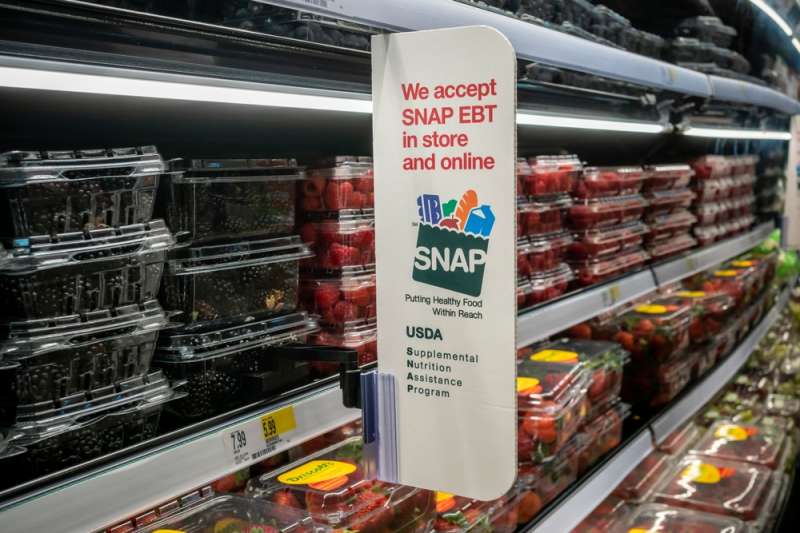
A free workshop in Wilson on Wednesday will bring together faith leaders, food pantry volunteers, advocates, and local residents to discuss recent changes to the Supplemental Nutritional Assistance Program (SNAP) and how they could affect North Carolina families, schools, and county budgets.
RAFI’s Come to the Table program is organizing a “Food & SNAP” workshop from 10 a.m.—2 p.m. at First Christian Church of Wilson, located at 207 Tarboro St NE. The event is free and open to the public, with lunch and mileage reimbursement provided.
Short for Rural Advancement Foundation International–USA, RAFI is a North Carolina-based nonprofit that works to support economically, racial, and ecologically just farm communities in the Southeast. Come to the Table is its faith-based initiative, which partners with congregations and nonprofits to address food insecurity and promote what organizers describe as a “just food system.”
READ MORE: Trump says millions are ‘lifted’ off SNAP. A Charlotte nonprofit says hunger hasn’t gone away in NC
Wednesday’s workshop will focus on changes to SNAP enacted by Republicans’ “One Big Beautiful Bill Act,” also known as H.R. 1. Those changes reduce the federal share of SNAP administrative costs from 50% to 25% beginning in October, shifting an estimated $191 million in costs to the state of North Carolina over the next year, according to NC Budget & Tax Center.
RELATED: Rep. Lopez proposes $85M plan to keep SNAP running for North Carolinians
SNAP administrative funds do not pay for grocery benefits directly. They cover county staff, computer systems, and casework required to process applications, renew benefits, and correct errors. North Carolina is one of 10 states where counties administer SNAP. That means local governments in 100 counties will have to decide whether to find new revenue, cut other services, or risk longer processing times and higher error rates.
Come to the Table Program Director Justine Post said her organization has already seen the impact of H.R. 1 in the communities it serves.
“Since July of 2025 when H.R. 1 was passed, there’s already been a 13% decline in SNAP participation, just in North Carolina alone, and at the same time, unemployment nationwide has been flat around 4%,,” Post said. “So it really seems and indicates that SNAP decline is not because conditions, economic conditions, have improved. It’s really because, you know, all of the restrictions and the complicated ways that now SNAP is being affected.”
Post said rural counties, which often have higher SNAP participation and smaller tax bases, are likely to face the greatest strain as federal support declines and administrative demands increase.
WATCH: Video: Leaving SNAP doesn’t mean North Carolina families no longer need help
About 1.4 million North Carolinians receive SNAP each month, including nearly 600,000 children, according to the state Department of Health and Human Service. Students in SNAP households are automatically certified for free school breakfast and lunch through a process known as direct certification, which allows districts to enroll eligible children without separate applications.
Advocates warn that when families lose SNAP or face delays in processing, children can lose automatic access to school meals and to SUN Bucks during the summer months—a one-time $120 per-child summer grocery benefit. Those disruptions can force families to complete additional paperwork and may increase the risk that students go without food.
Post, who has two children in North Carolina’s public school system, said food access has clear consequences for the classroom.
“When you’re feeling hungry as an adult, you’re not feeling great, and you’re not at your best,” she said. “It is critical that kids are fed, but fed well.”
Wednesday’s event will include an overview of SNAP’s history and current policy from NC State University researcher Annie Hardison-Moody, followed by sessions on how recent cuts may affect food pantries, small farmers, and school meal programs. Organizers say participants will receive fact sheets, talking points, and information about campaigns focused on healthy food and SNAP enrollment.
The goal is to provide clear information and practical tools for people who encounter food insecurity in their daily work, Post said.
Registration for the “Food & SNAP” workshop is here.
WATCH: Video: Facing federal SNAP cuts, NC lawmaker unveils $85 million funding proposal