
A local family says they’re waiting in limbo after paying an immigration attorney roughly $16,000 as part of a nationwide scam in which she branded herself as a “miracle worker” to those seeking legal status in the U.S.
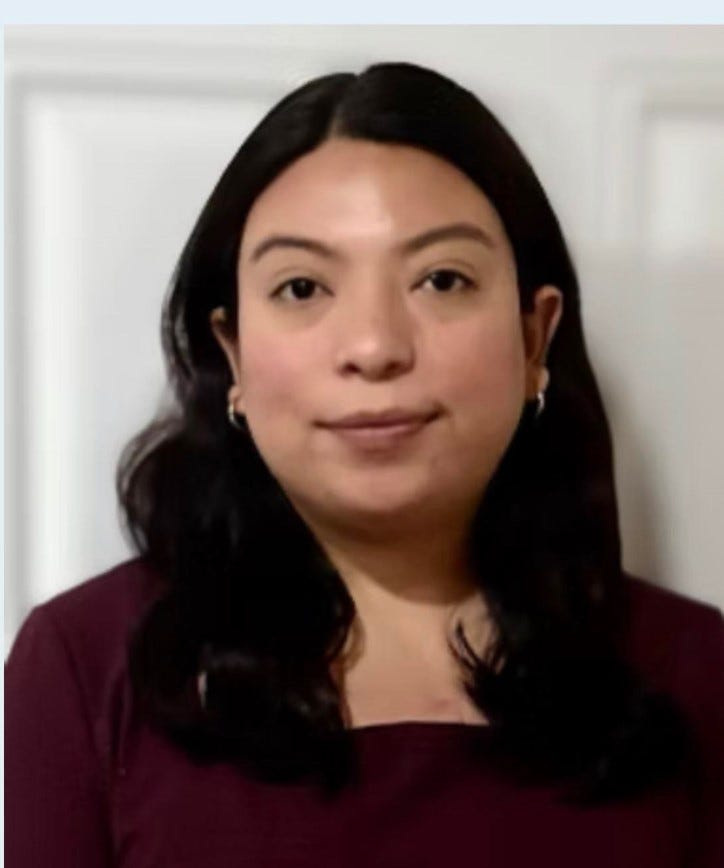
Alexandra Lozano, a Washington state-based attorney, is facing a civil action lawsuit in which she is accused of scamming people out of money. According to the lawsuit, Lozano had offices in at least five states.
Read More: In rural NC county, opposition to Flock cameras unites conservatives and liberals
On May 11, nine former clients sued Lozano and her firm, La Luz del Camino Legal, formerly Alexandra Lozano Immigration Law, as well as affiliated entities in U.S. District Court for the Western District of Washington. On July 11, a first amended complaint was filed to bring the number of plaintiffs to 34.
Jenifer Gutierrez, a local community coordinator and relief center volunteer, said she’s working with families in Buncombe County, including Weaverville, and Yancey County who are also alleged victims of the scam.
Yancey County resident Jazmin Madrigal, 21, said her grandparents found Lozano through an advertisement on social media. They signed a contract with Lozano in March 2025.
Madrigal said Lozano referred to herself as “the lawyer of miracles” in the ads.
According to the lawsuit, Lozano “used imagery of the Virgen de Guadalupe, the phrase ‘abogada de los milagros,’ or ‘attorney of miracles,’ and Mexican cultural and religious imagery” in her marketing materials to convey the impression that she is capable of miracles.
Madrigal said she starts shaking because of how upset it makes her to think about her grandparents being taken advantage of, even more so because their hard work, long hours, and sacrifices have afforded her a better life.
“If they sit here and they tell you everything they had to go through in order to be here today, they’d probably cry,” she said.
Gutierrez said Madrigal’s grandparents didn’t experience trafficking, but Lozano was putting them down as trafficking victims.
“People who have been trafficked get to speak about their story or not; it really should be up to them,” Gutierrez said. “This is traumatizing for someone that has been trafficked to read all about that.”
In the end, Gutierrez said that as far as they have been able to determine, no petition was ever filed on Madrigal’s grandparents’ behalf.
No communication
According to the Washington State Bar Association, Lozano resigned May 26, making her permanently ineligible to practice law.
The Washington State Bar Association said in a release it is working with the Washington chapter of American Immigration Lawyers Association and other organizations on getting legal help for Lozano’s former clients.
Madrigal said her grandparents’ last correspondence with Lozano’s office was in early May. According to the U.S. Citizenship and Immigration Service, Lozano closed her law firm June 10. On June 18, the Board of Immigration Appeals suspended Lozano from practice. Lozano’s website, abogadaalexandra.com, is no longer active.
The Citizen Times reached out to the Washington State Bar.
When The Citizen Times called Lozano’s office Aug. 17, the answering machine said the office was permanently closed and was not taking calls.
“As many of you know, our firm has faced increasing challenges and unjust scrutiny in recent years. After careful consideration, we have determined that closing the firm is the best course of action. This decision was not made lightly,” La Luz del Camino legal team said in a June 10 release on its website.
Gutierrez said she and Madrigal’s biggest concern is, how the alleged victims are going to get their money back.
It’s unclear what steps Madrigal’s grandparents have available to them.
Madrigal’s grandparents immigrated from Mexico in the 1980s, and lived and worked in the U.S., primarily in Yancey County, throughout that time without legal status. Fear and uncertainty are a constant presence in their lives, particularly given the rise of Immigrations and Customs Enforcement’s expanding presence.
“There’s a fear for them going out to the grocery store,” Madrigal said. “Everybody should be able to go to the grocery store without being scared.”
Gutierrez said for people who have been in the U.S. for most of their life, it would be a culture shock to go back to a place that has become a foreign country to them.
“My family grew up here,” Madrigal said. “Even if they were born (in Mexico), you never grew up there. You don’t know anybody there. You don’t even have a house there.”
Cathy Guthrie, a community organizer who lives in Madison County, said she shares concerns for the safety and wellbeing of immigrant communities throughout Western North Carolina, particularly after a popular swimming hole in the Pisgah National Forest became the site of an Immigration and Customs Enforcement (ICE) operation late last month.
The Department of Homeland Security, which oversees ICE, said it arrested 13 people who were illegally in the United States during the operation at Wilson Creek, in Caldwell County, in partnership with the Caldwell County Sheriff’s Office and the U.S. Forest Service.
Legal status obstacles
Gutierrez said the scam is emblematic of the many hurdles immigrants face in trying to obtain legal status. Additionally, she said it’s upsetting to see a person abuse her position of power by capitalizing on the fears of immigrants, as the demand for immigration attorneys is high.
“A total like $16,000, for people that come here illegally for a better future, that could be their whole life savings,” Gutierrez said. “They worked for that money.”
According to Madrigal, her grandparents paid Lozano’s office $960 a month, and would be charged an extra $500 for every day the payment was late.
“Even if my grandparents needed to put gas in their car or buy groceries for the week, it would have to wait,” Madrigal said.
Gutierrez said Lozano’s alleged fabrication of false stories of human trafficking and domestic abuse on humanitarian visa applications minimizes the real experiences of immigrants on their journeys to the U.S., particularly victims of sexual abuse.
“If you really think about people’s journeys to the United States, they risk their life,” Gutierrez said, pointing to a group of immigrant women who were cooking in the kitchen of a Yancey County church Aug. 7.
“People know that when they come here, and they decide to risk it, because the desire to give their children a better life is greater than risking their life, dying of dehydration, exhaustion, and getting raped, or maybe even getting killed by cartels.”
Gutierrez and Madrigal said they hope by coming forward to tell Madrigal’s story that it may help other families to speak up.
Reporting by Johnny Casey, Asheville Citizen Times / Asheville Citizen Times
USA TODAY Network via Reuters Connect