This story was originally reported by Jenae Barnes of The 19th. Meet Jenae and read more of their reporting on gender, politics and policy.
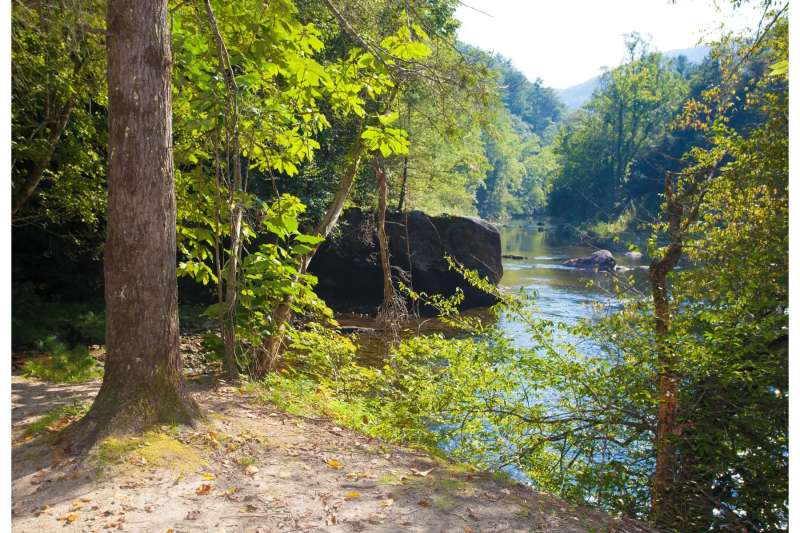
Going to Wilson Creek in the Pisgah National Forest is something of a Sunday routine for many Latino families in this corner of the Appalachian Mountains. On a recent Sunday, Argenis Eduardo Torres Rosales joined other parents and children for a day outdoors.
While they swam and picnicked on the rocks, Immigration and Customs Enforcement (ICE) agents set up a checkpoint in Caldwell County, North Carolina, on the narrow road that was the only way in and out of the creek. Rosales was sitting in his car when the agents approached him, his aunt said; according to an advocate, they had been stopping people and asking them for their citizenship status.
“Some people that were down at the creek didn’t know what was happening,” said Andreina Malki, defense manager for Siembra NC, a local advocacy organization. “Some people that went back to their cars didn’t come back down.”
By late afternoon, Rosales and 12 others had been detained and separated from their families, including a father whose wife and children were stranded on the side of the road with no signal in the forest because she didn’t have a driver’s license.
As far as anyone could remember, this was the first-ever ICE raid in a national forest in North Carolina. It has since become a deterrent to immigrant families who were already underrepresented among visitors to national parks.
Hispanics or Latinos made up only about 8 percent of visitors to national forests, according to the most recent U.S. Forest Service National Visitor report, released in 2022.
Malki grew up hiking and swimming around Pisgah National Forest. “It’s a sacred place to me,” she said. “What they did to families who were probably experiencing that same communion with nature … to have it desecrated by violent and cruel law enforcement activity is heartbreaking.”
Weaponizing the outdoors for immigration enforcement doesn’t only exacerbate a gap in access to the outdoors for people of color. The fear of it becoming a place for more immigration enforcement also prevents families from visiting parks and engaging in nature-based activities, resulting in missed opportunities to explore and learn about the environment, advocates say.
“When families live in terror, environmental justice becomes impossible,” said Kim Bailey, president and CEO of Justice Outside, an environmental organization that promotes the participation of people of color in the outdoors. “Children cannot participate in outdoor programs because families fear leaving home, environmental education becomes inaccessible to communities most impacted by environmental racism, and outdoor spaces transform from healing sanctuaries into surveillance sites.”
The raid came after the Republican-led North Carolina General Assembly voted to override Democratic Gov. Josh Stein’s veto on SB 153, which requires state law enforcement agencies to collaborate with ICE. Last weekend, community members hosted a prayer vigil in Raleigh to protest the legislation.
In a statement to The 19th, ICE confirmed that the agency worked with the Forest Service to arrest 13 people on July 26. The agency said that “many” of them “had criminal histories including DUI and illegal reentry — a felony.”
“My nephew is no criminal,” said Torres Rosales’ aunt, Wuendy Rosales. She has worked with Siembra NC to independently confirm that her nephew does not have a criminal record. She told The 19th that Rosales, 32, is from Venezuela, entered the United States as an asylum seeker and, as such, received a permit to legally work in the country.
He is being held at an immigration detention facility in Folkston, Georgia – 433 miles from Caldwell County, where his wife and stepson have been waiting for him to come home.
Wuendy Rosales said he has called her from detention every day.
“This is his first time being detained, it’s been a nightmare for him. That’s why I’m speaking up for him, because he can’t speak for himself,” she said.
Between paying attorney fees and depositing funds into his account to afford phone calls home, the family has spent thousands of dollars. That’s on top of Rosales’ already expensive asylum application process, Wuendy Rosales said.
On the first Saturday after the raid, a group of over 100 people gathered for a prayer vigil at a nearby town in Caldwell County. “We gathered here to say unequivocally, the waters and forests belong to everyone,” said Rev. Adam Love from Oak Hill United Methodist Church.
There, questions immersed in confusion and fear swirled around the community: Are forest rangers ICE agents now? Will this happen at other parks?
“It’s creating fear, which is exactly what they want. I think this is a way of them telling folks that they don’t belong in our states, or in our national forests and we think that is not the case,” Malki said, adding that the park appeared to be empty. “We hope that people keep enjoying our natural resources.”
Deputies from the Caldwell County Sheriff’s Office were also a part of the raid. Malki and Rosales both said that a partnership between the Forest Service, ICE and local law enforcement felt shocking — and a very intentional way to make people feel less safe.
“They were not looking for someone who had escaped to a national forest or run away,” Malki said. “They were setting up an intentional check point on a Sunday midday to detain and arrest sunbathers and families enjoying the day with their loved ones.”
“We never expected ICE to go there,” Wuendy Rosales told The 19th. The operation, she added, felt like “a trap” because the local enforcement knew the area was frequented by the Latino community.
The community’s relationship with the Forest Service wasn’t always this way. In 2023, the Pisgah National Forest Land Management Plan stated a “desired condition” to serve “historically underserved” communities to increase diversity of visitors, volunteers and partners. In 2024, the Forest Service worked closely with Caldwell County and local partners to create a community action plan for the creek.
“People are scared now to approach a sheriff at the national forest because they were participating in this operation,” Malki said. “If they are aligned with ICE, or doing their job for them, are they a safe agency to approach for other things that are actually forest-related?”
Officers assigned to the Forest Service’s law enforcement division don’t report to local Forest Service units, an agency spokesperson told The 19th.
“While officers have no authority to enforce immigration law, the Forest Service complies with Executive Orders and Administration Policies directing cooperation with agencies tasked with immigration enforcement,” the spokesperson added.
For Wuendy Rosales, the explanation does not make sense. “They’re detaining my nephew, taking his freedom away. For me, it’s a political thing,” she said. “We are paying the price for a political war.”