Activists from across the ideological spectrum, some of them brand new to public advocacy, are quickly mobilizing as part of a broad-based push against Flock cameras in Hendersonville and Henderson County.
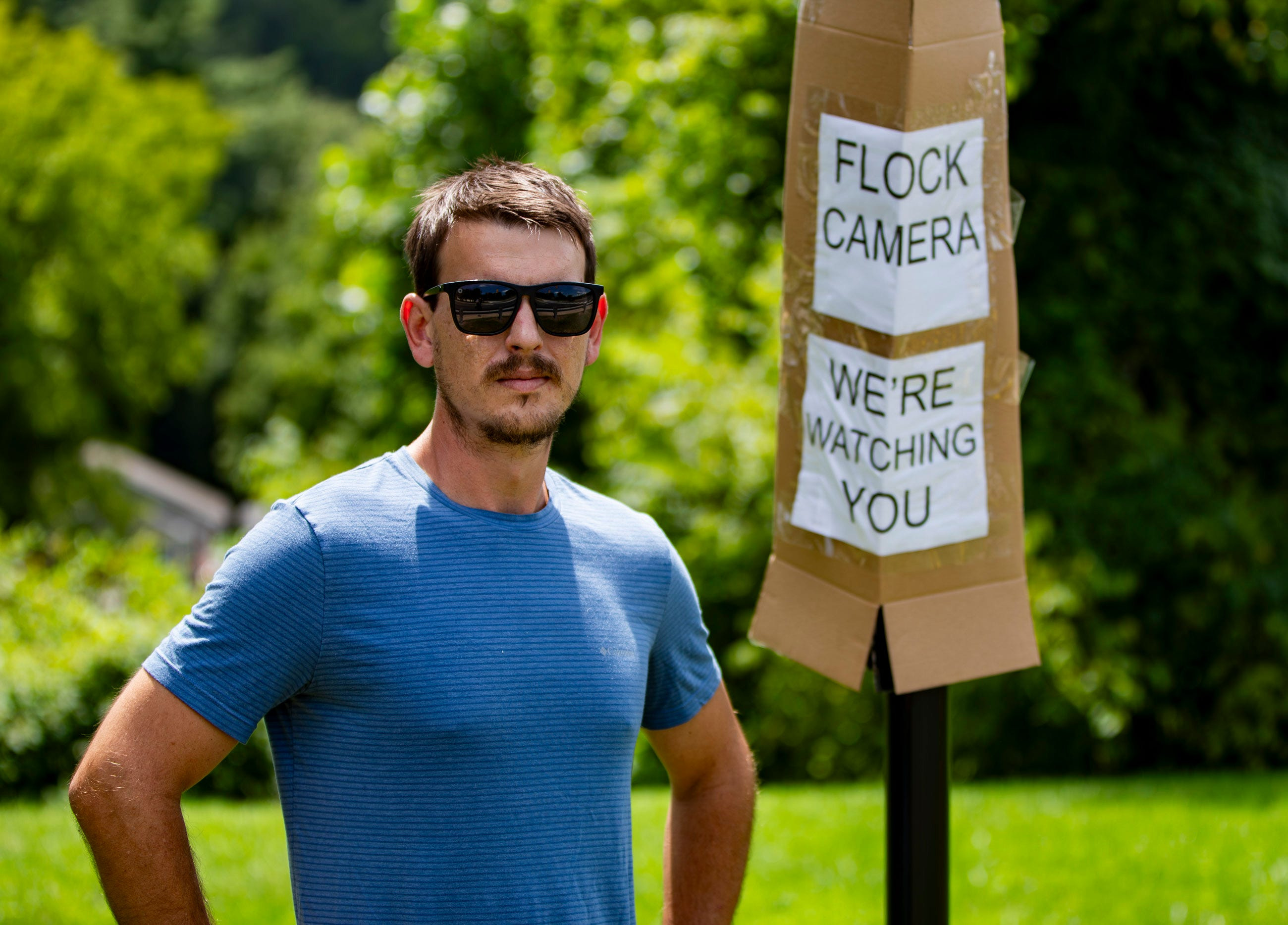
Berry and cattle farmer Austin Rhodes and HVAC mechanic Tiernan Turner met for the first time at an Aug. 3 Henderson County Board of Commissioners meeting, where they spoke against the Sheriff’s use of the cameras, sitting literally and figuratively on opposite sides of the aisle.
Rhodes, 30, a conservative, and Turner, 30, a progressive, went on to form the group Deflock Henderson County, calling for defunding and removing the cameras, saying they constitute a privacy concern and a rights violation.
Read More: How to take action against Flock cameras in North Carolina
Neither had given public comment at a local government meeting before but now their group, like many others across the country, is picking up steam.
“The beautiful thing about it … is that it’s not a left or right issue,” Rhodes told the Times-News Aug. 8. “If you’ve struck a chord that resonates with the left and the right, in a divisive culture, you’ve obviously (really) struck a chord.” He said most people he knows oppose the cameras.
Rhodes started a Change.org petition Aug. 6 that had more than 2,000 signatures as of Aug. 17.
Now joining the fray is the progressive activist group PERSIST of Henderson County, perhaps best known for its role in organizing Hendersonville’s No Kings demonstrations.
“It’s been amazing to me how nonpartisan this is. People that I would typically disagree with on pretty much everything, this is a common goal and an opportunity that the entire community can work together for change,” Holly Newton, a PERSIST leader, told the Times-News Aug. 17.
Along with Deflock, PERSIST plans to call on Hendersonville City Council and the Board of Commissioners at meetings Sept. 3 and 8 to defund and remove flock cameras operated by the Hendersonville Police Department and Henderson County Sheriff’s Office.
Flock detractors claim privacy, rights violations
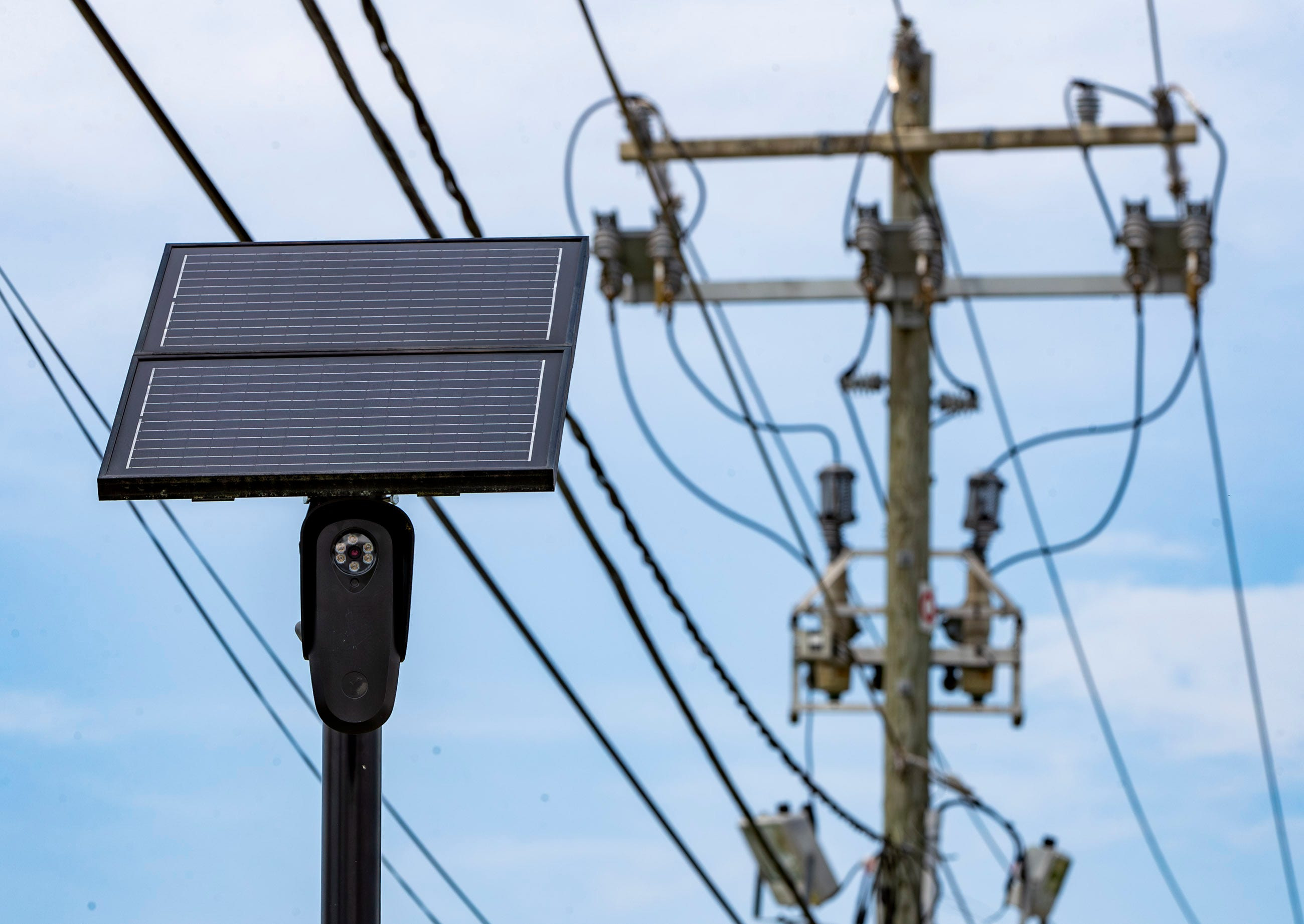
Flock is a brand of automatic license plate readers, surveillance cameras typically aimed at roadways to monitor passing cars and capture license plate numbers and used to find people who might be reported missing or suspected of crimes.
The cameras are seeing growing popularity at law enforcement agencies across the country as well as growing pushback on grounds of privacy, cost and concerns about the technology’s potential for abuse.
“I’m all for aiding law enforcement and I’m for traditional policing … but you don’t burn the Fourth Amendment to prevent car theft,” Rhodes told the Times-News, referring to the U.S. Constitution’s protections against unreasonable law enforcement searches and seizures.
Rhodes said he doesn’t want to cut funding that might go towards wages or training for law enforcement but hopes local government will bar funding from going towards cameras.
“We’re basically putting (everyone) into a digital lineup and making everyone, law abiding citizens, feel like criminals without ever having done anything and I think it’s destroying our foundation of trust between the community and the local police department,” Turner told the Times-News Aug. 11.
Law enforcement responds
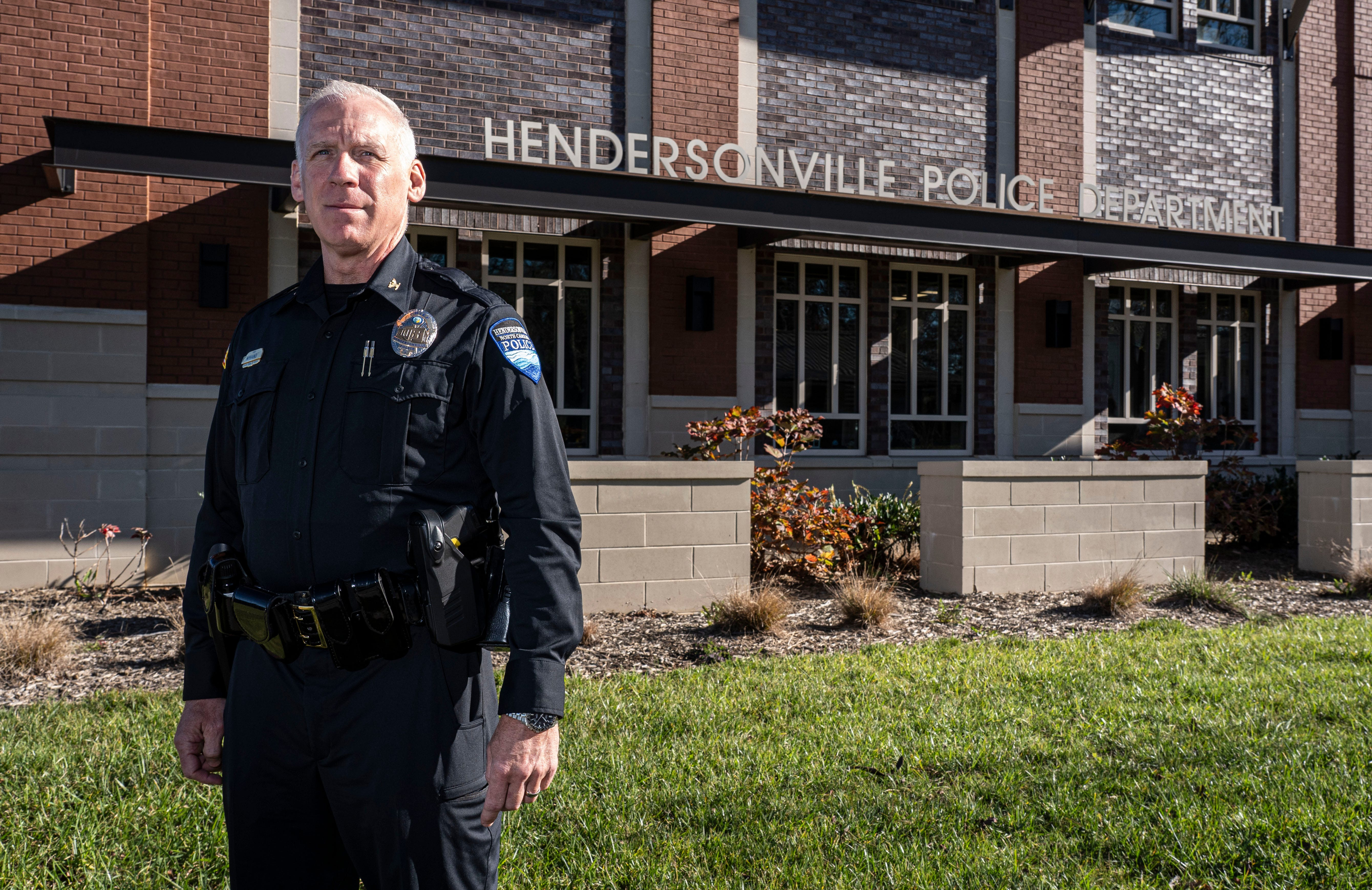
Henderson County Sheriff Lowell Griffin and Hendersonville Police Chief Blair Myhand both pushed back against that criticism, telling the Times-News that the cameras were an important tool helping them to improve public safety.
“I’m not dismissive of fears (about routine police surveillance, but) a lot of them are not founded in an actual reality,” Myhand told the Times-News Aug. 12.
HPD operates 15 Flock cameras, he said.
There were three cameras in the city starting in mid-2024 and the rest were installed in November 2025.
Since then, crime rates have gone down, with larcenies down 25% between October 2025 and today, for instance, he said.
Before they were installed, “a lot of people got away with crimes that they are likely not to get away with now,” he said.
He said the department didn’t keep numbers on how many crimes had been solved with the use of Flock cameras but estimated that there had likely been at least dozens though fewer than 100.
The subscription service for those cameras costs around $3,000 each per year, for a total of around $47,000 for HPD’s cameras, he said.
At HPD and the Sheriff’s Office, money for the cameras isn’t funded by a specific line item earmarked by the city or county, Myhand and County Chair Bill Lapsley told the Times-News.
The Sheriff’s Office operates 13 cameras.
Since 2023 the Sheriff’s cameras had led to at least four homicide arrests, the return of eight missing or runaway people and the arrest of one person suspected of sexual assault against a minor, as well as the recovery of $200,000 in stolen property, Griffin told the Times-News in an Aug. 12 email.
“While I’m unable to provide any guarantees as to how other agencies handle the Flock data in their communities people can rest assured that the Henderson County Sheriff’s Office values the rights of the people in our county and any information accessed or utilized will only be for the pursuit of justice in criminal cases,” Griffin said.
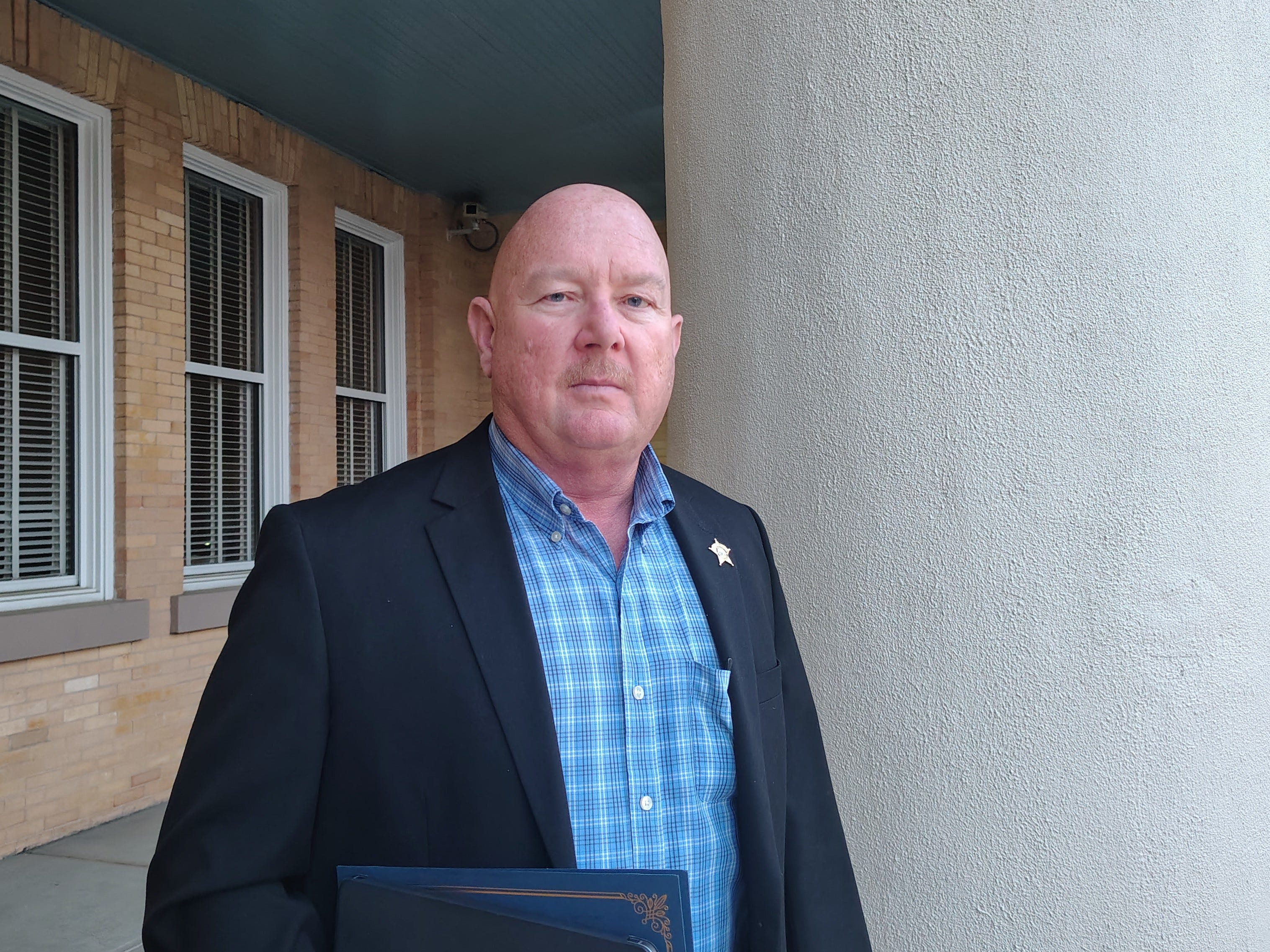
He said in a public statement Aug. 12 that Henderson County’s Flock cameras don’t provide live video surveillance or facial recognition or track individuals from one camera to another.
Hendersonville City Manager John Connet told the Times-News in an Aug. 17 email that City Council had requested a presentation on Flock cameras by Myhand Sept. 3.
Reports of misuse nationwide fuel wariness of Flock
Media reports of misuse of the camera system by law enforcement officers at different agencies across the country has fed into opposition.
Flock has 120,000 cameras across 6,000 communities nationwide, reading 20 billion license plates a month, the Washington Post reported.
At least 50 law-enforcement officers had been charged or accused of using automatic license plate readers for unauthorized purposes including stalking women, and 46 of those cases were using Flock cameras, the Post reported.
The City of Oshkosh, Wisconsin, canceled its Flock subscription after its police department told City Council that the cameras created a “heat map” that tracked vehicles’ movement from point to point, contrary to what Flock had told the city, the Oshkosh Northwestern reported. More than 50 law enforcement agencies have also used Flock cameras to track protesters and activist groups, the Electronic Frontier Foundation reported.
Flock recently added a feature requiring officers to enter a criminal case number to conduct a search, though Flock won’t verify those case numbers, the MIT Technology Review reported.
A new automatic auditing system is meant to flag cases of officers making improper searches, MIT reported.
“Technology doesn’t create misconduct. People do,” Paige Todd, cofounder of Flock Safety, said in a statement, USA TODAY reported.
Flock Safety couldn’t be immediately reached for comment Aug. 17.
Reporting by George Fabe Russell, Hendersonville Times-News / Hendersonville Times-News
USA TODAY Network via Reuters Connect