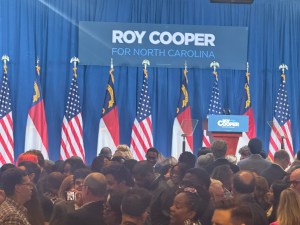
Imagine getting no votes on Election Day but still being victorious. That’s what the unofficial results of North Carolina’s US Senate race suggest Democratic nominee Roy Cooper could have done.
Cooper won by more than 800,000 votes after all precincts reported this week. But his early-voting total was 85,000 more than his opponent received through all forms of voting.
In early voting, he received 1,728,410 votes. In total, Republican Michael Whatley received 1,643,088 votes. This means Cooper, the state’s former governor and now the senator-elect, could have gone voteless on Election Day and still won the race.
It’s an incredible achievement in a state viewed as a true swing state. North Carolina is known to vote for both Democrats and Republicans in a given election.
Four of the state’s five governors this century have been Democrats, while just two Democrats have served in the US Senate during the same period. Cooper is already on the first list. With his Nov. 3 win, he will join the other list.
Perhaps this shouldn’t be surprising. Cooper has long been a fixture in the Tar Heel State’s political world. Cooper’s first electoral victory was in 1986, when he ousted a 12-term incumbent in a Democratic primary for the state House.
Forty years later, he remains undefeated in elections, including seven statewide races: four for attorney general, two for governor, and now the US Senate.
According to Census Reporter, the median age in North Carolina is 39.4, meaning around 50% of the state’s population wasn’t alive when Cooper entered politics. He’s almost a permanent fixture on voters’ ballots.
However, younger voters came out in big numbers for Cooper.
According to NBC News, 79% of voters ages 18-29 supported the senator-elect, as did 70% of voters ages 30-44.