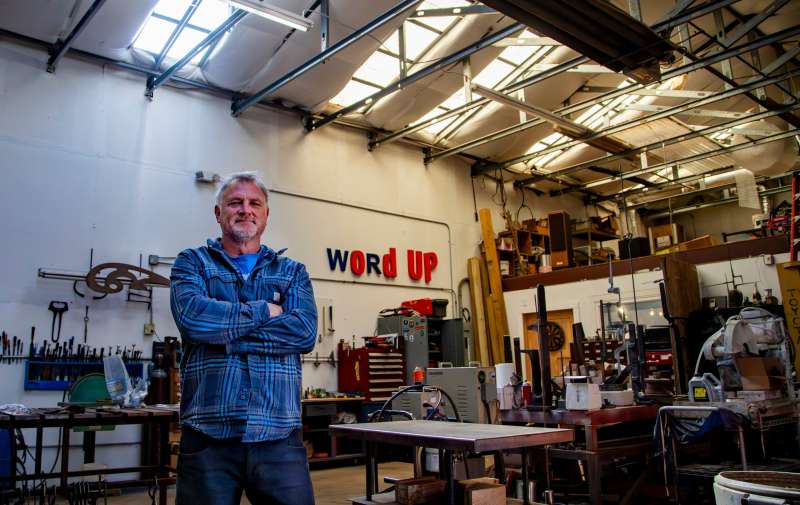
Metalworker Zack Noble doesn’t know exactly how badly his business suffered due to Tropical Storm Helene. Like much of Asheville’s River Arts District, his Depot Street studio was flooded by the French Broad River, and the local arts economy still hasn’t rebounded to where it was before the storm.
What Noble does know is that recovery wasn’t easy.
Helene recovery, no partisan spin: Get Cardinal & Pine’s free, award-winning newsletter
Cleaning up in the immediate aftermath of Helene, he said, “I worked my ass off for 12 hours a day for two and a half months, and I paid two helpers $2,000 every two weeks to help me do this out of my own pocket with no income coming in.” While he didn’t lose his business like other artists in the district, he continued, “I know that I got hit pretty hard.”
Noble estimated he spent at least $45,000 in labor and materials to get his shop functional again. So he was eager to apply this June for Asheville Recovers Together, a $14.6 million grant program funded by city government from $225 million in federal recovery money. He figured he was a perfect fit, given the program’s explicit focus on small businesses within city limits.
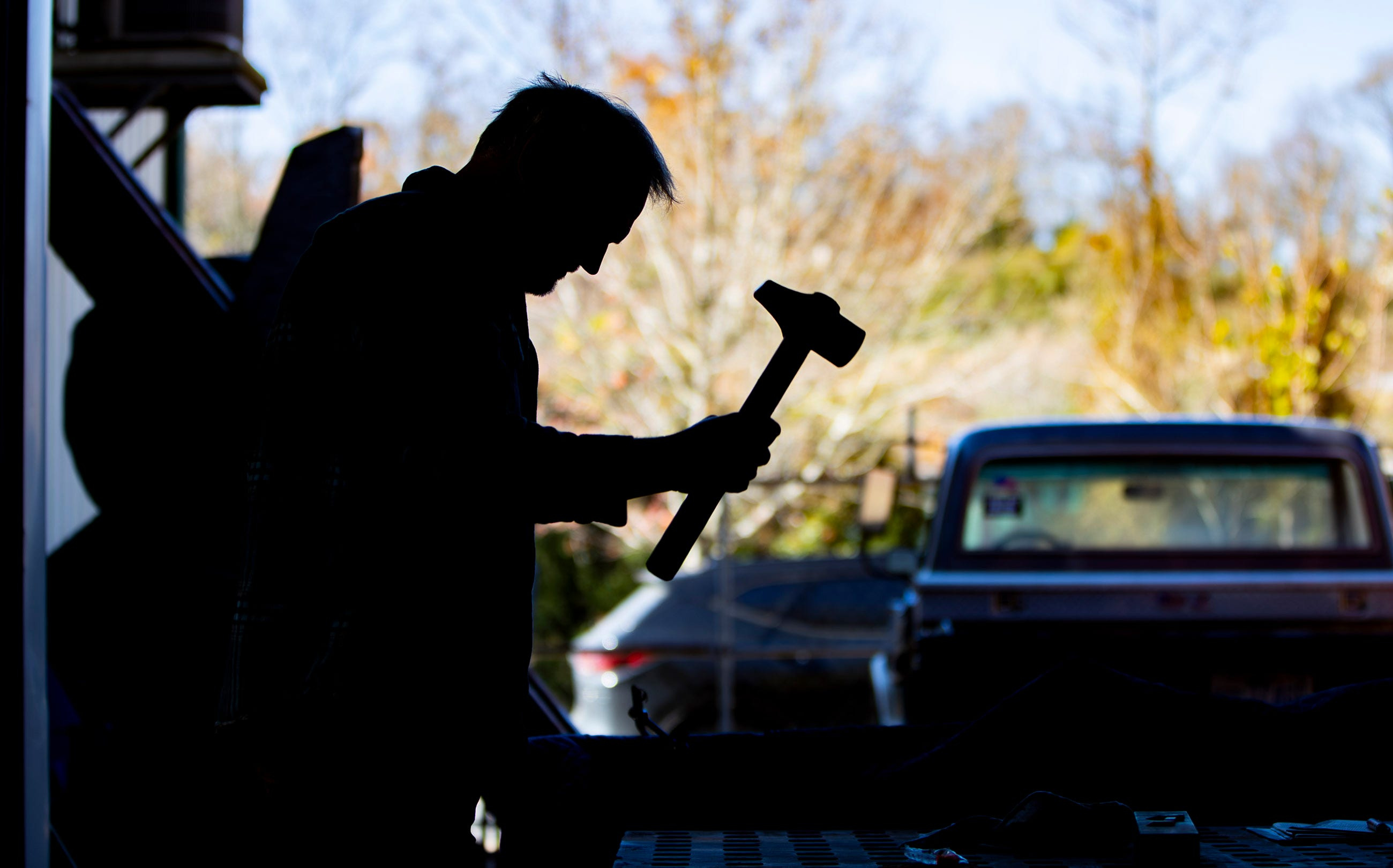
Yet in October, his application was denied by Mountain BizWorks, an Asheville-based nonprofit helping administer the grant program. The organization’s letter cited incomplete documentation; after receiving the notice, Noble said, he spoke with multiple RAD colleagues who’d faced similar denials.
“I am very, very angry, honestly,” Noble told the Citizen Times. “I don’t track my funds like a regular business who has a bookkeeper, and I feel like there’s several of us who have been screwed because of that fact.”
454 grants approved in western NC, but many others turned away
More than two years after Helene’s initial impact, Asheville Recovers Together is starting to get money into the community. As noted by Matt Raker, executive director of Mountain BizWorks, in a Nov. 17 presentation to an Asheville City Council committee, the program has conditionally approved grants for 454 businesses in amounts from $5,000 to $75,000. He said over 30 applicants were fully approved and will sign formal grant agreements soon.
Over 300 applicants, however, were turned away. And those who were approved will have to submit even more paperwork to have their Helene-related expenses reimbursed, with each request taking up to 45 days to process. The slowness and complexity of the program have both sparked frustration from a city in need of an economic boost.
Moving at the speed of red tape
The grant program was first approved in May 2025, as part of Asheville’s plan for its $225 million Community Development Block Grant from the U.S. Department of Housing and Urban Development. As early as October 2025, Council members expressed concerns about the pace of the process, with Kim Roney telling staff that even the spring of 2026 would be “too late” for many businesses.
Over the past months, Asheville has seen a raft of prominent business closings, especially in the food and beverage industry. Among the recent casualties are Oyster House Brewing Company, Limones, Rhubarb, and Mother Ocean Seafood Market and Restaurant. Many have cited the post-Helene economic environment as a key factor.
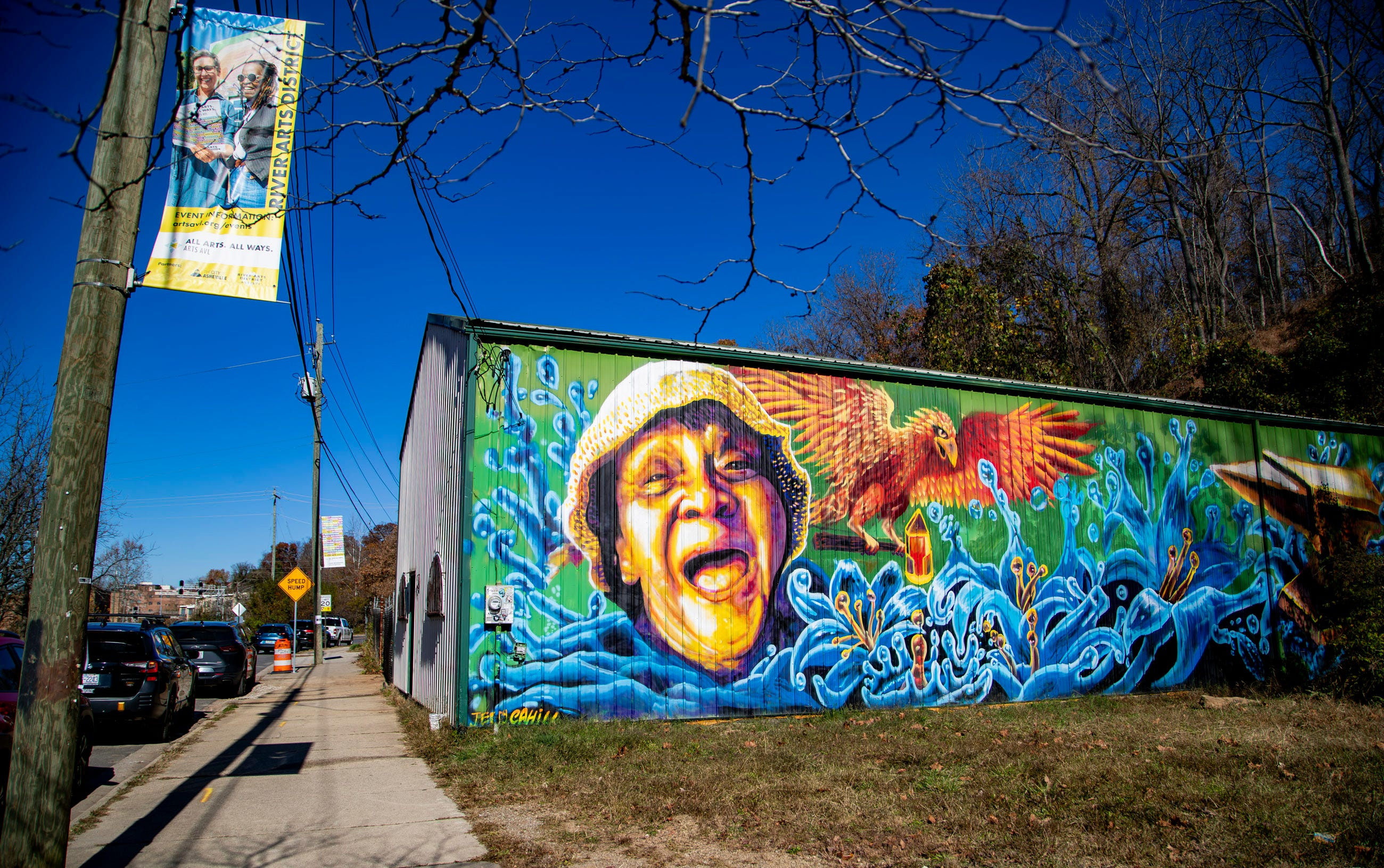
During his Nov. 17 presentation, Raker told Council’s Planning, Economic Development, and Environment Committee that Asheville was still the first community that had used CDBG money to stand up a small business support grant program after Helene. He said the biggest issue to distributing cash had been the extensive documentation required by federal officials.
Raker noted that CDBG funds have historically been used for larger projects, with recipients more used to complying with red tape, rather than small businesses. He said that half of all Asheville Recovers Together grant applicants had paperwork issues and required extra assistance to fix their applications.
“We’ve been going as fast as we responsibly can,” Raker told Council members. “There are many opportunities to make it more right sized, but we also have to administer the program as it is now.”
‘I don’t know how to explain it to you’
Christine Laucher, strategic partnership director for Mountain BizWorks, told the Citizen Times that her nonprofit had anticipated the process would be challenging. Asheville Recovers Together built in a “grace period“ for applicants to correct paperwork, and those who were denied were able to file appeals. She wrote that the program had already responded to more than 70 complaints and appeals.
Of the program’s 771 applicants, Laucher continued, only 40 were ultimately denied for incomplete documentation. Roughly 100 were denied because they weren’t eligible for the program, while another 200 were turned down due to a lack of available funds.
Among those deemed ineligible was artist Julieta Fumberg, who runs a gallery space down the street from Noble at Pink Dog Creative. Although she provided bank statements showing a steep decline in income after the storm — including a nearly $13,000 year-over-year drop for one month alone — she said her application was denied for not demonstrating at least $5,000 in unmet need.
“If you can’t see that, I don’t know how to explain it to you,” Fumberg said. She didn’t appeal the decision, saying she figured it’d be a waste of time to fight the bureaucracy. (Noble said he didn’t receive his notice of denial until after the appeal window had passed.)
Katie Cornell is the executive director of ArtsAvl, which administered a $2.3 million subset of the Asheville Recovers Together grant specifically targeting arts businesses. That money supported 105 grants for 127 applicants with a median award of $10,000, she told the Citizen Times, a level of dedicated arts funding she hadn’t previously seen in disaster recovery. But she added that she understood the frustration applicants like Fumberg had about the process.
“Unfortunately, federal eligibility requirements, particularly HUD’s definition of unmet need, don’t always capture the full impact of a disaster on a small creative business. While we cannot change those requirements, we have worked to provide as much flexibility and assistance as the program allows,” Cornell wrote.
The need remains
Nearly all of the $14.6 million in available Asheville Recovers Together funds have now been allocated, Laucher wrote, “with a small reserve set aside for final decisions.” A full list of grant recipients will come in January, along with more information about award amounts and the business sectors that received funding. She expects that “the vast majority” of money should reach businesses by the end of June.
But the unmet needs of applicants far exceed the program’s capacity. Raker told Council members that small businesses had reported over $117 million in physical damage and $300 million in lost revenue, but only $83 million in other assistance to date. Three-quarters of applicants, he continued, said their revenue still lagged behind pre-Helene levels.
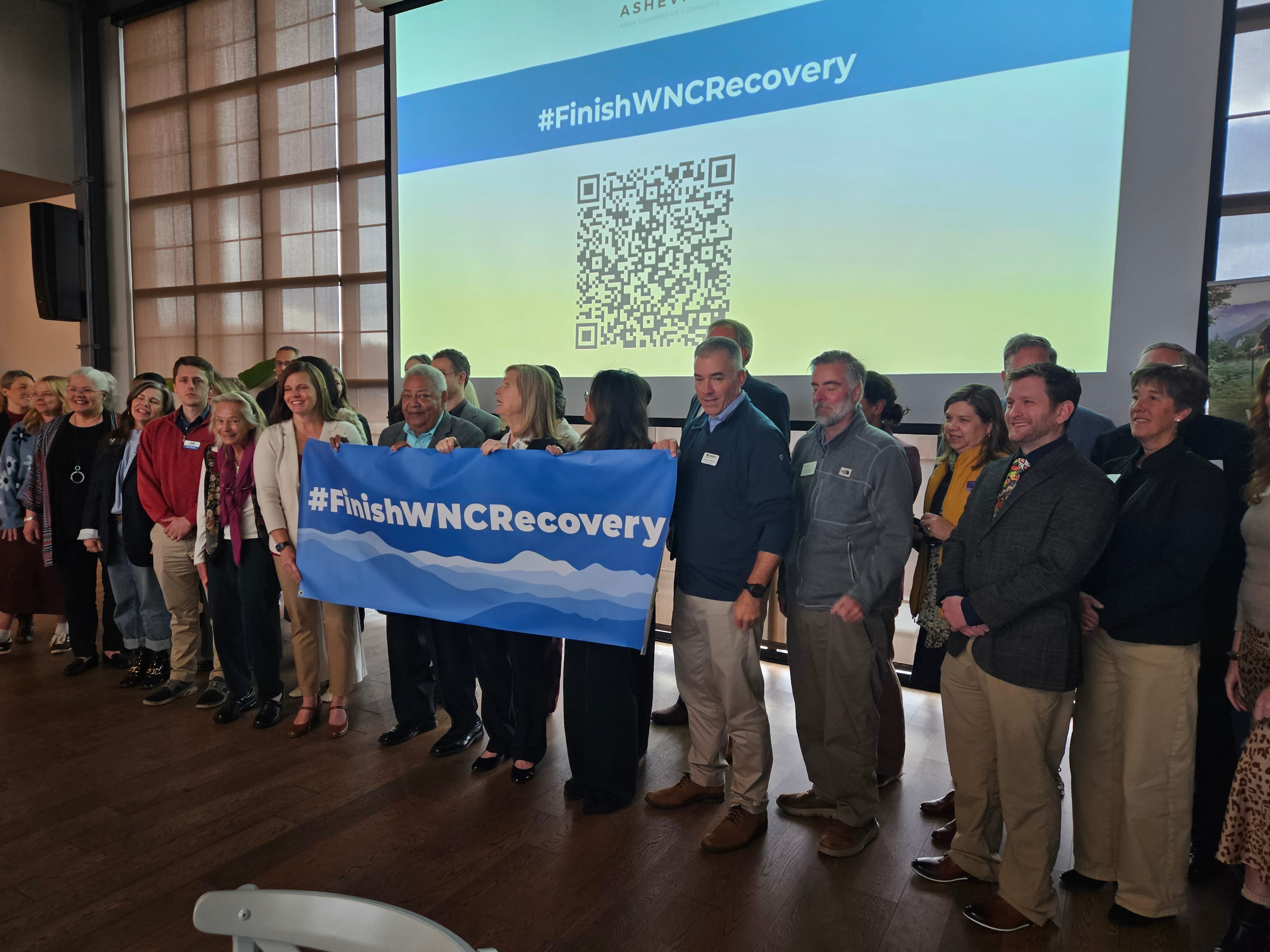
Officials are hopeful that more help may be on the way. Both Roney and Council member Maggie Ullman said they’d be heading to Washington in the coming months to advocate for additional funding. The Asheville Area Chamber of Commerce has also launched a new campaign, #FinishWNCRecovery, to support another $10 billion in federal aid.
“We have actual dollars of unmet need that are not theoretical, that are not projected. They applied, we couldn’t do this,” Ullman said. “And so we have real opportunity right now.”
Small business owners like Noble and Fumberg are hopeful, too. But they’re not particularly optimistic.
“You’re sitting there, talking about it, while businesses are going out of business,” Fumberg said. “We’re tired, and we keep getting punched in the face.”
Reporting by Daniel Walton, Asheville Citizen Times / Asheville Citizen Times
USA TODAY Network via Reuters Connect