Geri Massey had a holiday vest to show off.
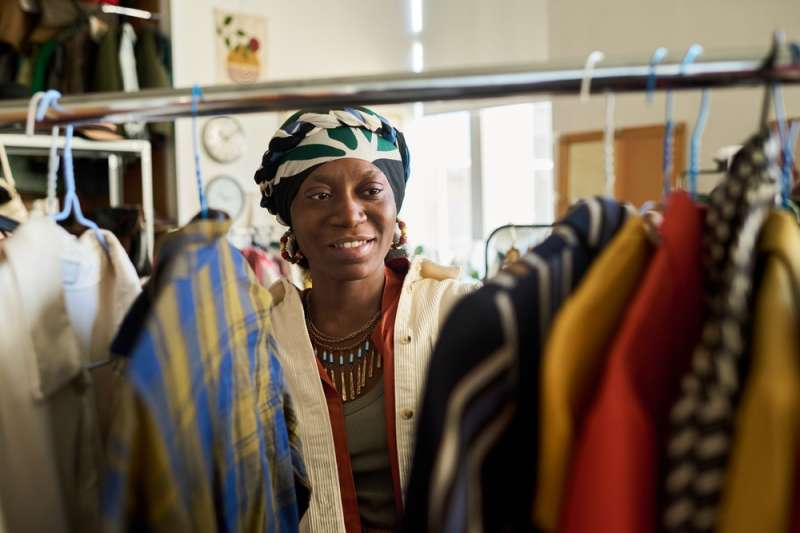
She held it up at Nouveau Chapeau, the Charlotte vintage and thrift boutique she co-owns with her husband, Marvin Massey, in the Plaza Midwood neighborhood.
The vest looked familiar. With its Christmas patches resembling quilt squares, stitched together by red string, it was the kind of vest an elementary school teacher might wear in December.
“We’ve all seen this vest,” she said.
That didn’t mean someone couldn’t make it work. Finding the possibility in something a little unexpected is part of the appeal of her shop, where customers find handmade jewelry, vintage clothes, and hats her husband customizes.
“You just have to come and find your little funk,” Massey said.
RELATED: 12 of our favorite North Carolina thrift stores, from the Outer Banks to the mountains
Throughout the interview with Cardinal & Pine, the business kept interrupting. Sitting behind the front counter, Massey welcomed a returning shopper, answered questions about the price of earrings and a necklace, and offered to work out a deal.
The couple financed the business themselves. Now, they also make room for local makers and host pop-up markets where other small business owners can reach customers.
For North Carolinians buying holiday gifts this year, those connections are part of what a local purchase can support. At a time when the Trump administration and major corporations are scaling back diversity, equity, and inclusion (DEI) initiatives, including supplier-diversity programs, businesses like Nouveau Chapeau can offer something larger businesses may no longer prioritize: a place for artists who need a place to sell, first-time owners looking for guidance, and customers looking for somewhere they feel seen.
Massey, a former senior human resource consultant, said the DEI rollbacks also raise concerns about losing ways for people to understand one another across differences. At the shop, Massey wants people of different backgrounds to feel comfortable being themselves.
“We are a Black-owned business,” she said. “But that’s one thing about us.”
At Nouveau Chapeau, Massey and her husband are trying to keep that kind of place going, but there is a lot to manage. A strong holiday season could help them pay for regular help and get a little more time away from a business that’s open six days a week.
A new hat, a new business
The store’s name began with a joke about Marvin.
Put him in a new hat, Massey said, and his whole attitude changes. According to her, Marvin brought decades of experience selling antiques, collectibles, and secondhand finds. Massey, who retired in 2021, had a background in finance and administration. They opened Nouveau Chapeau in a Graham Street warehouse in January 2024.
Getting people through the door was another matter.
“If you knew we were there, you knew,” she said. “But if you didn’t know, you just didn’t know.”
The couple moved to Plaza Midwood in June 2025. In the six-bedroom house that now holds their shop, different rooms have different personalities: jewelry near the entrance; patterns and prints in another room; records, band posters, a daybed, and a listening station upstairs.
What it takes to stay open
When the couple were new business owners, Massey said she looked into the Beyond Open program, a three-round pandemic recovery grant program led by Foundation For The Carolinas and supported by the Wells Fargo Open for Business Fund. But the shop had not been operating long enough to qualify at the time. Since operating, Nouveau Chapeau has not received financial aid from grants, programs, or corporations, she said.
But moving store locations meant paying for security cameras, insurance, and technology to manage sales and inventory. Looking back, Massey wishes she had spent more time pursuing financial support.
“Things like technology or adding on employees, those are things that some of the grants would have addressed or could have addressed,” Massey said.
Reliance on one’s own finances to start a business is not uncommon. A 2024 analysis from National Opinion Research Center (NORC) at the University of Chicago found that more than 8 in 10 business owners who needed startup funding used personal or family assets to help launch their business.
Anisha Steephen, a former senior policy advisor for racial equity at the US Treasury Department, said money and connections can shape who gets the chance to turn an idea into a livelihood.
“Most working Americans come to business ownership with far less access to wealth, credit, and connections,” they said.
Efforts to expand access can also reach people who are not always part of the public conversation about equity, Steephen said.
During their time at Treasury, the Biden administration invested more than $8.5 billion to support banks and credit unions serving places conventional finance can overlook, such as small towns and rural communities. An entrepreneur without family wealth or access to a lender can have a strong idea and still struggle to get started.
“Addressing racial inequity helped us ask a broader question: Who is being left out of economic opportunities in this country, and what would give them a fair chance to succeed?” Steephen said.
Getting Rumors off the ground
Marshé Wyche remembers trying to persuade lenders to take Rumors Boutique seriously.
At Rumors, shoppers can buy secondhand clothing, trade in pieces from their own closets, and find work by independent designers. With locations in Richmond, Virginia, Chapel Hill, and Durham, the business caters to a younger generation, including college students, looking for affordable ways to express themselves.
Wyche and Casey Longyear founded the women- and Black-owned business in Richmond in 2007 before expanding to the other locations in 2013 and 2019. They were young women with limited credit histories, Wyche said, and banks repeatedly rejected their requests for financing.
At one bank, she recalled, they were asked why they couldn’t get the money from men in their lives.
“They asked us why our boyfriends couldn’t just give us the money,” Wyche said. “Like, ‘Don’t you have boyfriends? Can’t your daddy give you, like, $30,000 and your daddy give you $30,000? You put $60,000 in an account, and then we can give you a secured loan for, like, $8,000.’”
Without the help of a bank, they relied on a combination of funds: a credit card from Longyear’s parents with a small limit of about $5,000, multiple jobs, and, later, an inheritance from Wyche’s late father. Further down the line, several grants aimed at supporting women and minority entrepreneurs, including an award associated with Spanx, helped develop the company’s website and online store, Wyche said.
Now, Rumors hosts markets where other sellers can build an audience. Some people need encouragement to see that what they consider a hobby could become a business, Wyche said.
“We’re trying to give them a platform where they can sell something,” she said. “And we’re trying to help them create a brand.”
RELATED: Deck the halls with these 17 holiday events in North Carolina
For Wyche, the markets give creative people both a place to sell and the confidence to keep going.
Making room for others
According to Steephen, the Trump administration’s stance on DEI, alongside corporate rollbacks from those commitments, hurt everyday working people. They added that the conversation over federal and corporate DEI rollbacks should include a basic question: “Who gets a fair chance to participate in the economy?”
“Removing efforts to address those differences leaves the advantages in place,” they said. “Communities lose out when people with ideas and skills never get the chance to put them to work.”
At Nouveau Chapeau, the couple also have markets of their own. Massey said the monthly markets generally bring together 15-20 small business vendors, including artists, jewelry makers, clothing upcyclers, and their own children.
READ MORE: 10 unique NC-made gifts for this holiday season
Finding an affordable place to sell consistently can be difficult, she said. Making room for those sellers is one way she and her husband try to help.
What a successful holiday season can mean
Massey knows holiday shoppers have their own bills.
“If you have to make a decision between getting groceries and paying a light bill, you’re probably not coming to the store,” she said.
RELATED: NC groceries with holiday deals
But a difficult season would make it harder to build momentum into 2027 while paying rent, sourcing merchandise, and keeping the lights on. A strong one for the store could help the couple maintain regular help. They divide the schedule so each can get some time away, with part-time help and the occasional intern coming in to help on weekends.
Steephen said the consequences of a shop’s success or closure can extend beyond its owners. Local businesses provide jobs and gathering places, and neighboring shops can depend on the same customers. Helping people open a business also requires attention to whether they can afford to stay.
Nouveau Chapeau has been preparing for the season with events, including the shop’s final pop-up market of the year on Dec. 5. Massey wants customers to feel as though they are browsing a big sister’s closet, comfortable enough to experiment. That might mean finding the right piece of jewelry—or seeing the possibilities in a familiar holiday vest.
READ MORE: 11 wonderful winter festivals in North Carolina to put on your calendar now