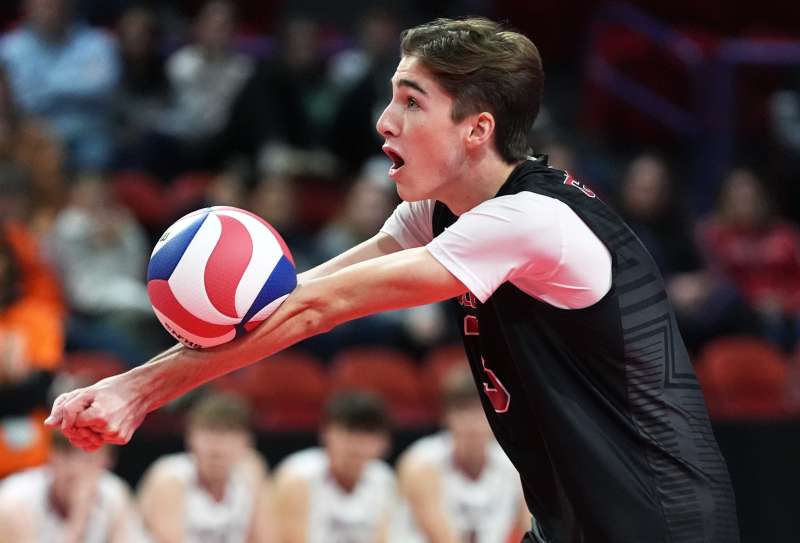
High school boys volleyball is coming to Wilmington.
After years of advocacy and support from players, coaches and families, the North Carolina High School Athletic Association finally sanctioned boys volleyball in May 2026.
The decision is a major milestone for a sport that has long struggled to gain widespread recognition in American high schools but is now surging in popularity nationwide.
It’s also part of a greater shift in North Carolina high school athletics. Girls flag football was sanctioned alongside boys volleyball, with both additions coming just over a year after the NCHSAA expanded to eight classifications.
While boys volleyball has existed in North Carolina for years through private schools and clubs, sanctioning gives public-school athletes their first opportunity to compete for official state championships.
Read More: NC cannabis panel could recommend full adult-use marijuana legalization
The decision was decades in the making, driven by players, coaches and advocates who dedicated years of effort to bringing boys volleyball into the mainstream of American high school athletics.
Ninety-three years after Pennsylvania first sanctioned boys volleyball, North Carolina is finally joining the mix. At least 130 schools statewide had club programs last year, with four Wilmington-area schools planning to field official teams during the inaugural season in spring 2027.
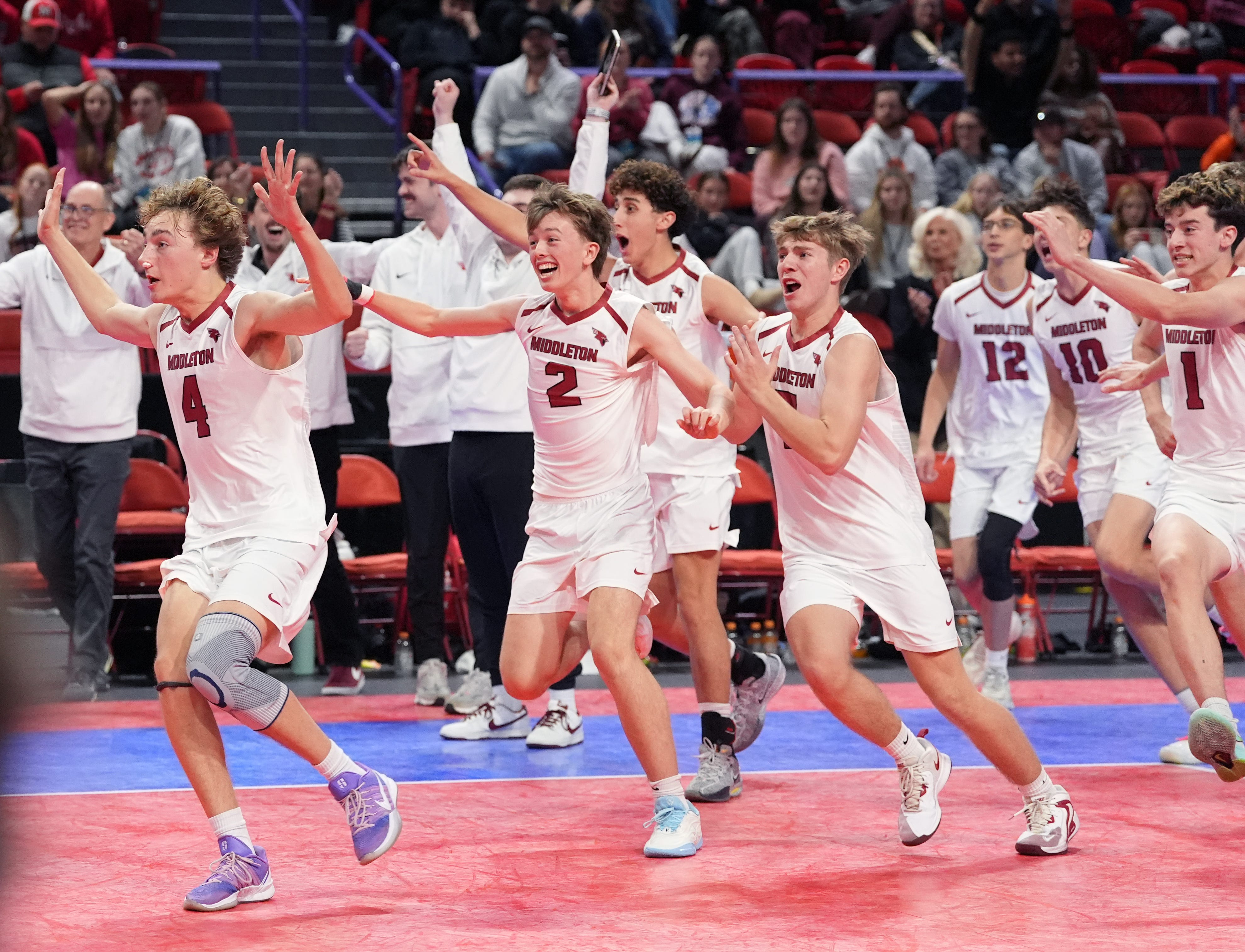
North Carolina high school boys volleyball in Wilmington: Who’s playing?
Still in its infancy, details about boys volleyball in Wilmington are evolving.
For now, all four New Hanover County public schools (Ashley, Hoggard, Laney and New Hanover) plan to field teams in spring 2027. Schools in Brunswick and Pender counties do not plan to participate in the inaugural season.
At Hoggard and Laney, coaches had not been named as of Nov. 9. New Hanover County Athletic Director Aaron Livengood said both schools, Wilmington’s largest, were working to fill the positions as soon as possible.
At Ashley, 28-year-old Pennsylvania native Matt Schaeffer has been named the school’s boys volleyball coach. Schaeffer played volleyball throughout high school and college before moving to Wilmington in early 2026, initially planning to coach only at local club NC Coastal.
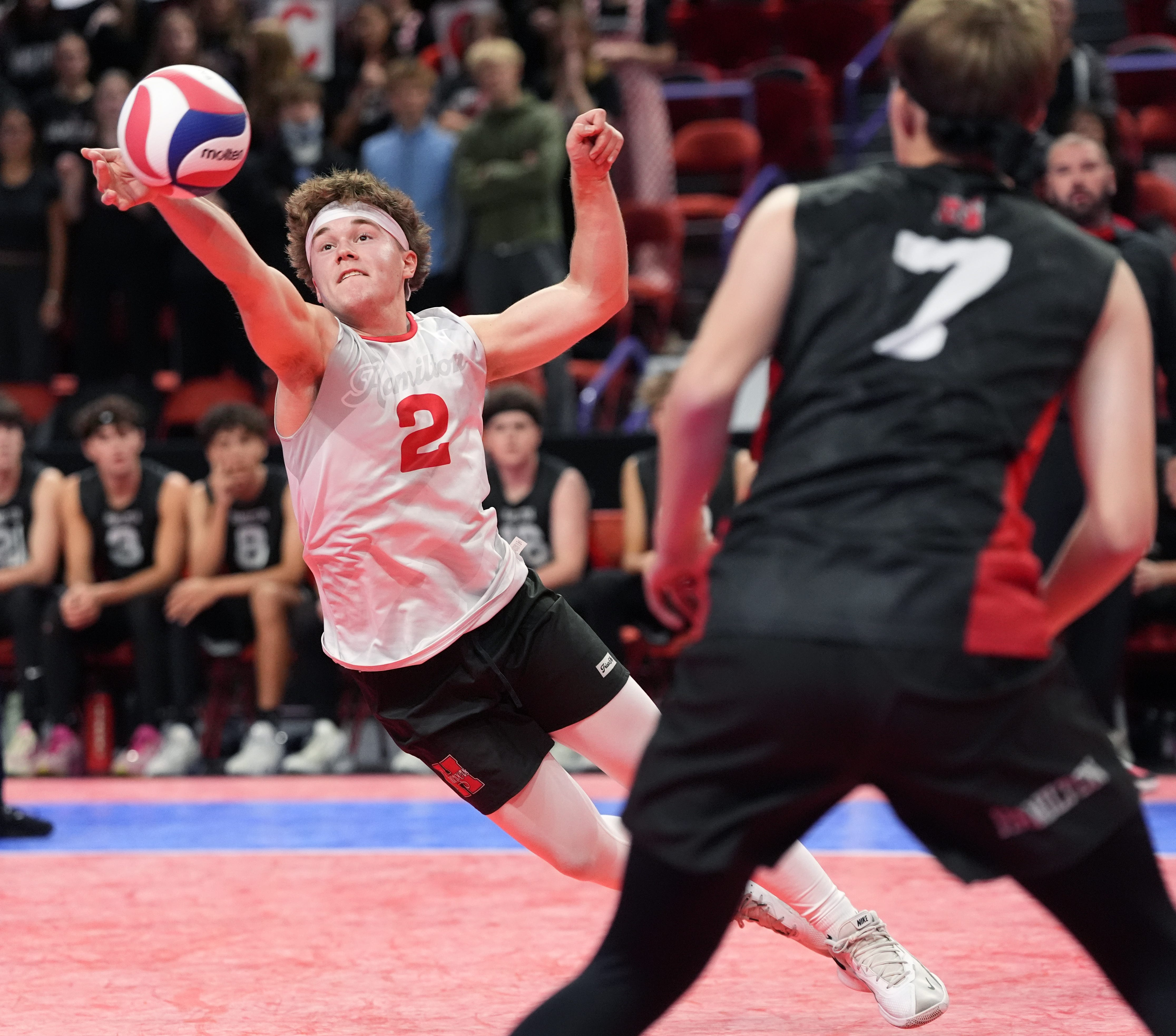
But after Ashley’s girls volleyball coaching position opened, the Screaming Eagles hired Schaeffer to lead the program. He guided Ashley to a 16-12 record this fall before being named the school’s boys coach in late October.
In Pennsylvania, where high school boys volleyball has been sanctioned for nearly a century, the sport is commonplace. The contrast with North Carolina proved revealing for Schaeffer.
“Coming from a state where (boys volleyball) is just the norm has been an eye-opener,” Schaeffer said. “It’s time for us to catch up here; it’s only a matter of time before it takes off here.”
New Hanover has appointed Bill Carter as its boys coach. A 25-year coaching veteran, Carter has led the Wildcats’ girls volleyball program since 2023.
He believes Wilmington’s established beach volleyball scene has helped spur interest in the boys game, even before it became a sanctioned high school sport.
“That’s probably one of the biggest influences,” Carter said of Wilmington’s relationship to beach volleyball. “A lot of these guys that are interested go out to Capt’n Bill’s and play a couple times a week and have been doing that for a while.”
Another factor positioning Wilmington for growth is local club NC Coastal, which expanded to offer boys volleyball three years ago. Director Steve McKeon believes bringing the sport into public schools will accelerate its development.
“The boys getting into high school, that side will explode in the next few years,” McKeon said. “Once the boys start seeing that it’s not a ‘girls’ game’, it will take off and become huge.”
At the private-school level, Coastal Christian has fielded a boys volleyball program for the past three years. However, the school will not field a team in spring 2027, according to athletic director Brandon Easler.
A dream come true
Blu Soe will finally get to play high school volleyball.
The Thai-born Ashley junior picked up volleyball two years ago and has since played for local club NC Coastal.
Blu’s family is part of the Karen people, Thailand’s largest hill tribe ethnic minority group. He recalls growing up in wooden huts in the mountainous jungles and valleys near the Myanmar border.
“My parents came here because they wanted a better life for me,” Blu said of his family’s move to the U.S. about 11 years ago.
While Blu, now 16, says volleyball was popular in Thailand and in his family, it was the Japanese anime series Haikyu!! that first sparked his interest in the sport.
His passion eventually led him to try to establish a boys volleyball team at Ashley, but without official sanctioning, his efforts fell short.
“I tried to reach out to NC Boys Volleyball to try and start a team for my school, but it never worked out really,” he said.
For Blu, the arrival of high school boys volleyball means more than a chance to showcase his skills. He believes it can introduce the sport to boys who previously lacked the opportunity to participate.
“Most kids can’t afford club,” he said. “So to bring it to schools, where you can still learn and grow without having to pay as much, it’s a really good experience.”
At New Hanover, Fisher Manning is among those preparing to play organized volleyball for the first time.
Already a member of the Wildcats’ boys soccer team, Manning grew up around volleyball. His mother played the sport, and beach volleyball has long been a staple for his family. Despite having no competitive experience, he’s prepared to take on the new challenge.
“I think it’s awesome,” Manning said. “I’m really looking forward to it.”
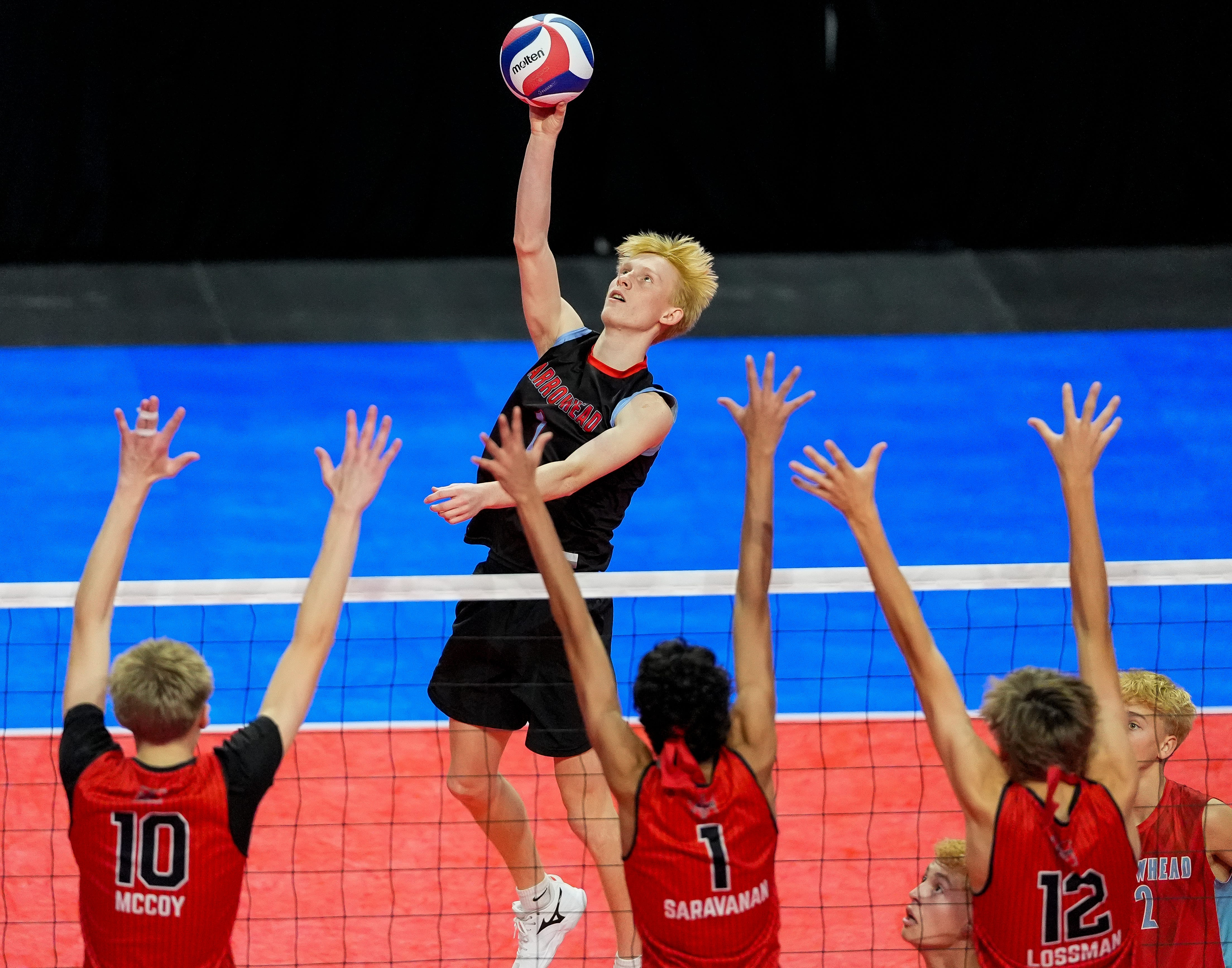
Tork Mason/Green Bay Press-Gazette
And Manning isn’t keeping that excitement to himself. He’s already helping generate interest in the new program, encouraging classmates and fellow soccer players to try volleyball.
“We put up fliers around the school to make sure everyone knows about it. I’ve been trying to get the word around, trying to get kids on the (soccer) team to play as well.”
North Carolina joins 29 states in sanctioning boys volleyball
When the NCHSAA Board of Directors narrowly approved sanctioning boys volleyball by a 10-7 vote on May 6, North Carolina became the 30th state to do so.
The decision was decades in the making.
While North Carolina has sanctioned girls volleyball at the high school level for half a century, the boys game, as in many parts of the country, has taken much longer to gain widespread acceptance.
That lag has little to do with novelty.
In 1933, Pennsylvania became the first state to sanction boys volleyball at the high school level. But for decades, the sport remained largely confined to hotbeds along the coasts and scattered pockets of the Midwest. North Carolina was one of those boys volleyball deserts.
Sarah Conklin wanted to change that.
After a lifetime surrounded by volleyball as both a player and coach, Conklin founded the North Carolina Boys Volleyball Association in 2016.
The organization helped high school students establish unofficial school-based club teams despite the lack of NCHSAA sanctioning. What began with just four schools eventually grew into a statewide movement, with approximately 133 schools participating by the 2025-26 school year.
“It was easy to get behind because I saw the impact the game was making on young men all across North Carolina,” Conklin, who also serves on the USA Volleyball Foundation board, said.
But moving the needle on awareness for any sport is rarely easy.
Conklin says one of the greatest challenges facing advocates nationwide is a difficult cycle between schools and state athletic associations.
“A lot of times it’s a chicken-and-egg situation where the state will say, ‘We’ll sanction it when you have X number of teams,’ and then you have schools saying, ‘We’ll offer it when it’s sanctioned.’”
In North Carolina, advocacy from organizations including USA Volleyball and the North Carolina Boys Volleyball Association helped overcome that obstacle. Under NCHSAA sanctioning guidelines, a sport can qualify by reaching participation from at least 25% of member schools.
Other barriers have historically made boys volleyball difficult to grow nationwide.
One has been the relative lack of collegiate opportunities. According to the NCAA’s 2026-27 projected figures, 348 Division I institutions sponsor women’s volleyball, compared with just 31 on the men’s side.
Perception has also impeded the sport’s expansion. Despite men’s volleyball’s worldwide popularity, a longstanding stereotype of volleyball as a “girls game” has persisted in the United States.
But the landscape is changing.
More colleges have begun sponsoring men’s volleyball over the past decade, particularly at the Division II and III levels, while competitive club programs offer additional opportunities at universities nationwide.
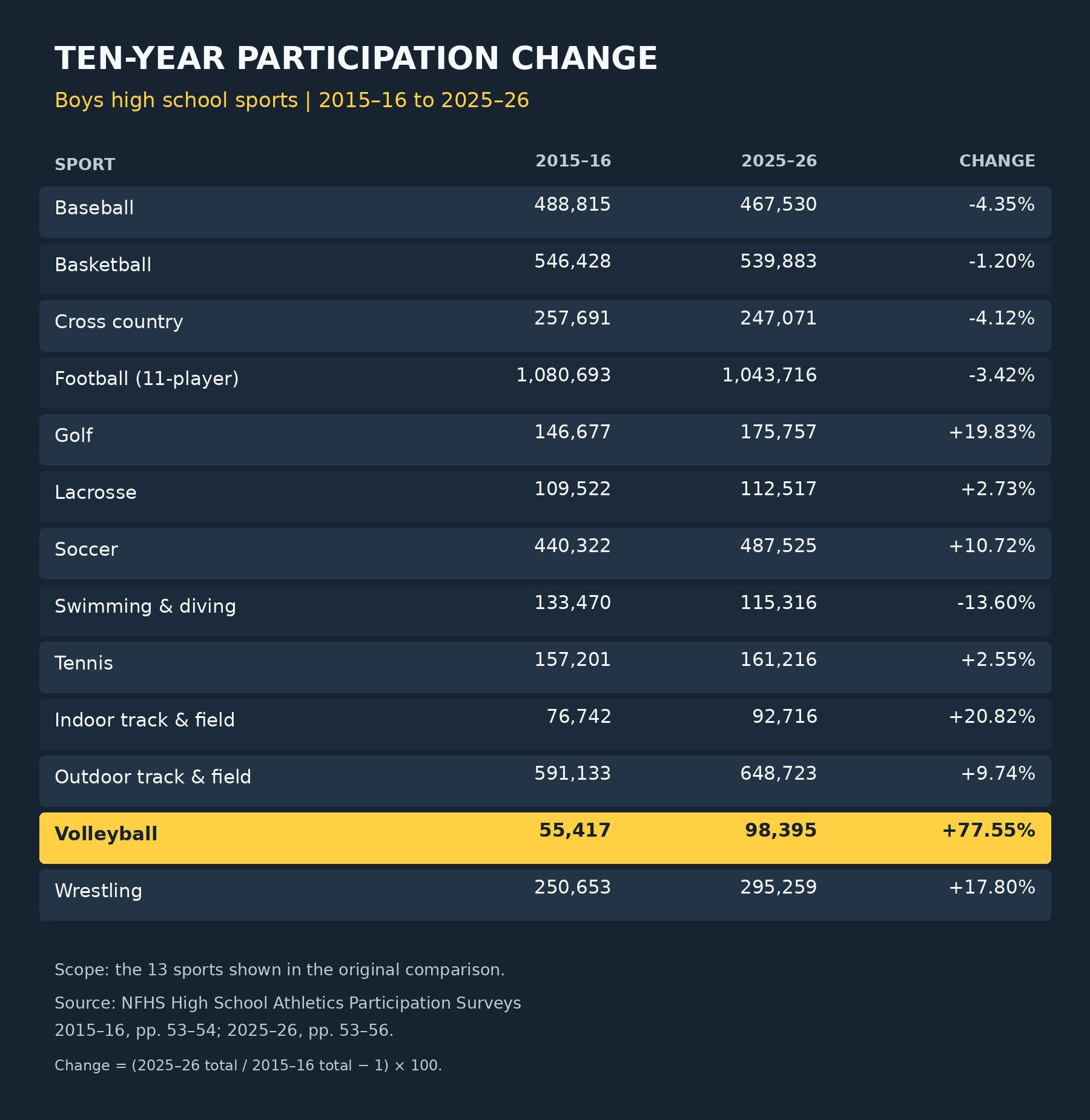
Meanwhile, high school participation is surging.
During the 2015-16 school year, the National Federation of State High School Associations reported 55,417 boys participating nationwide.
A decade later, that figure had climbed nearly 78% to 98,395 during the 2025-26 school year, including a sharp increase from the roughly 66,000 participants reported in 2021-22.
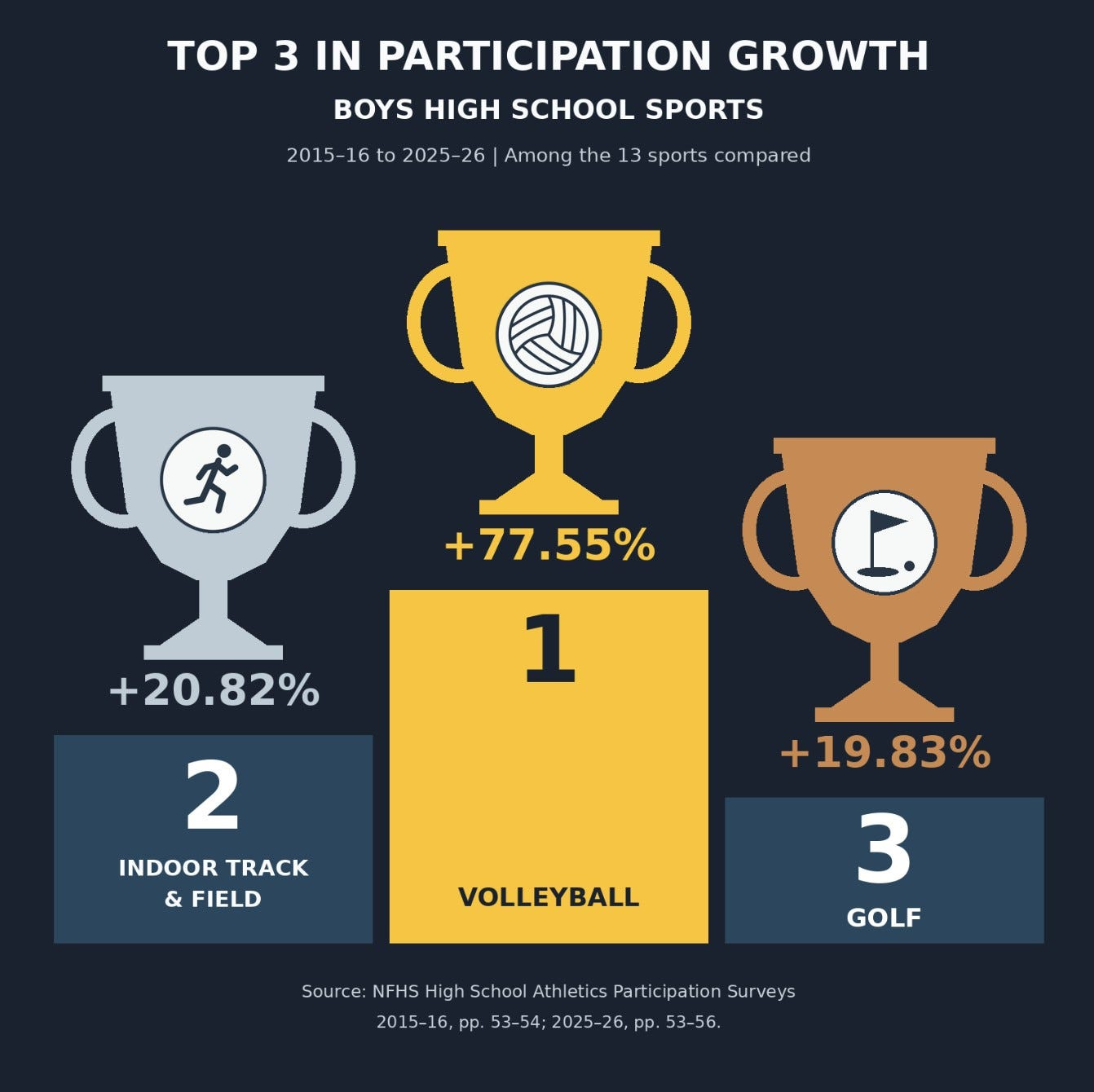
That growth has made volleyball the fastest-growing boys team sport in the country over the past decade.
What’s next for boys volleyball in North Carolina and beyond
High school boys volleyball is trending upward.
In North Carolina, the immediate goal is simple: Get more schools involved.
In areas like Wilmington, where only New Hanover County schools plan to participate in spring 2027, advocates believe the sport will grow quickly.
“Boys and men’s volleyball is growing day by day, and having it in any capacity in New Hanover County, it will shoot up. We’ve just got to get it started,” Schaeffer said.
Statewide, the sport already has considerable momentum. With around 130 schools fielding teams last spring, boys volleyball is on the verge of surpassing boys lacrosse, which had participation from 118 schools last spring despite being sanctioned since 2008.
Nationally, one of the biggest remaining challenges is expanding the sport across the South.
Outside of Florida, much of the region, including high school sports strongholds such as Texas, Alabama, Tennessee and Georgia, has yet to sanction boys volleyball.
Often described as football states, these areas have historically struggled to establish boys volleyball programs, although participation has grown in recent years.
Organizations like First Point Volleyball, which Conklin helps lead, are working toward an ambitious goal: getting boys volleyball sanctioned in all 50 states by 2033, exactly a century after Pennsylvania became the first to do so.
“It takes so much effort to grow the game without the support of the schools or the state that it’s really a big ask for these volunteers to keep working so hard year after year to do this,” Conklin said.
North Carolina has already cleared its biggest hurdle by officially sanctioning the sport. But the work isn’t finished. As more schools establish programs, more boys will have opportunities to play volleyball for the first time.
In Wilmington, where beach volleyball and the local club scene have already built the framework, coaches and advocates believe the sport is ready for major growth.
For now, plenty of details regarding the first season of boys volleyball in North Carolina remain unresolved. But those closest to the game believe once students get the opportunity to play, the sport will sell itself.
“These guys fall in love with the game,” Conklin said. “I have not had one boy that’s walked into my gym and not fallen in love with volleyball.”
Reporting by Michael Cuneo, Wilmington StarNews / Wilmington StarNews
USA TODAY Network via Reuters Connect