A simmering dispute over coastal water rights, views and who gets to do what where is in danger of moving from a slow boil to an outright dispute that could soon reach the halls of the NC General Assembly in Raleigh.
In July 2026, a temporary moratorium that bans new shellfish leases in New Hanover County is set to expire – unless extended by legislators in a bill filed in late April 2026.
The prohibition on new leases, which went into effect in 2019 and was subsequently extended after originally set to sunset in 2021, was adopted after waterfront homeowners and boat users complained about the density, view and rapid growth of shellfish farms in Masonboro and Myrtle Grove sounds.
But while the temporary ban might have pleased waterfront homeowners and boaters in Wilmington, it did the opposite in neighboring Pender County, which has seen a significant uptick in new shellfish leases since the New Hanover moratorium came into effect.
That growing frustration prompted the Pender County Commissioners in 2024 to pass a resolution asking the state to adopt a moratorium on new shellfish leases in the county. In doing so, the county joined neighboring Onslow County in seeking a pause on new leases, especially water column leases.
The move came after leaders of the three beach towns − Topsail Beach, Surf City and North Topsail Beach − that share Topsail Island teamed up to request the moratoriums.
According to the Pender resolution, there were several reasons to seek a lease moratorium. They included the shellfish farms’ unsightly nature, their equipment limiting tourism options and access to waterborne recreational opportunities, and the impacts the farms can have on “the beauty of a marsh area that did not have the plastic poles and other equipment marking shellfish areas.”
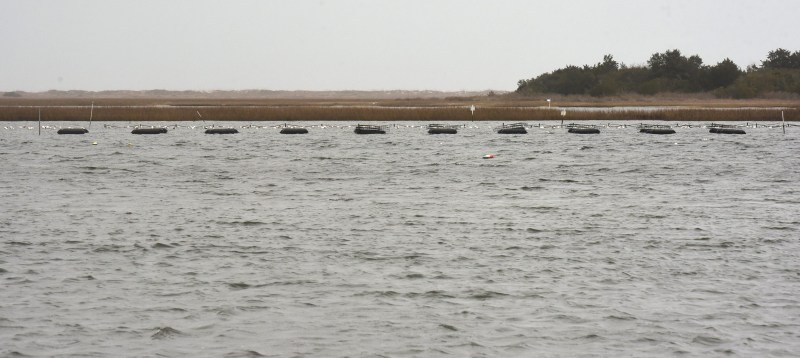
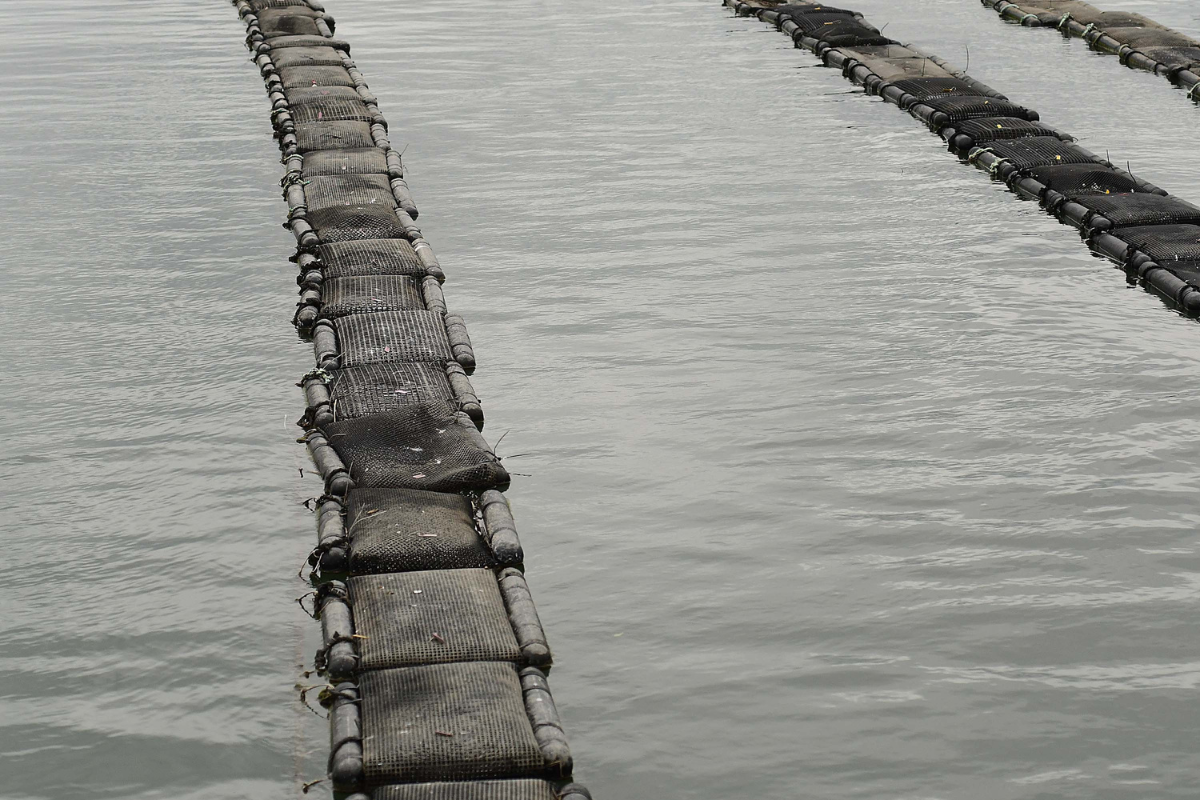
Shellfish growers are increasingly using floating cages instead of gear moored to the water bottom to grow oysters in the water column. Doing so allows the farmers to increase their yields per acre, but leaves the cages and fiberglass poles often visible in the water and marsh areas, turning them into visible eyesores and boating hazards to many.
Unfair pressure on parts of the NC coast
But the biggest driver of the proposed moratorium was the growth of the industry in Pender and Onslow counties, which has been largely driven by bans on new shellfish operations in neighboring counties. That’s increasing the density of shellfish operations in a relatively small part of the N.C. coast, officials argue.
On April 14, 2026, the N.C. Coastal Federation‘s Kerri Allen held a meeting in Surf City with various stakeholders to discuss the issue of the growing density of shellfish leases in Stump and Topsail sounds.
“What I think we heard is everyone is passionate about these waters, everyone loves these waters for various reasons, and a lot of reasonable asks were put forward,” said the federation’s coastal management program director.
Allen said with mariculture becoming an increasingly important part of North Carolina’s coastal economy, accounting for roughly more than 70% of the oysters harvested in the state, no one wants to see unnecessary burdens and brakes put on its continued growth and success. But there are legitimate concerns that need to be acknowledged and addressed, and she said she hopes meetings like the one in mid-April and future get-togethers along with additional research and policy discussions can yield some positive developments.
“We need to realize that there are user concerns out there over how to share reasonable rights to the water,” Allen said. “And that should include ways to alleviate some of the pressure certain parts of our coast are experiencing, whether by adopting temporary moratoriums or opening up areas that are currently closed to new leases.”
Bans on shellfish farms in New Hanover, Brunswick
In southeastern and central coastal North Carolina, Brunswick County has had a moratorium in place since before the Korean War, while temporary bans now cover New Hanover County and Bogue Sound in Carteret County. A lease moratorium also covers Core Sound north of Beaufort.
According to the latest figures from the N.C. Division of Marine Fisheries, there are 525 active shellfish leases in North Carolina covering a little more than 2,500 acres of public trust waters.
They include 85 lease footprints in Onslow County and 52 in Pender County. Most of the leases in Onslow and Pender counties are found in waters behind Topsail Island. In contrast, there are six leases in New Hanover County − including a research operation at the University of North Carolina Wilmington − and just one in Brunswick County.
Pender’s push for a moratorium sank in the N.C. General Assembly, but the frustration that Topsail-area waters have become a sort-of dumping ground for shellfish farms has not subsided.
Now the potential sunsetting of a moratorium in nearby coastal waters could help alleviate some of that pressure on Pender’s waters − if politicians in Raleigh allow the ban to wash away. State Rep. Ted Davis Jr., R-New Hanover, on April 29, 2026, submitted a bill to extend the New Hanover shellfish lease moratorium until July 2031.
‘There are solutions out there’
Chris Matteo is a Pamlico County shellfish farmer and president of the N.C. Shellfish Growers Association. He said there’s an easy way to cool the water temperatures and keep supporting the growing coastal industry.
With Carteret County Community College north of Onslow County and the University of North Carolina Wilmington south of Pender County actively and aggressively promoting and helping grow the state’s shellfish industry, Matteo said it’s ridiculous to have public trust waters around those institutions effectively off limits to new entrants.
Besides creating jobs and income for coastal residents, Matteo said oyster farms also provide important habitat for juvenile fish and other marine critters and help filter massive amounts of water daily to improve local water quality.
Spreading it out over more public water areas would make reduce water-user conflicts and make the industry more sustainable and resistant to outbreaks of disease or pollution in one waterway area that could quickly devastate a large chunk of the state’s shellfish farms.
The federation’s Allen agrees that reasonable compromises are out there to be had.
“There are solutions out there,” she said. “We just need to be willing to work together to get there.”
Reporting by Gareth McGrath, USA TODAY NETWORK / Wilmington StarNews
USA TODAY Network via Reuters Connect