
On a sunny day in March, Naomi Reeves had to leave a trampoline park with her mother to hop on a video call with a reporter.
Naomi wasn’t pleased.
“She’s a little mad because I took her away from jumping,” her mother, Bethany Reeves, said.
Naomi, who turned 10 later that month, loves jumping. She also loves somersaults and gymnastics, and all she wanted at that moment was to get back to it, so instead of talking, she offered to show off the cartwheel she’d been working on. She nailed it, then shouted goodbye and ran back to the trampolines.
“ Naomi is my little feral gremlin,” Bethany said.
Trampoline parks and playgrounds are fixtures of every parent’s lives, but they can be risky places for Naomi. Still, her mother takes her there anyway, because children are meant to run and jump and laugh.
“We didn’t put a whole new heart in Naomi to keep her in a bubble,” Bethany said.
Naomi had a heart transplant when she was four months old, a procedure that even a decade later requires hyper-vigilance and follow-up care that is both non-negotiable and terribly expensive.
When Bethany lost her job and her insurance in 2023, she and Naomi would have lost access to the care keeping her alive, running, and jumping if it weren’t for Medicaid. Naomi was on Medicaid for 18 months while Bethany aggressively looked for another job, but a pause in her care of even a single day could have had devastating consequences.
Naomi has to see a cardiologist every three months and undergo extensive tests, and she has to take immuno-suppressing drugs every 12 hours, every day of her life. If she misses a single dose, her immune system will start to attack her transplanted heart as if it were a dangerous virus. Left unchecked, that would lead to organ failure. The medication alone costs between $10,000 and $20,000 a year.
Naomi is no longer on Medicaid, but her medical needs highlight the fallacies in many of the attacks that President Donald Trump and Republicans in the North Carolina General Assembly have launched against Medicaid, including their tendency to equate the raw cost of the program with waste and abuse, a dangerous oversimplification for families whose needs are both genuine and extremely expensive.
Legislation passed by Congress last year at Trump’s insistence cited waste as the reason for cutting $1 trillion in Medicaid spending over the next decade.
But Medicaid covers the healthcare costs of nearly half the children with severe health needs in North Carolina, according to a 2025 Kaiser Family Foundation analysis, and that care is expensive. Federal cuts to the program, KFF found, make it more likely that states will have to limit spending, even on crucial care.
“Proposals to limit federal spending on Medicaid could potentially result in reductions in eligibility or coverage or make it more difficult for children with special health care needs to access the care they need,” KFF wrote.
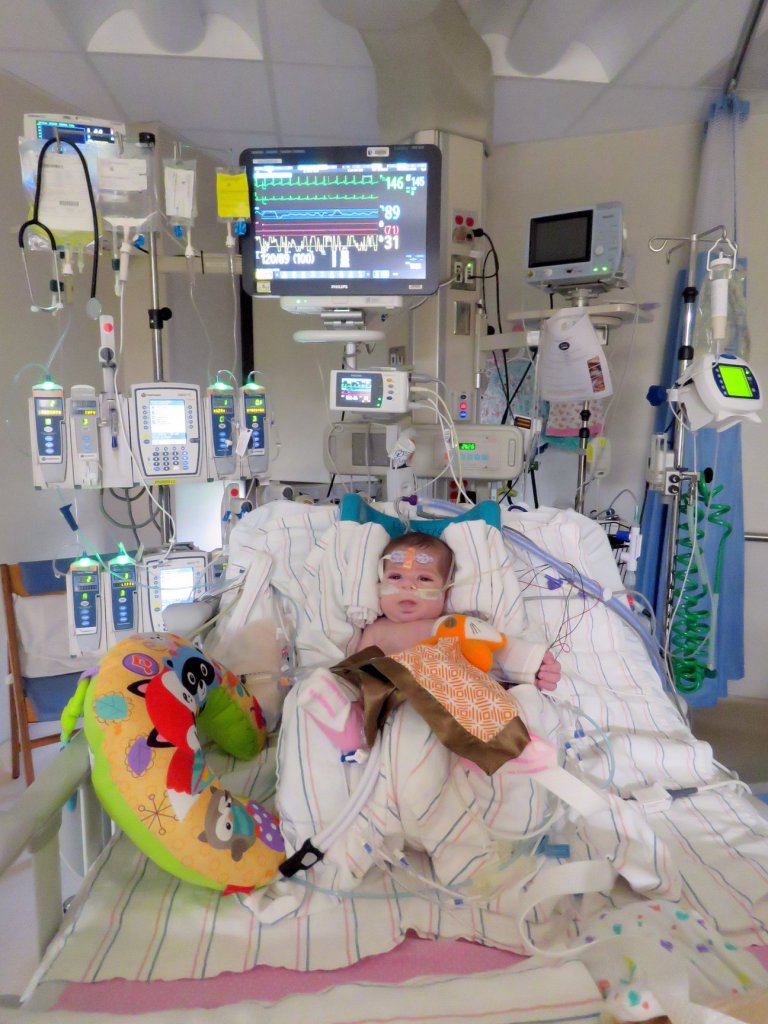
Children on Medicaid with needs like Naomi’s are unlikely to lose Medicaid entirely, but even small cuts to service could be dangerous when each part of the care is crucial and more expensive than parents could afford on their own.
There is no part of Naomi’s care that is a luxury or optional, Bethany said.
“That’s just a fact. There is no, ‘Well, let’s go without for this month and we can pay for it next month,” she said.
More than 237,000 children on Medicaid in North Carolina are in similar situations. And some of those families are in the state’s Medicaid CAP/C program, which serves as a supplement to caregivers who have primary insurance, but whose policies don’t cover all of their children’s complex needs. The program helps children get care at home with their parents and siblings, rather than being confined to a facility.
‘You need what you need’
Finley Thomas, 11, is in the midst of a major pre-teen right of passage: a passion for make-up and cheerleading.
She participates with a cheer group every Wednesday night, and though she relishes an audience, she still sometimes gets nervous during competitions. She also loves hot sauce, marshmellows, and helping her parents cook.
Finley insists, however, that her mother does not help her with her make-up. Finley’s independence is growing, but it has been a rigorous road.
In the first few months of her life, Finley’s heart stopped several times, her parents Dennis and Jennifer Thomas said in a recent interview in their home.
“She would just stop breathing, at any given moment. She’d be fine for a week then all of a sudden have like five episodes in one day where she would code and all the teams came running,” Dennis said.
She spent five and a half months in the neonatal intensive care unit and doctors “did a gazillion tests” to determine what was going on. She has a neuromuscular disorder that affects her legs, and reflux so bad it can shut down her windpipe. Her lungs fill easily with mucus and she can have difficulty breathing.
Eleven years later, doctors still have not given a single diagnosis that accounts for all Finley’s health challenges.
“They just never could figure out what was going on,” Dennis said.
Finley needs 24/7 supervision, and has a day nurse and two overnight nurses. She uses a tracheotomy tube to help her breathe, and a gastrostomy tube to help her digest her food. She also undergoes weekly physical therapy and occupational therapy and uses a wheelchair for her cheerleading practice and all other activities.
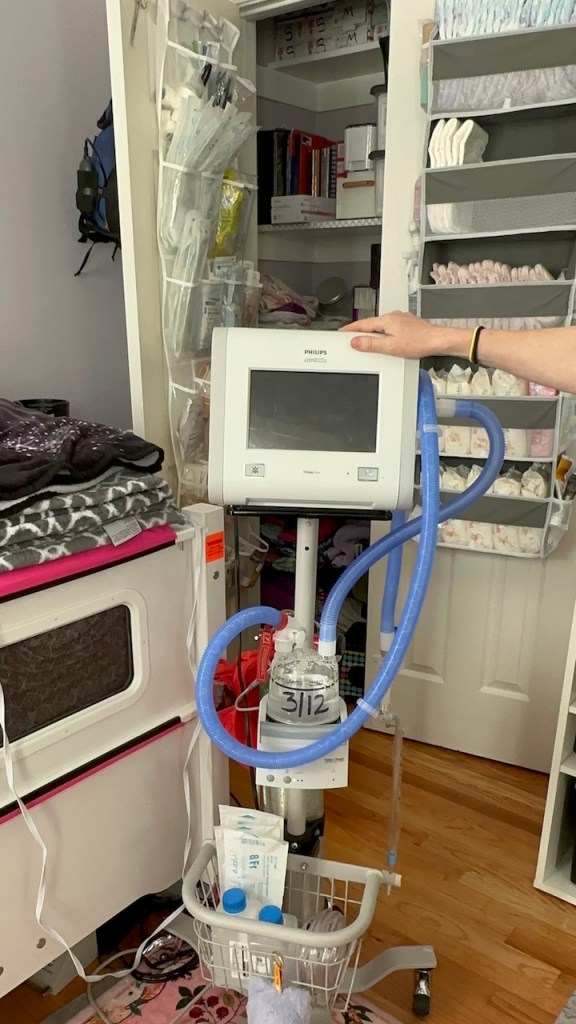
Her bedroom is full of equipment and several closets in the house are full of supplies.
There are feeding bags, water flushes, syringes, G-tubes, vent circuits, inline suction canisters, and humidification chambers and the sterile water they need to use.
“It’s truly an intensive care unit in our house,” Dennis said.
Dennis and Jennifer run a research consulting firm and have top notch insurance, they said, but it doesn’t pay for any of the items in the list above.
Medicaid, they said, covers about 95% of Finley’s care.
“The ventilator, the feeding pump, we have to have these things for our show to go on. They aren’t options,” Sandra Little, Finley’s day time nurse of nearly four years, said.
“You need what you need,” she said.
Dennis and Jennifer are not worried that Medicaid will suddenly go away, but they are worried about what they will lose if the state has to make cuts.
For the last eight months, the state faced a $319 million shortfall in the Medicaid program that Republicans in the North Carolina General Assembly only agreed to fill last month. But in the weeks before the vote, and as they patted themselves on the back afterward, they also vowed to curb Medicaid spending in the future, once again suggesting high costs were the same as wasteful spending.
“We must ask: How many millions are being lost to waste, fraud, or abuse before a single case is opened?” NC Rep. Grant Campbell (R-Cabarrus) asked state health officials in April at a hearing of the House Select Committee on Oversight and Reform.
Over the summer, fall, winter, and spring, Republicans accused Gov. Josh Stein and state health officials of exaggerating the need for more funding, citing their concerns over waste and abuse. And though they ultimately voted to fill the full shortfall, ahead of the vote, Republicans vowed to scrutinize spending levels with suspicion.
“ I hope that you appreciate the amount of new money we’re putting into Medicaid for this year and the work that we need to do for next year to begin to understand more about what’s driving that cost increase,” NC Rep. Donny Lambeth, (R, Forsyth County) said on the House floor ahead of a preliminary vote on the shortfall bill.
In future votes, he said, the legislature needs “to look at ways to curb the increase in cost of Medicaid.”
Going after the most expensive care first—like Finley’s care—does not seem outside the realm of possibility, her parents said.
“I get it’s expensive, but that’s kind of the canary here in my mind, that something that is really necessary for her is being considered for cutting,” Dennis said. “She’s a pretty extreme case. And so we’re worried, if something gets cut, what are they gonna cut? Is it gonna be cases like hers? If you did tally up the numbers, I can see where people are gonna say, wow, that’s a lot for one child to keep her alive, but if we have to cover all that, we just can’t.”
Dennis and Jennifer have been trying to make their equipment and supplies last longer, just in case any funding goes away.
“You have to change her trach every week and the max it can be reused is three times,” Dennis said.
But even that can be dangerous.
“The more you reuse them, the more likely it is for her to get an infection,” Jennifer said.
‘It’s not like they just trust you.’
The parents of children with severe needs are never off the clock.
They go sleepless when their children are sick. They stand watch over them in the darkest nights. They drive them across the state to see specialists multiple times a year, they wash and rewash each of the seemingly endless components of the devices keeping their kids alive, and they devote hours and hours to paperwork proving to the state that they aren’t making it all up.
“We have to be an advocate for Finley, ”Jennifer said. “I would call myself her walking encyclopedia.”
So they know the state and federal Medicaid requirements are already very strict, and they have a hard time imagining significant numbers of other recipients are somehow getting away with waste and abuse in the same system.
Finley has a Medicaid caseworker who checks in once or twice a month. There are separate video calls, so that she can see Finley to corroborate her needs. Every three months there is an in-person visit, and once a year, a two to three-hour visit, her parents said.
“It’s very structured,” Dennis said. “It’s not like they just trust you.”
They often have to fight for every single piece of Finley’s care.
“No one wants to be in this situation where you’re having to jump through all these hoops to get the medical supplies you need for your child,” Jennifer said.
“I would be interested to find out where they think this waste is coming from,” she said. “I believe that a good majority [of Medicaid recipients] just want to take care of their kids.”
‘She has to fight just to be here’
The long-term survival rate of pediatric heart transplants has greatly improved over the last decade, as technology and post-operative care has improved. But with things like transplants, it is never certain.
The median survival age of infants who receive heart transplants is 22 years old. Studies show that more than 40% of transplant recipients die less than 15 years after their transplant.
There are threats around every corner, but contagious diseases are especially dangerous for Naomi. The drugs that keep her immune system from attacking her heart also disarm it against viruses, meaning the common cold can be dangerous. She can get some vaccines, but is not able to get the measles vaccine.
When the measles outbreak soared in South Carolina late last year, Bethany kept Naomi inside or masked.
The threat of Medicaid cuts are not the only state and federal policies endangering Naomi and Finley. Vaccine hesitancy is climbing in the United States, in large part because of the vaccine disinformation now coming from federal health officials under the leadership of US Health and Human Service Secretary Robert F. Kenney Jr.
“It makes me angry, because we shouldn’t be here, we have a vaccine that works,” Bethany said.
Because Naomi can’t get the measles vaccine, she depends on others to get it.
“Naomi fights so much. She already fights her own immune system. She has to fight just to be here. Why is she having to fight measles?” Bethany said.
Finley is fully vaccinated, but respiratory diseases are just as dangerous for her. A cold can easily lead to pneumonia.
“If she gets any illness, it’s 10 times worse for her now than other people,” Dennis said.
“People who choose not to vaccinate because they think the measles might not be that bad, they’ve never seen their child truly sick,” Jennifer added.
Like all parents, Bethany and the Thomases just want to see their children thrive.
“These folks wanna be pro-life and say every life matters, but what about Naomi’s?” Bethany said.
At that, Naomi came sprinting back from the trampolines with an urgent statement and request for her mother.
“I love you, too,” Bethany answered her daughter, “but no you can’t have my credit card.”