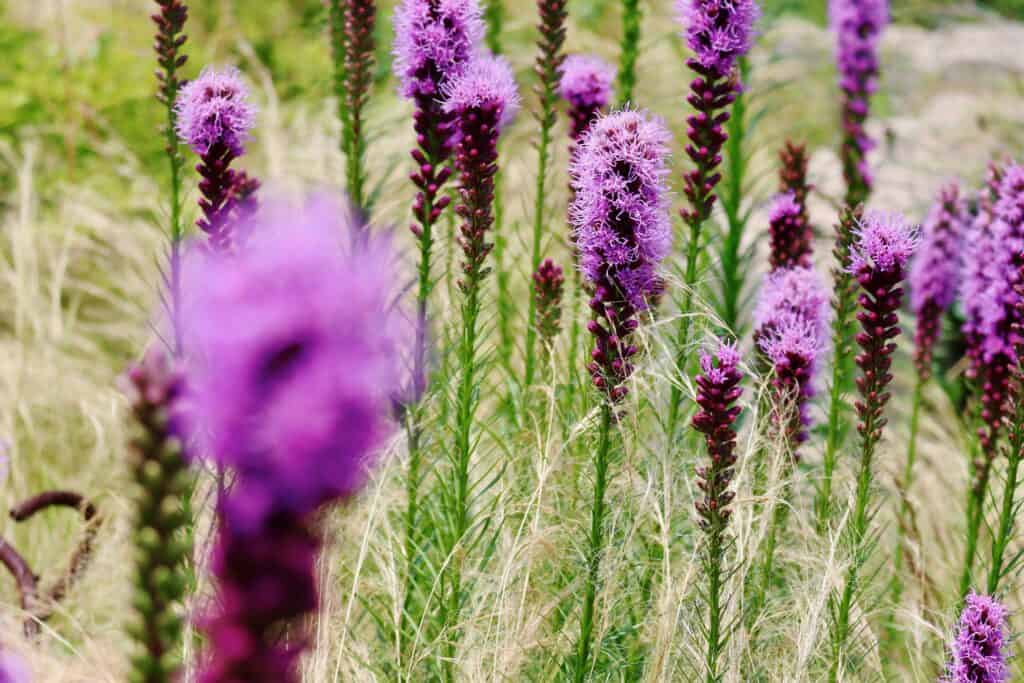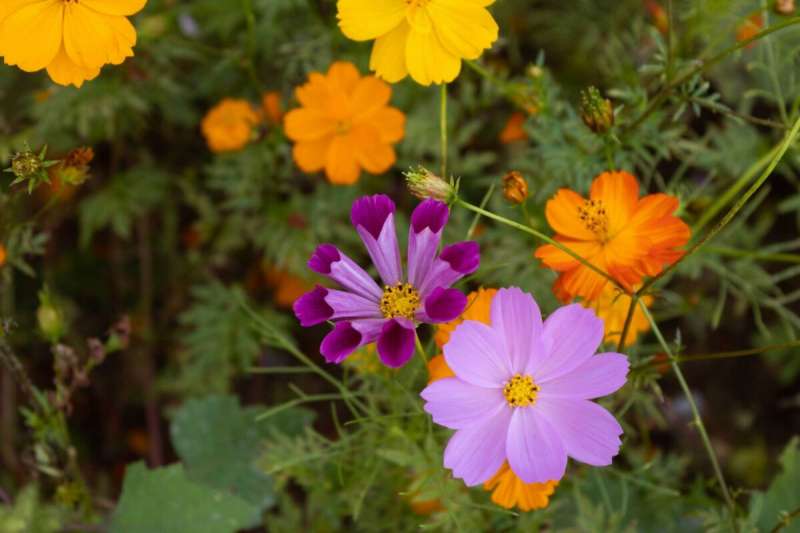
Enjoy a colorful spring with our all-encompassing guide on wildflowers in North Carolina.
On Groundhog Day, Punxsutawney Phil predicted six weeks of winter. North Carolina saw below-average temperatures this past February, but the good news is that we’re finally at the end of the six-week stretch, and spring is in the air. Arguably one of the best parts of spring in the South is taking the time to stop and smell the flowers, including our very official state flower—the Flowering Dogwood.
The Flowering Dogwood is one of the early spring bloomers. Some daffodils even start blooming as early as late January, according to Fox 8, and die by late spring. So while they say “April showers bring May flowers,” it’s never too early to start making plans to catch sight of all the native wildflowers in North Carolina.
Read on for all of the details you need to know on this upcoming wildflower season in N.C., and get ready for a visual treat.
What to expect out of the 2026 wildflower season in N.C.
According to the National Oceanic and Atmospheric Administration, there is a 60–70% probability of above-normal temperatures for the rest of March—a notable swing after what was the coldest winter for most of North Carolina since 2010–2011. A study conducted in 2013 examined the “record-breaking early flowering” seen across the Eastern seaboard and found that unusually warm springs caused flowers to bloom earlier. But it’s uncertain whether the late-March warmup could get warm enough to offset the cold start and shift blooming timelines for wildflowers in North Carolina, especially as the outlook for April and May trends only slightly toward above-normal.
N.C. is also home to a wide variety of wildflowers with some blooming now to others being late bloomers as fall/winter flowers. Arguably the best part of the state to go to see wildflowers is the mountain region, with hundreds of flower species. Per Pilot Cove Forest Lodging, the wildflower season in the Blue Ridge Mountain area goes from early spring to late fall, peaking between April to June.
The lodging company recommended several tips to help you plan your wildflower trip itinerary, including not straying from the marked trails or littering, bringing binoculars to get a closer view of the flora, wearing secure hiking shoes for the rockier trails, and bringing a jacket in case the weather changes.
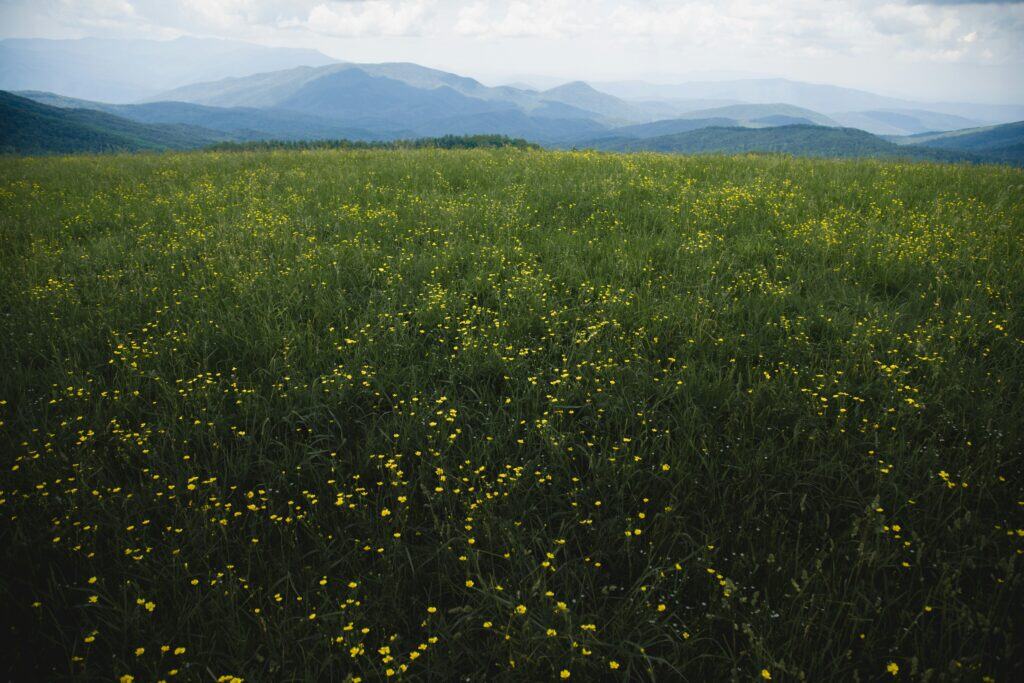
Places you can go to see native wildflowers in North Carolina
Easily one of the best places you can add to your wildflower-related travel bucket list is the N.C. Arboretum in Asheville. Located within the Pisgah National Forest, it contains a 434-acre garden and several trails that allow you to soak in breathtaking views of the Blue Ridge Mountains. The arboretum boasts dozens of wildflower species and the National Native Azalea Collection—the latter of which blooms during late spring to early summer.
Some of the hiking trails are also sprinkled with colorful flowers, including the beginner-level Azalea Collection Trail, moderate-level Natural Garden Trail, and the advanced Wesley Branch Trail.
In another part of Pisgah is a “5-mile loop hike” called Pink Beds. Pink Beds has a rare ecosystem—”a high elevation mountain bog,” where the environment has water. Because of the environment, this trail features rare wildflowers.
The Great Smoky Mountain National Park, which spans the Tennessee and North Carolina border area, has an entrance in Cherokee, N.C., and is colloquially known as “Wildflower Park” for its wide variety of various wildflower species. The Deep Creek Loop Trail in the park offers a perfect mix of scenery from waterfalls to wildflowers. The trail itself has trillium, Jack-in-the-pulpit, foamflower, crested dwarf iris, Solomon’s seal, galax, beardtongue, cinquefoil, bloodroot, etc. It takes you uphill and you start to see Mountain Laurel, Rhododendron, and Flame Azalea as you increase in elevation.
Pilot Cove Forest Lodging also recommends the moderate 3.2-mile Graveyard Fields Loop Trail, the difficult 30-mile Art Loeb Trail, and the advanced 6.4-mile out-and-back Looking Glass Rock Trail. The Graveyard Fields Loop Trail has two waterfalls and popular wildflowers such as asters, goldenrods, and coneflowers. The Art Loeb Trail goes through mountains and valleys full of wildflowers in Pisgah such as trilliums, rhododendrons in valleys, and mountain laurels at peaks. The Looking Glass Rock Trail has trilliums, violets, coneflowers, black-eyed susans, bee balms, and even the rare pinkshell azalea that is native to the region.
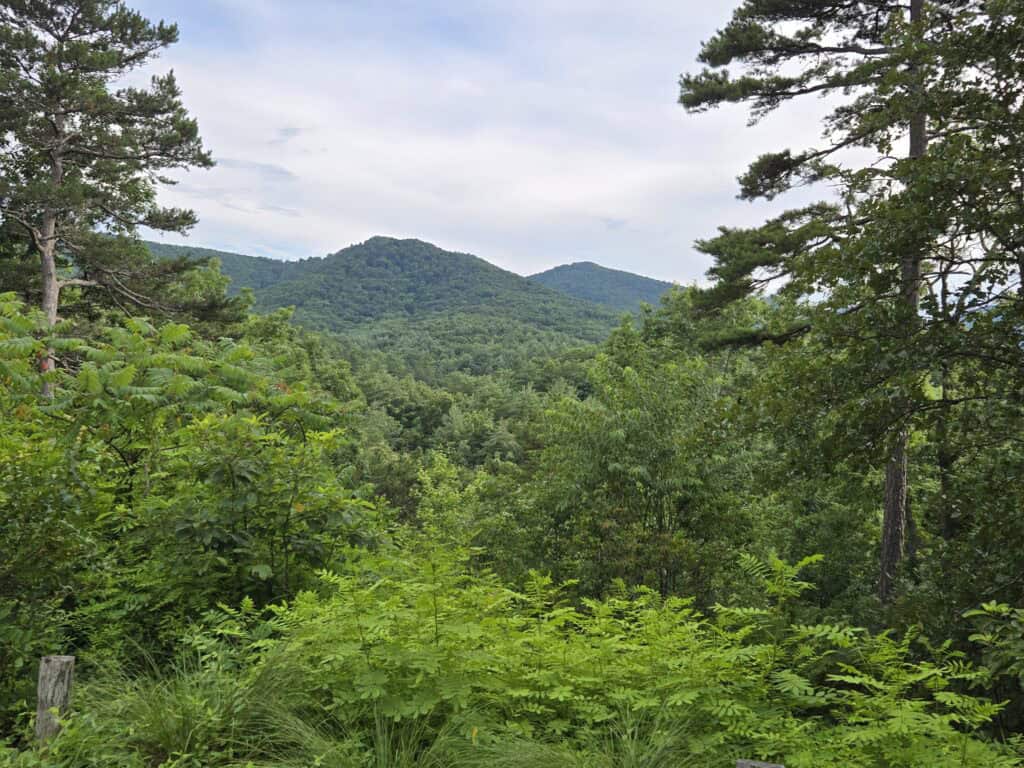
If hiking scares you, Visit NC has some recommendations so you can still see wildflowers in North Carolina. For those who don’t hike, the Fields at Sunflower Trail in the Piedmont Triad town of Mocksville has 30 different types of sunflowers and is open to the public in “mid-June and late September.” On the other hand, if you want to hike but don’t feel comfortable going solo, you can join one of the Friday short walks by Bigelow’s Botanical Excursions that go from now until November. Plant expert Adam Bigelow takes you through a guided tour around the Cullowhee area where you learn all about the 50+ species of regional flowers.
In the Piedmont-Coastal Plains town of Lillington, Raven Rock State Park has pink mountain laurel as well as ground cover flowers such as bloodroot, yellow bellwort, and trailing arbutus. You’ll know if you’re passing by the trailing arbutus if you start to get a whiff of a Jasmine fragrance.
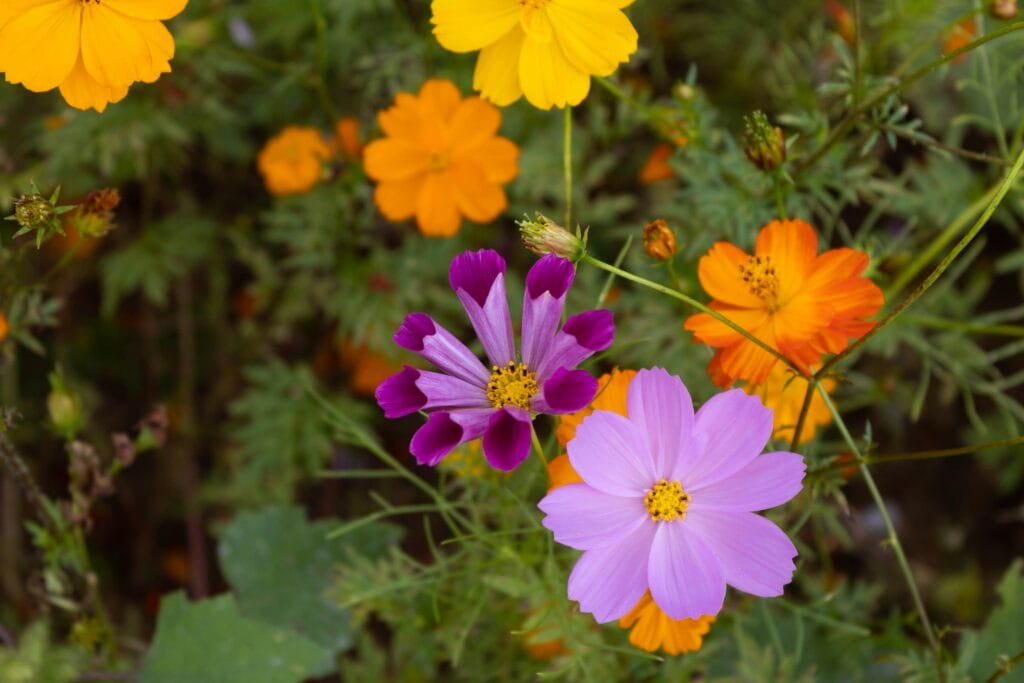
Be an early riser and get a peek at some early bloomers
Several flowers have started to bloom and if you want to get ahead of the pack, there’s no better time than the present to get out there.
According to Visit NC, this is the perfect time to spot some wildflowers while getting in early spring hikes in the mountain areas. Starting now and going until May, the Catawba Falls Trail in Old Fort boasts the “deep purple dwarf crested iris, pink wild geraniums, trillium, lacy foamflower, and delicate chickweed.”
In Hiddenite, you can take a look at the unique trout lilies, a yellow flower with its signature mottled leaves. From now through April, you can hike the six miles of trails at the Rocky Face Mountain Recreational Area to see these early spring bloomers.
The N.C. Arboretum says Bloodroot, Trailing Arbutus, Oconee Bells, and Redbud should start blooming in early spring. In all regions of N.C., you should be able to spot the Highbush Blueberry blossoms, Eastern Columbine, Green-and-Gold, and Tickseeds. People in the Piedmont and coastal areas should also be able to see the Carolina Jessamine.
These mid-to-late spring flowers are anything but “mid”
At the N.C. Arboretum, you can see Carolina Allspice, Downy Rattlesnack Plantain, Dwarf Crested Iris, Galax, Jack-in-the-Pulpit, May Apple, Pink Lady Slipper, Squirrel Corn, Trillium, and Soloman’s seal.
Throughout the Pisgah National Forest, you will see plenty of yellow trout lilies and white hepaticas blooming along with colorful bloodroots and trilliums. Other flowers you can see while walking across parts of the forest include azaleas, mountain laurels, and rhododendrons.
Located close to Raeford in the Piedmont, the Calloway Forest Preserve is known for their longleaf pines, but it also becomes a treat for anyone into forest bathing during April and May. In the forest, you’ll see the blue spires of wild lupine, pastel goat’s rues and the yellow buds of wild indigo.
For those who live in the Piedmont and coastal areas of the state, some flower blooms you’ll be able to see include the Foam Flower, American Beautyberry, Purple Coneflower, and Butterflyweed.
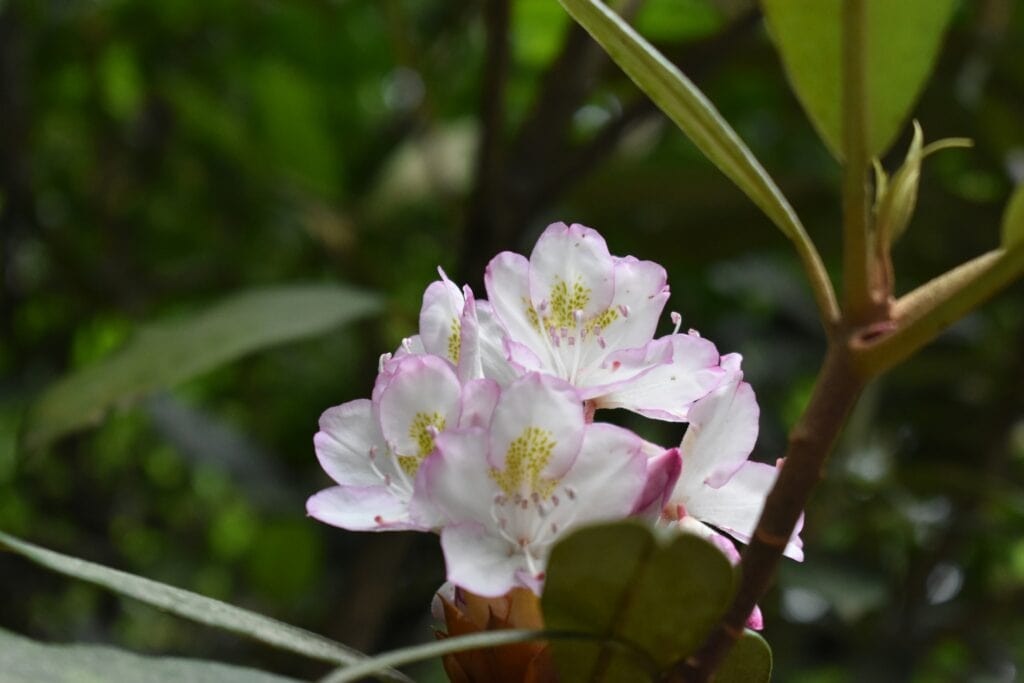
Vibrant flowers bloom in the summer
Summer brings an explosion of hues throughout the Pisgah National Forest with lilac-tinted wild bergamot and purple coneflowers. The flowers also draw in pollinators such as butterflies and hummingbirds that make you feel like you’re one with nature.
At the N.C. Arboretum, you can also see the Flame Azalea, Indian Pipes, Showy Orchid, Black Cohosh, Black-Eyed Susan, Oxeye Daisy, Common Milkweed, Fire Pink, Oswego Tea, Spotted Wintergreen, Rosebay Rhododendron, Ironweed, and Jewelweed. Summer-blooming wildflowers that are located in the mountains, Piedmont, and coastal areas include Garden Phlox, Joe-Pye Weed, Goldenrod, and the Black-Eyed Susan.
Visit North Carolina recommends several sites for wildflower enthusiasts during the summer. Hendersonville-based Jeter Mountain Farm allows you to create a custom bouquet of “technicold zinnias and 10 varieties of sunflowers.” After assembling your bouquet, the farm offers alcoholic cider and lattes that you can sip on.
If you’re like Audrey Hepburn and you “believe in pink,” then this next recommendation is definitely going into your bucket list. Bright magenta-hued Catawba rhododendron flowers blanket Roan Mountain in June, making the view during a hike through Pisgah especially scenic. If you head to the area during the weekend of June 19–20, make sure to stop by Bakersville and check out the craft fair at the North Carolina Rhododendron Festival.
People in the Piedmont region can head to Bunn-based Vollmer Farm to pick out various wildflowers out such as zinnias, sunflowers, and celosias.
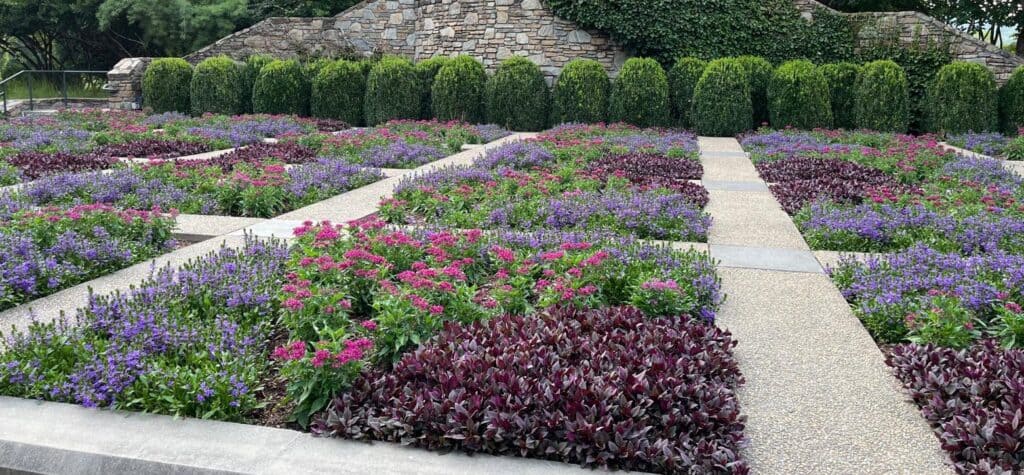
Sweater weather brings crisp air and perennial flowers during fall
The fall and winter flower variety prove that it’s better later than never to go see wildflowers. According to the N.C. Arboretum, there are two other fall-exclusive species that you can view at its site—the Blazing Star and White Snakeroot.
You can also see certain flowers that bloom from late summer and continue until the fall including the Cardinal Flower, Goldenrod, Joe Pye-Wood, Mountain Mint, New England & New York Aster, Rabbit Tobacco, Sunflower, Turtlehead, Yarrow, and Zigzag Spiderwort. The lavender-colored Fleabane flower is especially a stand-out at the N.C. Arboretum as it stays in season from early spring until fall. The bold flower hues especially stand out against the backdrop of the striking fall foliage in the Pisgah National Forest.
It’s also the perfect time to catch the vibrant, violet-hued Big-Headed Aster, the official 2026 wildflower of the year in N.C. The flower is the literal piece de resistance of the wildflower season as it starts to bloom in September and continues until November.
So you can save the best flower sighting for last by going to the N.C. Botanical Garden in Chapel Hill. Now all you have to do is to start making wildflower sightseeing plans and make sure to take plenty of pictures for the Gram.