Coronavirus vaccines are coming, but Cooper and NC faith leaders make case for virtual worship services as holidays approach.
With more than 90% of North Carolina counties at critical or substantial levels of COVID-19 community spread, the news that more doses of the coronavirus vaccine are headed to the state couldn’t come at a better time.
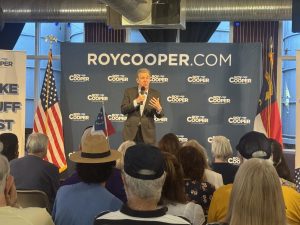
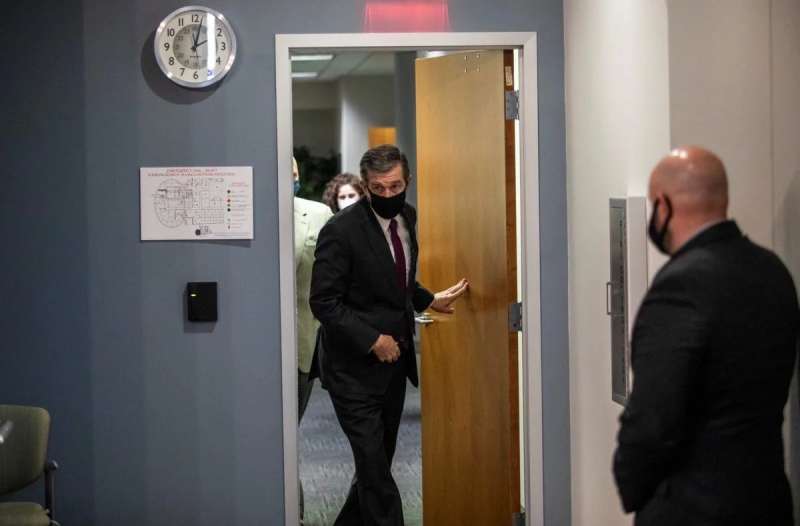
Gov. Roy Cooper said Tuesday that he expects around 60,000 doses of the Pfizer vaccine and 176,000 doses of the Moderna vaccine to reach North Carolina next week. Those Moderna vaccines will go to 59 hospitals and 97 local health departments across the state.
“Our state is now mostly red,” said Dr. Mandy Cohen, NC Secretary of the Department of Health and Human Services, referring to the state’s county alert system for “red” critical levels of infection. “I remain very worried, but at the same time I’m full of hope that we have vaccines that are more than 95% effective.”
We put the facts first. Subscribe to the Cardinal & Pine newsletter.
Last week, 53 hospitals received the first distribution of Pfizer vaccines allocated to North Carolina. The first recipients of the vaccine were health care workers at high risk of COVID exposure.
“As of early this morning, more than 24,000 health care workers caring for COVID patients have received their first dose of the vaccine,” said Cohen.
According to the state’s prioritization protocol for the vaccine, the next recipients of the vaccine would be high-risk health care workers, long-term care staff and residents, and high-risk members of the general population.
But this week, the Centers for Disease Control released updated guidelines for vaccine prioritization that include administering to all individuals over age 75, as well as essential workers such as grocery store employees and teachers.
“The federal government advisory committee made some additional recommendations to further define how we do prioritization going forward—we are looking at that guidance right now, and we will have changes to our prioritization going forward,” said Cohen. “We will be looking at folks who are at highest risk of dying from this disease as well as how we stop the spread of this virus in North Carolina.”
Read More: How a Tiny Home ‘Hotel’ in Rocky Mount Cured Me of Pandemic Cabin Fever
Cohen noted that long-term care facilities will begin receiving vaccines on Dec. 28, though the federal government is overseeing that distribution through a partnership with CVS and Walgreens drug stores. The vaccines will come from the state’s total allotment.
Though the promise of more vaccines is good news, Cooper and Cohen cautioned that with infection numbers increasing as rapidly as they have been recently—the state logged more than 5,200 new cases on Dec. 22—North Carolinians should be especially vigilant in the coming weeks to prevent further spread.
A Plea for Prudence
And with Christmas and New Year’s Eve coming up, Cooper appealed to North Carolinians to limit their holiday celebrations. He invited two faith leaders—Rev. Joseph Casteel of First United Methodist Church in Roanoke Rapids and Rev. James White of Christ Our King Community Church in Raleigh—to encourage churchgoers to attend services virtually rather than gathering in person.
“Since March, my congregation has only offered virtual worship,” said Casteel. “On Christmas Eve, we will be worshipping virtually for the first time in our church’s history. Our service is going to go out at five but you can watch it later than that, or you can fast-forward if you want.
It’s a win-win for all of us.”
Cooper said he plans to celebrate Christmas at home with his immediate family, and he encouraged other North Carolinians to do the same or gather virtually to prevent a post-holiday surge in COVID cases.
“North Carolina needs to drive down our numbers, and to do that, we need to change our holiday plans if we haven’t already,” he said. “The best plan is to gather virtually.”