When ecologist Owen Carson was asked to survey a potential conservation property on the edge of Chimney Rock State Park, he was excited.
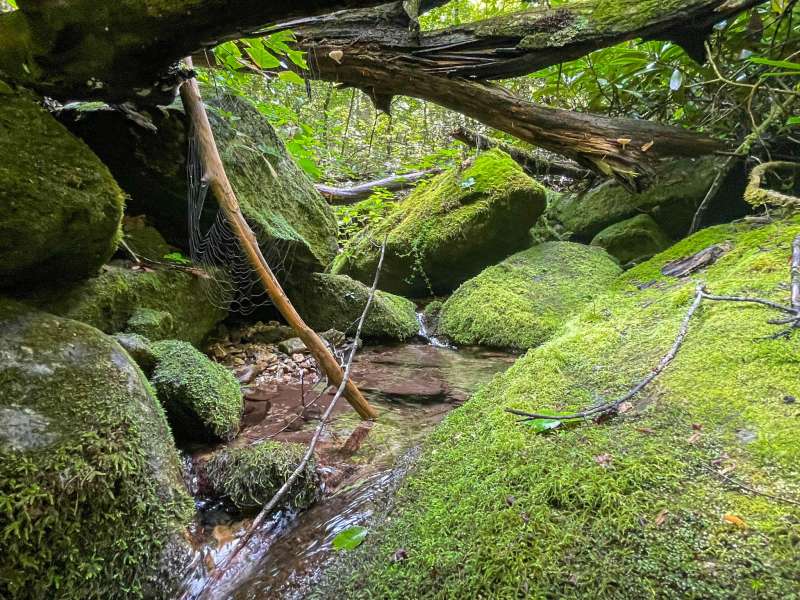
“I knew I would be walking into something pretty special,” he says. There were rare plants he hoped to find, like one species of “cryptic, ancient fern.” There were rocks with the right kinds of crevices for salamanders. There was diversity of terrain—boulders, ravines, cliffs, seeps, and streams—that might support a wide variety of natural communities.
Read More: Two years after Helene, a county-by-county breakdown of recovery in western NC
“It’s situated in an incredibly biodiverse part of the world,” says Carson, who works for Equinox Environmental. You could find all kinds of life in a place like that.
He wasn’t wrong. “When I first arrived at the property, my assumptions were almost immediately validated,” he says. “The site is incredibly diverse from an ecological perspective.”
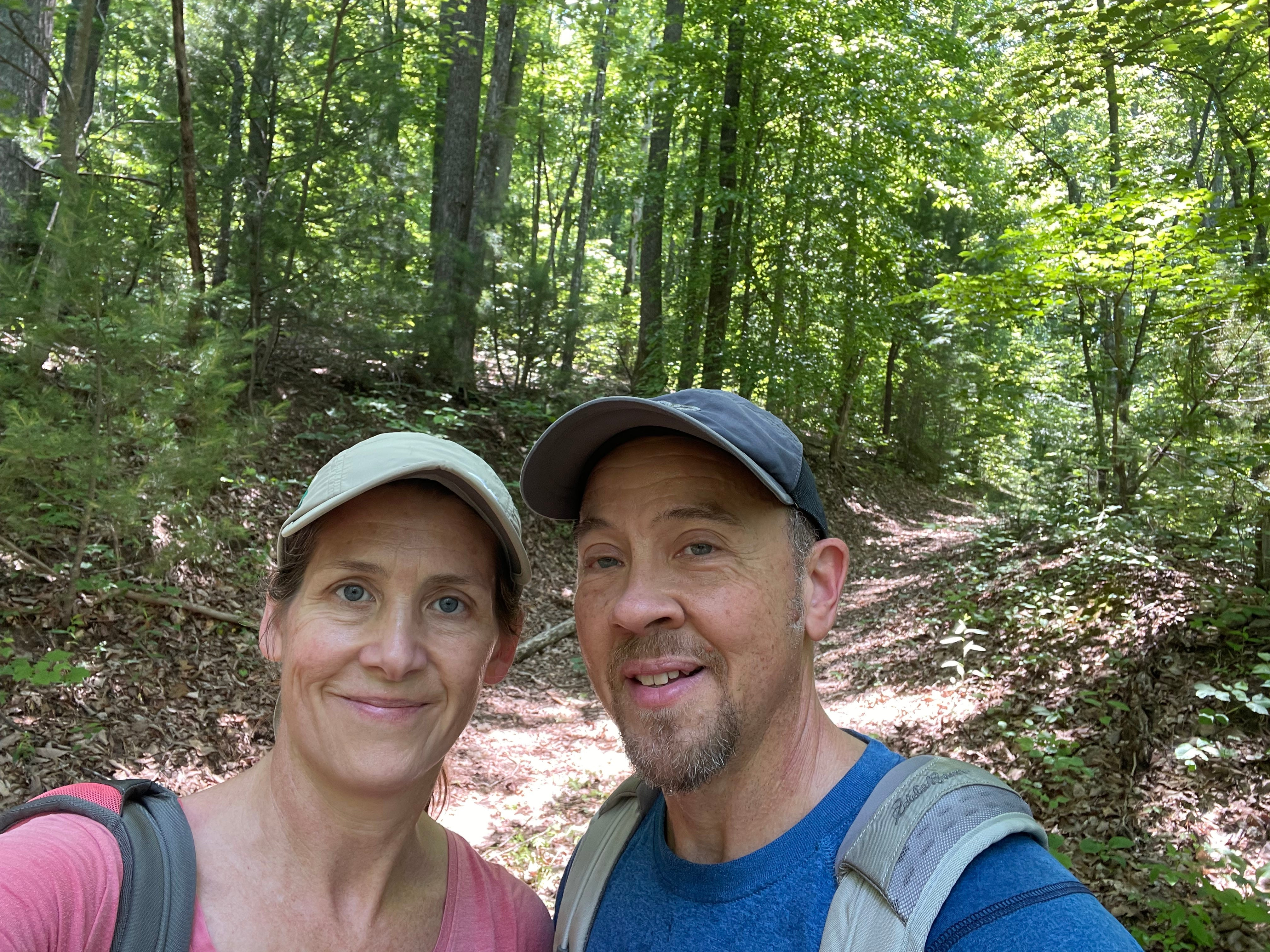
This special property bordering the state park could have been developed and this extraordinary habitat, full of unique plants and animals, could have been lost. Instead, Christina Sprecher and Bennett Weston bought the land to protect it. This August, they conveyed a conservation easement to Conserving Carolina, forever protecting 121 acres.
Tom Fanslow, Land Protection Director with Conserving Carolina, says, “We’re so grateful that these landowners saw the risk to this land and stepped up to conserve it. This was an incredible opportunity to protect land right next to the state park, with such important wildlife habitat, and almost three miles of headwater streams.”
Giving Back to the Earth
Sprecher first noticed this property in Henderson County when she was working as an attorney for Upstate Forever. It was part of her job to monitor real estate listings. She wasn’t looking to buy land. But this one caught her attention. It had outstanding conservation value—but she knew that’s not how most buyers would think about it. Right next to the state park, it would be a prized location for home sites.
When it was still for sale a few months later, she wondered: Could they buy it?
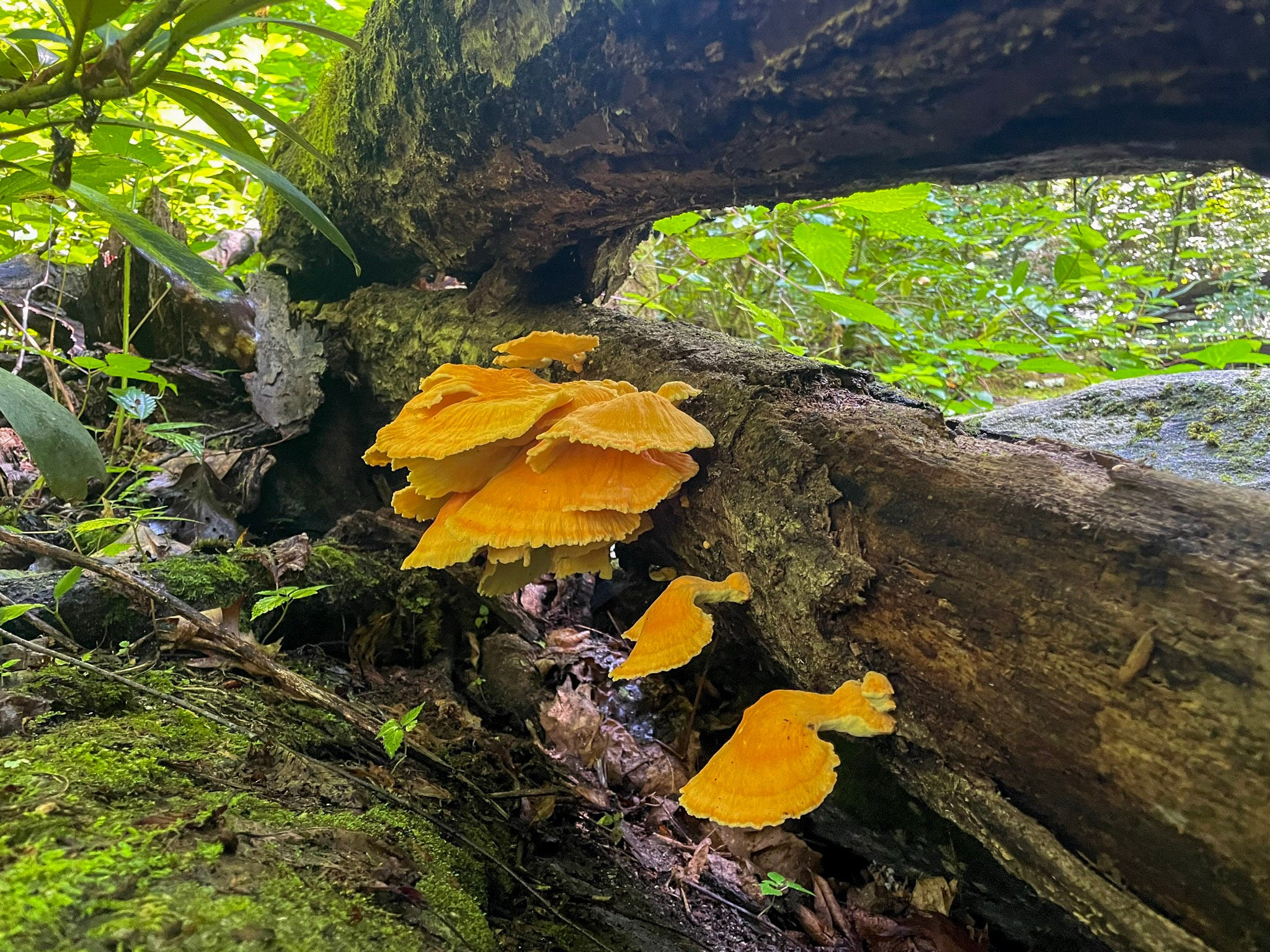
She and her husband went out to see it, and it was so lush and beautiful. She says, “It’s a steep hike but it’s worth it. There’s just so much life and so much variety in the natural plants and native species. To me, it was rather magical. There’s moss everywhere, there’s rocks, there’s streams trickling.”
This extraordinary place moved them to take action.
They bought the land in 2021 and went on to protect it with a conservation easement, donating part of the value. Additional funding for the easement came from the NC Land and Water Fund and the Stanback family.
“Our purpose in buying the property was to protect it,” Sprecher says. “We wanted to give something back because we feel like, as humans, we tend to forget that everything we have comes from the earth. To have a chance to protect something feels like giving a little bit back.”

Adding to a Vast Wilderness
With the conservation easement, the property remains private land, but its forests, creeks, and wildlife habitat are protected forever. Flowing down its steep slopes are pristine streams that provide clean, cold water for trout. Carson observes that here in the mountains you can even find the seeps where water first emerges from the ground—“the true headwaters.” In those verdant seepages live unique communities of plants and animals.
This private conservation land also enhances public land in Chimney Rock State Park by expanding the wild, protected natural area.
Conserving Carolina’s executive director, Kieran Roe, notes that the land trust has already helped to protect thousands of acres in this area. Earlier projects include the stunning 1,568-acre World’s Edge tract that became part of the park; 1,525 acres at Buffalo Creek Park; 1,144 acres at Joel Ridge Nature Preserve; 484 acres at Transfiguration Preserve; and 437 acres at Youngs Mountain.
Roe says, “When you look at all of these parks and preserves as well as numerous smaller protected properties—and you see how we’re linking these conservation lands together—you can see that these efforts are adding up for this landscape in a dramatic way.”
Change and Resilience
Carson, who also serves on the board of Conserving Carolina, says that wild plants and animals need unbroken stretches of habitat like this to help them adapt to climate change and survive the extreme weather that comes with it.
The first time he went out to the Sprecher/Weston property was in 2023. When he came back after Hurricane Helene, things had changed. There had been landslides, trees were down, and large amounts of rocks had washed down the streams. But, in spite of these impacts, he found the special habitats on the site still largely intact.
Carson says that scientists are studying how changes like these are impacting wild plants and animals. Think about salamanders, for example. When trees come down and the rocks where they live are exposed to more sun, becoming hotter and drier, will those environments still be suitable for salamanders?
One survival strategy is to move. Plants shift their range; animals migrate. Having connected areas of habitat gives them better chances to adapt.
“This project exemplifies how conservation land can lead to resilience for plant and animal species,” Carson says. “In the surrounding landscape, there are places that have been developed that will never be habitat for anything again. So creating refugia for plants and animals by protecting land definitely serves the region in terms of resilience.”
Reporting by Rose Jenkins Lane, Conserving Carolina / Hendersonville Times-News
USA TODAY Network via Reuters Connect