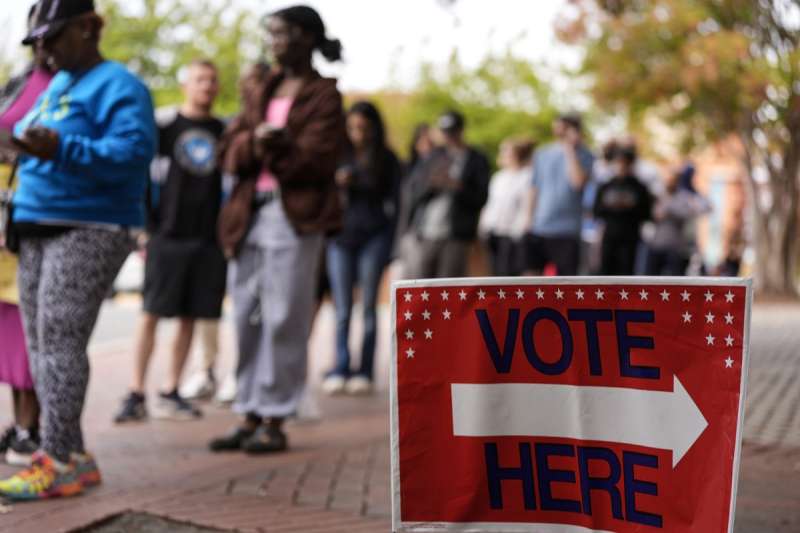
This year, North Carolina voters will have three ballot measures to vote on in the midterm elections. The General Assembly voted to put these measures before voters this fall, and if approved, they could have an impact on your right to vote and on your finances.
The backdrop
The amendments move existing ideas forward rather than radically shifting direction, raising questions about why they are necessary—and why now.
The truth might have far more to do with politics than policy.
President Donald Trump has won North Carolina each time he’s run for president, but his approval rating in the state is falling, and though he is not on the ballot this year, his unpopularity could increase voter turnout among his detractors and tamp it down among his supporters.
The amendments could be Republican lawmakers’ way of hedging their bets.
The measures target issues that have long been the darlings of conservative voters, namely lower taxes and unsubstantiated suggestions of widespread voter fraud. The calculus here is that if conservative voters see their pet causes on the ballot, they may be less likely to stay home.
David McLennan, director of Meredith College’s esteemed political poll, told NC Newsline this summer that the General Assembly’s rush to add amendments mirrored the lead-up to the 2018 midterm elections, another time when Trump’s unpopularity threatened to drag down other Republicans across the ballot.
The Republican-controlled legislature that year put six amendments before voters that tilted toward conservative wish lists.
“The cynic in me says this is just an attempt to ramp up Republican votes in the fall,” McLennan told NC Newsline.
Voter ID Amendment
State law currently requires a photo ID to vote in -person and a photocopy of a voter’s driver’s license or other acceptable ID if voting by mail.
Currently, the North Carolina Constitution requires a voter ID only when voting in person during early voting or on Election Day. If this measure passes, it would enshrine in the state’s constitution that ID must be provided for all forms of voting.
The North Carolina Board of Elections provides a list of acceptable forms of photo identification for voting here.
Voters who qualify for an exception are currently allowed to vote without an ID by completing an ID Exception Form.
Bob Phillips, the former executive director of Common Cause of North Carolina, expressed his opposition to the ID requirement for mail-in voting in 2024.
“I would be very sad to see someone disenfranchised because they have trouble including a copy of their photo ID on their mail-in ballot,” he said.
Republicans say the measure will help prevent voter fraud, but there is no evidence of widespread voter fraud in North Carolina. The far-right Heritage Foundation went looking for fraud and found only 123 confirmed cases in North Carolina since 1986.
The issue of overseas voters came up frequently in Republican Jefferson Griffin’s unsuccessful but months-long attempt to overturn his election loss to the state Supreme Court in 2024. Griffin lost to Democrat Allison Riggs by 734 votes, but tried to throw out more than 65,000 valid votes in order to reverse the outcome.
The votes Griffin targeted included several thousand overseas ballots, mostly military, that were submitted without voters providing a copy of an ID. These voters did not provide their IDs because they were told by election officials they did not need to, and the state’s online absentee ballot portal provided them no way for them to do so.
The state Supreme Court court ruled to certify the results of the election despite Griffin’s objections, but it also ruled that overseas and military voters were not exempted from voter ID requirements, despite the Board of Elections telling them otherwise prior to the election.
Overseas military voters are now required to submit a copy of their IDs with their absentee ballots, though the Legislature has not yet provided clear guidance on how they will do so. The amendment would enshrine that requirement into the constitution.
State income tax rate amendment
Another question posed to voters in November is whether to cap the state income tax rate at 3.5%.
A 2018 constitutional amendment capped state income tax at 7%.
The measure would essentially bar future legislators from raising the cap, even in a fiscal crisis.
Republicans pitch the measure as vital to maintaining the state’s business-friendly reputation and to addressing the affordability crisis.
But North Carolina’s income tax rates are already among the lowest in the country, and that has not stopped the price of groceries, rent, fuel, and clothing from becoming unaffordable for a huge number of North Carolinians.
And as the Trump administration pushes more and more expenses like Medicaid and school funding to the states, North Carolina’s budget simply will not be able to take it all on without significant cuts. Preventing the state from increasing revenue amid rising costs will be like telling job seekers they have to take a pay cut in order to pay for their rising bills, economic experts say.
Arguments that the measure will address the affordability crisis are “absurd,” Alexandra Sirota, executive director of the nonpartisan NC Budget & Tax Center, told Cardinal & Pine.
“The reality is, these tax policies to give tax breaks to profitable companies and very high-income individuals, and to lock them into our state constitution are going to raise costs long-term for families,” Sirota said.
Taxes are a state’s chief source of revenue, and that revenue pays for the services, salaries, and infrastructure the state provides.
“It means fewer services, fewer investments in things like affordable childcare, affordable housing development, affordable transportation networks,” Sirota said.
“It’s also likely to lead to increases in the sales tax, in fees, and property taxes,” she added.
The costs for everyday North Carolinians are going to go up as a result of the tax cap, because it’s a cap for the policies that legislative leaders have put in place over the past decade that have failed to reach everyday North Carolinians.”
Property tax amendment
Property taxes are set and collected by county and city governments, and there is no set rate at the state level.
The third ballot measure put before voters asks if the state legislature should be constitutionally required to limit the rate at which county and city governments can increase property taxes in their communities.
Property taxes allow local governments to fund essential services, and the amendment could hinder their ability to continue doing that.
“At the end of the day, those amenities and different things that they are used to here in the community, a lot of those things we’re not going to be able to,” Wake County Commissioner Don Mial said.
NC House Speaker Destin Hall (R-Caldwell) expressed his support for the measure, criticizing local governments for property tax increases.
“Property taxes are out of control, and some local governments are abusing their power by overtaxing and underdelivering for their constituents,” Hall said.
There is bipartisan agreement in the General Assembly that housing costs are a real concern for many North Carolinians, and while the state’s huge growth over the last decade is great for the economy, it also drives up the cost of housing and the property taxes residents pay.
But property taxes are the chief source of revenue for local governments and are used to pay for services that residents, especially in rural areas, rely on, including road repair, sanitation, public schools, and law enforcement.
Each municipality has unique needs and knows those needs best. Giving the power to set property tax rates to the Legislature rather than local leaders could backfire, leading to cuts in service.
“The independent danger of the state legislature dictating how local leaders put their budgets together is that we won’t have budgets that are rooted in the priorities of community” Sirota said.
“Property taxes are the most stable, predictable source of revenue a local government in North Carolina has.”
The disruptions of this fiscal pathway, she said, would ultimately fall on people who can least afford them.
“There will be a turn to many other kinds of revenue that are less sustainable, less predictable,” she said.
“[The local governments] will ask much more from middle and low-income households than they will from very high-income households.”
The NC Budget and Tax Center has expressed concern about the lack of information given to voters about the ballot measure and its potential effects.
“Voters need information in order to understand what the impacts are of the choices legislators make,” Executive Director Alexandra Sirota said.
The measure will appear on the ballot as follows:
[ ] FOR [ ] AGAINST: Constitutional amendment requiring limits on property tax increases by local governments.