Housing one of the largest concentrations of military veterans in the country, North Carolina faces a quiet crisis in veteran mental health.
According to the National Center for PTSD (Post-Traumatic Stress Disorder), around 6% of all U.S. adults will have PTSD at some point in their lives. This number is higher among military veterans, with the center estimating that 7% (and nearly 30% of Operation Iraqi Freedom veterans) will experience PTSD.
Moreover, a study published in the Journal of Psychiatric Research found that Black and Hispanic veterans screened for PTSD at higher rates than white veterans—17.8% and 16.7%, respectively, versus 11.1%.
One North Carolina doctor is working hard to improve these statistics, especially for veterans here in North Carolina. Along with Keith Parris, Jonathan Leake, M.D., co-founded Derive Health in Charlotte, a mental health clinic offering evidence-based care for brain wellness. Earlier this year, the center opened a second location in Pinehurst to cater to the veteran community in the Sandhills area.
The new facility is 1,700 square feet and has four private treatment rooms that are tailored to create a calm atmosphere for patients. In a press release, Dr. Leake said, “Moore County has a deep connection to the military community, and it was important for us to be present in a place where so many people have spent their lives serving others.”
Ketamine helps treat mental health conditions that are resistant to traditional antidepressants
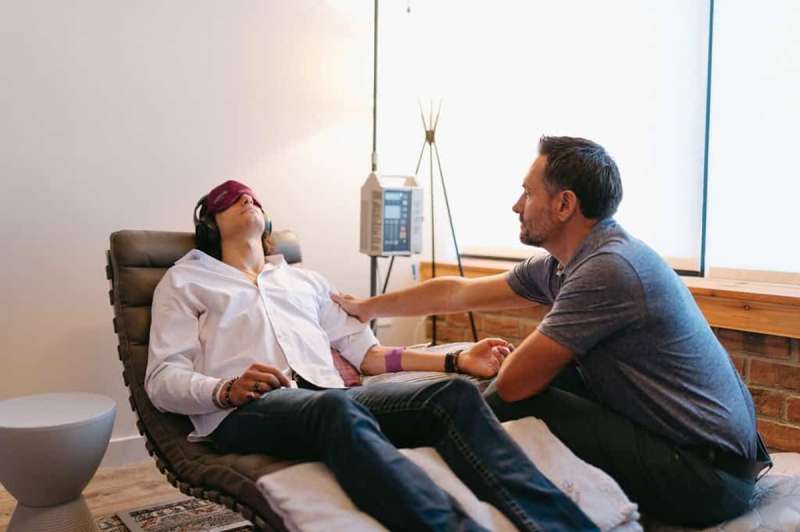
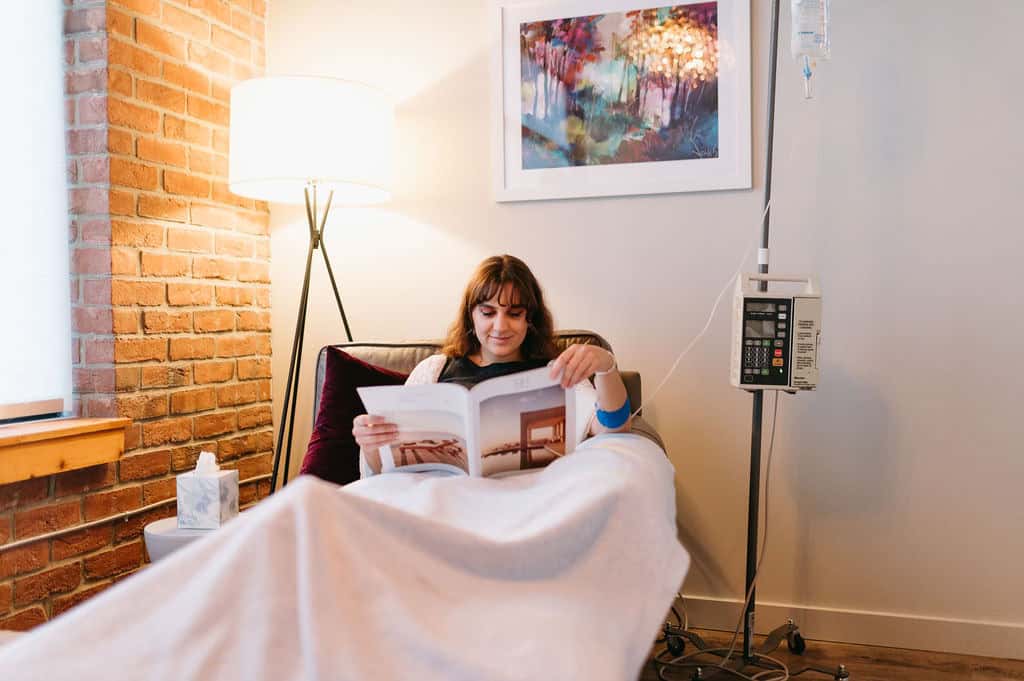
The center provides ketamine infusion therapy using ketamine hydrochloride, which, according to Cleveland Clinic, has traditionally been used as a “fast-acting anesthetic.” At the lower therapeutic doses (typically administered through an IV infusion, nasal spray, or lozenge), ketamine provides calming effects and the ability to produce a temporary sense of detachment from one’s environment. As a result, the drug has gained attention recently as an off-label treatment for mental health conditions such as PTSD and treatment-resistant depression.
Ketamine blocks your brain’s glutamate signaling, which can help people with trauma form new connections in the brain—balancing the nervous system and aiding in emotional regulation. Glutamate is a neurotransmitter that aids in communication between neurons. While the neurotransmitter is essential in mood regulation, decision-making, and forming memories, excess glutamate can actually trigger high stress and anxiety.
At Derive Health, Dr. Leake treats patients with ketamine through IV infusion. According to Dr. Leake, what sets ketamine apart from traditional antidepressants is that it acts immediately and offers relief within hours or days, while the latter can take weeks—making it a great option for people who have not found relief through Selective Serotonin Reuptake Inhibitors (SSRIs).
According to Yale School of Medicine, one study found that 70% of participants felt an improvement in their mental health after ketamine therapy and over 50% of participants felt a “significant reduction in depressive symptoms within 24 hours.”
This is promising news for military veterans who have treatment-resistant depression—an estimated 10% of the 1,635,233 total veterans diagnosed with major depression.
Ketamine therapy can be a part of a comprehensive treatment plan that offers long-term changes
At Derive Clinic, the initial series of treatments involves six infusions over seven weeks, with a week-long break in between the fifth and sixth treatments to evaluate the progress. Dr. Leake personalizes each patient’s treatment plan, but says that maintenance or booster doses are typically administered once a year to once every three months. In general, he finds that his patients require fewer boosters over the years.
Patients with treatment-resistant depression can have tendencies in their brain chemistry toward depression, which, according to Dr. Leake, could be triggered if they face life stressors after their treatment has concluded. Therefore, these booster doses help maintain the progress patients have made, pointing to ketamine’s potential for long-lasting changes, as opposed to traditional antidepressants, which only treat the symptoms.
Researchers at Vanderbilt University are also hopeful in implementing ketamine therapy as a part of a longer-term solution and have studied ways to extend the effects of a dose of ketamine to last up to two months.
The treatment process goes beyond infusion, though; ketamine therapy practitioners claim that “integration,” or taking improvements you notice in your thought patterns during the infusion and implementing them in your day-to-day life, is an integral part of the process. With ketamine’s dissociative properties, Dr. Leake says it can also help patients zoom out from their internal stressors and look at the bigger picture, especially when coupled with talk therapy.
“Ketamine turns on neuroplasticity as well as a growth hormone that allows the brain to make new connections,” says Dr. Leake. According to the Cleveland Clinic, ketamine can boost therapy outcomes by reinforcing and extending the benefits of talk therapy.
“Ketamine plus talk therapy is the secret to long-term success. We find people who are doing talk therapy along with their ketamine need fewer infusions and boosters, and have a better chance of responding,” Dr. Leake says.
He employs therapists at his clinic who are specifically trained to work in conjunction with ketamine therapy. The therapists help patients explore ways to reshape their thought patterns while they’re able to dissociate from any triggers or stressors.
Derive Health also offers NAD+ and vitamin IV therapies that may fit into patients’ customized plans and help them improve energy levels and brain function. NAD+ therapy involves infusing the body with vitamin B3, a precursor for NAD production, which is the primary energy source in the cells.
According to Dr. Leake, NAD levels dip in people with anxiety and depression, so replenishing those levels can help the brain and nervous system function at their best.
Ketamine therapy is especially beneficial for military veterans
“Many veterans and first responders carry invisible wounds from years of service,” says Dr. Leake. “Our goal is to provide safe, ethical, physician-led care that gives people new tools to heal, regain clarity, and move forward with their lives.”
Derive Health is collaborating with the non-profit organization Task Force Dagger to cover the costs of complete ketamine therapy treatments for eligible Special Operations veterans. According to the founders, removing financial obstacles is key to increasing access to more advanced treatment options that several Special Operations veterans require for certain mental health conditions.
Keith Parris, Derive Health’s co-founder, said, “Working with Task Force Dagger allows us to ensure these men and women receive the care they deserve without cost standing in the way.”
Thank You Life and VETSolutions are also providing financial support to help veterans and first responders, who often experience trauma, access critical mental health care.
“We’re really seeing high levels of PTSD, trauma, and depression from those recurrent deployments,” Dr. Leake says, adding that while treatment options for PTSD haven’t been as effective up until now, he has found that 60 to 65% of veterans no longer meet the criteria of PTSD after doing ketamine infusion therapy (while some clinical studies cite even higher percentages).
The U.S. Department of Veterans Affairs also found promising results, with 86% of military veterans demonstrating signs of “significant improvement in Treatment Resistant Depression” after a series of ketamine infusion treatments.

Taking ketamine therapy in a monitored clinical setting is key for safety and efficacy
Some people may be wary about seeking ketamine therapy, especially after seeing worrying headlines. Ketamine’s effects vary substantially depending on how it is used, which underscores the need for guidance from a medical expert and administration in supervised settings.
“If you’re considering ketamine therapy, you should try to find a place where it is a monitored setting from people who are skilled and trained and have worked in the setting just to maximize safety and optimize effects,” said Dr. Leake.
According to Cleveland Clinic anesthesiologist and pain medicine specialist, Dr. Pavan Tankha, DO, ketamine infusion treatments are administered in subanesthetic doses, under the recommended monitored setting, and the only “absolute contraindication” is pregnancy.
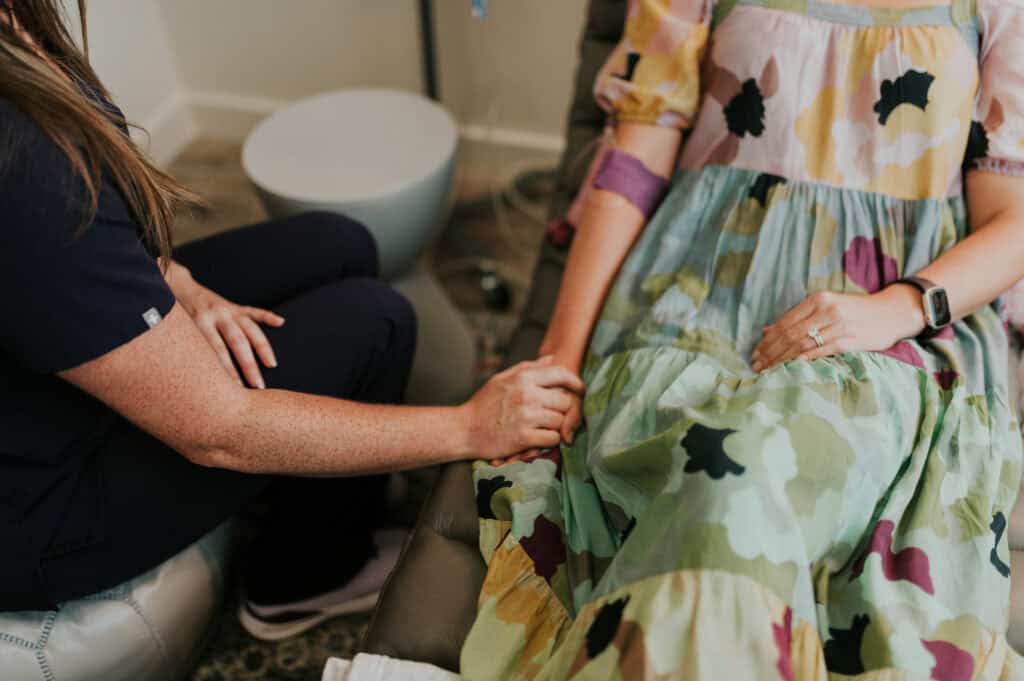
The infusion procedure requires medical monitoring in a controlled clinical setting, and Dr. Leake says his team is experienced in emergency medicine. The doses are carefully administered and adjusted based on each patient’s needs, with providers monitoring for potential side effects and ensuring the treatment is delivered safely.
While there are some at-home ketamine therapy options where the drug is mailed to you, Dr. Leake strongly cautions against using those services. The intravenous administration of ketamine for uses other than an anesthetic, such as the treatments at Derive Health, is still considered off-label for depression and PTSD.
According to Cleveland Clinic, people who should not take ketamine therapy include those who are allergic to the drug, have had an aortic dissection or aneurysm, have had a history of psychosis, currently have a substance use disorder, have had a recent heart attack, have high blood pressure that is not being treated, have elevated intracranial pressure, or have liver disease.
Although a patient with a history of addiction may not be advised to undergo ketamine therapy, a growing body of research shows that ketamine may actually help some patients who have Alcohol Use Disorder become sober. A 2019 study published in The American Journal of Psychiatry found that 82% of the participants who received one ketamine infusion treatment coupled with motivational enhancement therapy continued sobriety three weeks after the infusion.
While research on ketamine as a treatment for depression, PTSD, and addiction is relatively recent, Dr. Leake cites that data on the drug as a whole extends much before that. “Even though we’ve had 15 to 20 years of ketamine data for depression and trauma, we have over 60 years of ketamine data as a substance,” he says, adding, “It has been used as an anesthetic in the late 1960s, and it’s still used around the world in emergency rooms and operating rooms.”
For veterans in the Sandhills area and beyond who carry invisible wounds from their service, the growing body of evidence behind ketamine’s mental health applications may offer hope.
If you are a veteran in need of crisis support, call the Veterans Crisis Line at 988 and then press 1.
This article first appeared on Good Info News Wire and is republished here under a Creative Commons license.