Why Black barbershops and churches play a pivotal role in meeting the mental health needs of the Black community in North Carolina.
by Ahmed Jallow, NC Newsline
September 2, 2025
Editors note: This is the first of a series of stories NC Newsline is doing in September for Suicide Prevention Month. If you or someone you know needs help, the national suicide and crisis lifeline in the U.S. is available by calling or texting 988. There is also an online chat at 988lifeline.org
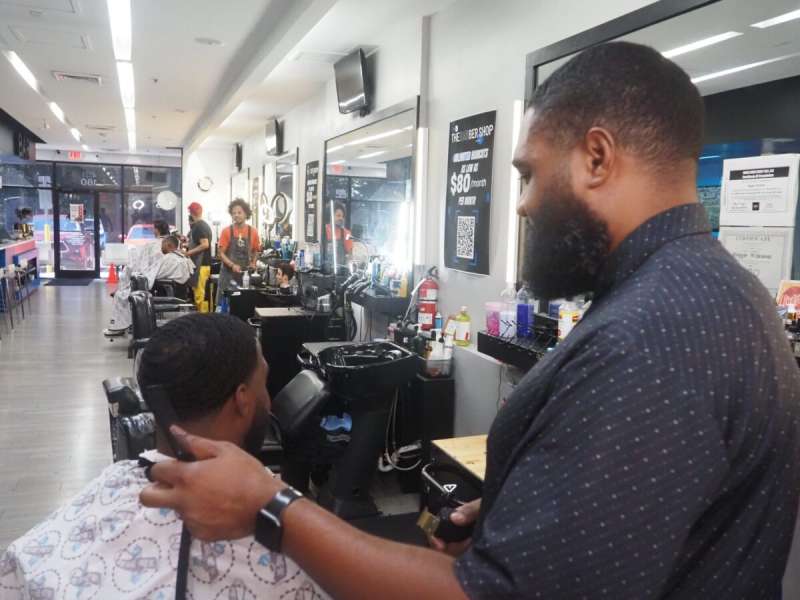
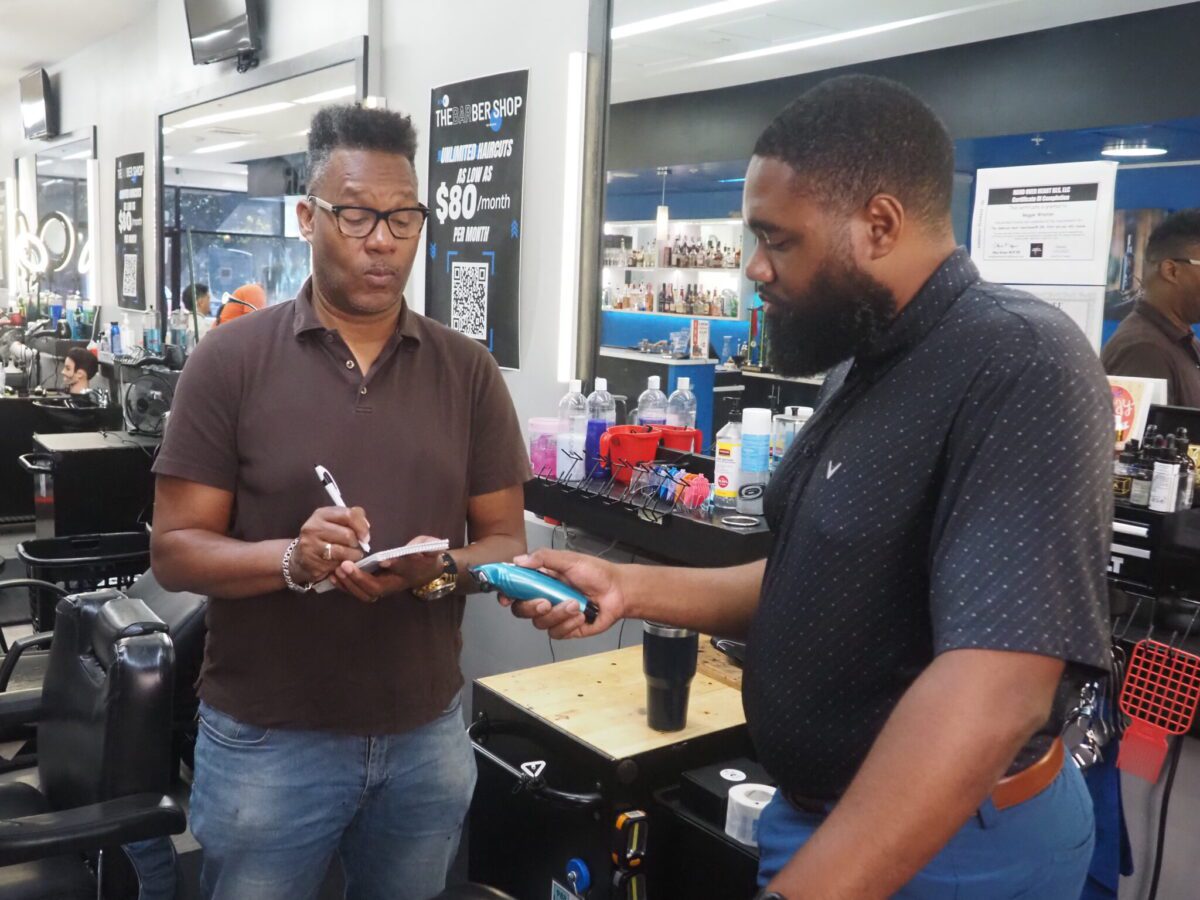
On a Tuesday afternoon in July, inside The Bar Ber Shop in Raleigh, Reggie Winston, 41, talks about a subject many of his young clients rarely discuss anywhere else: mental health.
READ MORE: ‘They knew I wanted an abortion’: What she got instead at a ‘crisis pregnancy center’ in NC
Winston, who is trained in mental health first aid and suicide prevention, remembers battling depression in high school without realizing it. “I had no clue what I was experiencing was depression,” he said. It wasn’t until he heard someone else’s story that he recognized his own, a realization that led him to therapy and, eventually, a mission.
After the COVID-19 pandemic, Winston expanded the community work he’d started years earlier with free blood pressure screenings in his shop. This time, he turned to mental health, founding Grooming Resources and Opportunities, a nonprofit that trains barbers to spot signs of depression, anxiety, and suicidal thoughts.
His method begins with seemingly casual questions when someone climbs into his barber chair. Instead “How are you?” he’ll ask, “What time did you wake up? What are your plans today?” As he snips and shapes, his clients reveal pieces of their lives they rarely share anywhere else.
Slowly, in the safety of his barber chair, these simple inquiries allow clients to reveal what’s really happening in their lives, Winston said.
“Once they get comfortable and start trusting you with their haircut,” Winston said, “they start trusting you with their mind and their heart.”
From 2013 to 2022, 377 Black North Carolinians ages 10 to 24 died by suicide, according to data. Nearly 17% of Black high school students said they had seriously considered suicide. Among middle schoolers, more than a third reported the same. The numbers peak at age 24 — and are especially stark for Black girls questioning their sexual orientation, who now report the highest rates of suicide attempts in schools statewide.
“The myth that Black people don’t die by suicide has been dangerous,” said Bettie Murchison, a longtime advocate who runs the Village of C.A.R.E. in Wake County. “We’ve had to fight against that in our families, in our churches, and in our schools.”
Winston’s effort is a key part of North Carolina’s response to rising suicide rates among Black youth. This year, the state health department launched the Black Youth Suicide Prevention Action Plan, a five-year initiative that leans on trusted community spaces, including barbershops and churches, to expand support and prevent suicide among Black youth and young adults. Unlike the state’s broader suicide-prevention strategy, this plan focuses on the unique needs of Black youth.
Dr. Sonyia Richardson, a UNC Chapel Hill researcher and one of the plan’s architects, said it was built on listening sessions with young people and their communities. “This is not a top-down plan,” she said. “It’s community-led, community-driven, community-implemented.”
One of its guiding principles: young people in crisis often turn not to doctors, but to trusted adults in familiar places — coaches, pastors, aunties, barbers.
“We’re meeting the needs of communities where youth are more likely to seek support. From local YMCAs, churches, and community centers rather than traditional mental health providers,” Richardson said.
Barbershops and churches
That’s where Winston and his longtime friend, counselor Rodney Harris, come in. This year alone, he and Harris have trained more than a dozen barbers in mental health first aid training. These programs teach them to spot warning signs of mental distress and suicide, as well as how to safely talk with clients about limiting access to firearms and other deadly means. They’ve trained barbers across Raleigh, Wake Forest and Durham. Soon they’ll be in Rocky Mount.
“Barbers often know more about their clients’ lives than anyone else,” Harris said. “When a clinician approaches, youth might be skeptical. But when a barber speaks, they listen.”
Barbershops have become hubs for this work well beyond North Carolina. The Confess Project, for example, has trained barbers across the country in mental health advocacy.
What’s different with GRO is that they train barbers to become community leaders themselves, Harris said. “What we saw as a gap in the research is to make the barbers trainers and then have them go into the community, offer additional trainings, and then they can also offer recruitment,” Harris said. That work, he added, includes expanding mental health first aid and counseling on access to lethal means, known as CALM.
The same approach is playing out in churches. Through Murchison’s Village of C.A.R.E. program, she trains pastors and faith leaders to act as first responders. “If we can get them to understand this is as much a part of their ministry as teaching the Bible,” she said, “we can reach a generation of youth who don’t see a therapist as their first line of defense.”
Building trust beyond the shop
State officials have identified 17 counties in North Carolina that are in urgent need of suicide prevention efforts. These counties, which range from major metropolitan areas like Durham, Wake, and Mecklenburg to smaller, rural communities such as Edgecombe, Halifax and Hoke, have the highest rates of Black youth suicides and the highest volume of 988 crisis calls. In each of these communities, Black residents make up at least 25% of the population.
Still, many young people don’t trust the 988 Lifeline. Black youth are underrepresented among callers, even though they show up disproportionately in emergency room visits for self-injury. Officials say building confidence in the hotline is essential to reaching young people before a crisis escalates.
Kelly Crosbie, director of the state’s Division of Mental Health, said fear and mistrust keep many from using the hotline. “There’s just personal shame, not knowing who’s on the other end, and what’s going to happen,” she said. Some families worry that calling could trigger involuntary hospitalization or even police involvement. “Some of these young folks, their families have already experienced trauma when they’ve tried to engage with treatment systems or government systems,” she added.
Once they get comfortable and start trusting you with their haircut,” Winston said, “they start trusting you with their mind and their heart.
– Reggie Winston
Mistrust can run even deeper for LGBTQ youth. In North Carolina, Black girls who are questioning their sexual orientation now report the highest rates of suicide attempts in schools statewide. At the same time, the federal government eliminated funding for the 988 “Press 3” option, which connected LGBTQ and transgender callers to specialized counselors. Advocates warn the loss strips away a culturally competent lifeline that has reached more than a million young people nationwide.
State officials say they have begun training local crisis counselors to handle calls from that population and are working with communities to ensure that 988 operators are equipped with inclusive, culturally aware training. “We’re losing that specialized national line,” Crosbie told NC Health News last month, “but we are making sure our 988 here is well-trained and ready.”
The state has also launched a youth-led awareness campaign, called “Stronger Together” initiative. Messaging, visuals, and formats are being created by Black youth themselves to make the hotline feel credible and relatable. “We need to get the messaging straight from young people,” Crosbie said. The effort includes training peers and trusted community figures—like pastors, coaches, and barbers—to recognize warning signs and encourage youth to seek help.
Current data shows texting and chat are the most utilized 988 services among North Carolina youth. Crosbie said that makes it even more important to meet young people where they are—whether that’s on their phones, in churches, or in barbershops. “We need to make sure the help is in places and spaces that people trust,” she said.
In addition to breaking cultural stigmas surrounding mental health discussions, other strategies include reducing access to lethal means and providing gun locks, and hosting community trainings.
The first Black youth suicide prevention conference is scheduled for September in Rocky Mount, which is one of the high need areas. Richardson hopes the plan will serve as a national model for suicide prevention among diverse populations. “We are focusing on those populations most impacted in our state… and I think this also provides a blueprint for how to create [prevention strategies] across the state.”
Back at The Bar Ber Shop, Winston says he sees that trust forming every day. Kids sit in his chair for a haircut and end up sharing the things they don’t tell teachers or parents.
“Barbers are the bridge for people to get the help they need,” Winston said. “We are the trusted few.”
NC Newsline is part of States Newsroom, a nonprofit news network supported by grants and a coalition of donors as a 501c(3) public charity. NC Newsline maintains editorial independence. Contact Editor for questions: info@ncnewsline.com.