Monarch butterflies are known for their unique migration patterns, and in North Carolina, peak months for monarch migration activity is here once again.
Monarch Watch explains that North America’s monarchs travel up to 3,000 miles during their migrations and are the only butterfly species known to make such extensive, two-way migrations yearly. Though they look the same as other monarchs, those that emerge from their pupae in late summer and early fall migrate southwards to spend the winter in warmer climates.
Read More: 3 things happening in North Carolina this week
When the winter ends, these monarchs mate and lay their eggs on milkweed plants, often in the southern U.S., before they die. When they emerge, the offspring of the butterflies that made the fall journey will recolonize their parents’ original homes.
The exact time of year that fall migrating monarchs are most abundant varies based on location. According to Monarch Watch and other sources, peak abundance is already upon us in North Carolina as we head into fall 2026. Here’s what to know.
Are there monarch butterflies in North Carolina?
Yes, though their abundance varies depending on the time of year, according to N.C. State Parks.
From August to October, monarchs range from common to abundant in the mountain regions of the Tar Heel State and along the coast, and occasionally fairly common to common elsewhere. At other times of year, the species tends to be uncommon.
When is monarch butterfly migration season in North Carolina?
According to Monarch Watch, North Carolina’s latitude sees peak monarch abundance during mid-September through early October.
Where do monarch butterflies migrate?
In order to survive the winter months, monarch butterflies living in eastern North America migrate to Mexico, specifically to the Sierra Madre Mountains, according to the U.S. Forest Service.
How to identify a monarch butterfly: Monarch butterfly lookalikes, more
The National Wildlife Federation explains that, while there are six subspecies of monarch butterfly worldwide, only one – Danus plexippus plexippus – can be found across North America. A second non-migratory species that is visually identical, Danus plexippus megalippe, can be found from Florida and Georgia southward.
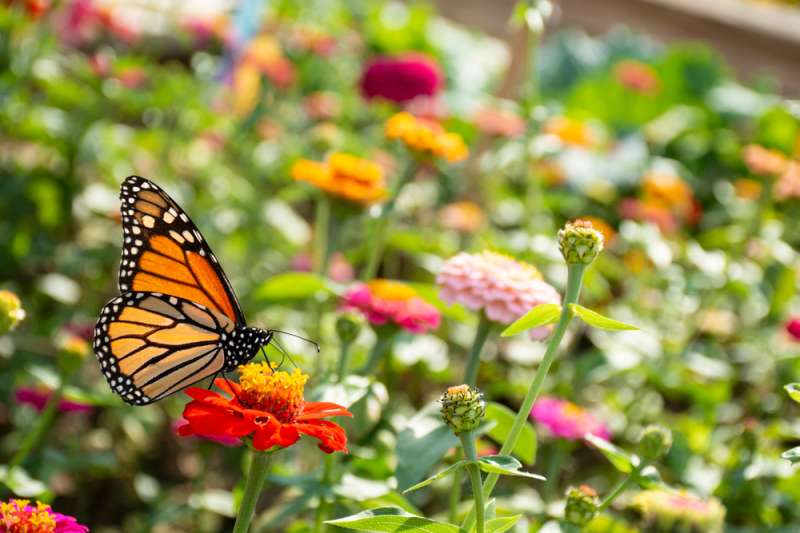
Monarch butterflies have black bodies with white speckling. Their wings, which can reach almost 5 inches across in total wingspan, are a vibrant orange color with black veins bordered by a black edge dotted with white spots. Male monarchs have two black spots, one on each hind wing, while females tend to be darker orange in color with thicker veining.
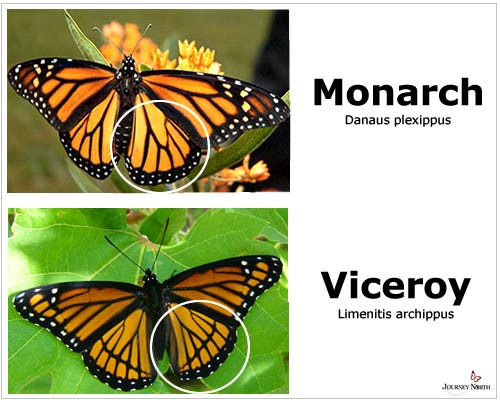
The federation also notes that the viceroy butterfly species closely resembles the monarch. The two species are almost identical in color. However, viceroys can be identified by a thick line across the hindwing that monarchs do not have, and they tend to be smaller than monarchs. Additionally, the viceroy’s flight tends to be more rapid and erratic, while the monarch butterfly has a distinctive gliding flight pattern often described as “sailing” through the air.
Are monarch butterflies endangered?
Yes, the migratory monarch butterfly was classified as endangered globally by the International Union for Conservation of Nature in 2022.
The N.C. Wildlife Federation explains that the monarch, like many other pollinators, has been subject to severe population decline caused by habitat loss, misuse of pesticides and climate change. The group’s Butterfly Highway program aims to grow monarch numbers.
Some of the tips offered to N.C. residents hoping to help monarchs include:
- Research local nurseries to find native plants for your garden
- Diversify nectar sources and larvae food sources by incorporating a variety of plants of varying heights and colors
- Take small steps such as replacing invasive or non-native plants over time with native plants as they die off
- Put a Butterfly Highway sign in your yard to celebrate that your yard is pollinator habitat and that you don’t use pesticides
- Supplement native plants with bird and bat houses, bird baths, butterfly puddlers and more
Find more at ncwf.org/habitat/butterfly-highway.
Reporting by Iris Seaton, Asheville Citizen Times / Asheville Citizen Times
USA TODAY Network via Reuters Connect