Here’s why a few tense encounters with bears in the Great Smoky Mountains has officials concerned.
Two encounters included a bear approaching visitors and taking two backpacks. In a third encounter, a bear displayed aggressive behavior and briefly chased a group
Three bear‑related incidents at Ramsey Cascades Trail in the Great Smoky Mountains National Park this past weekend, have prompted trail closures to protect visitors, according an April 20 news release from the park.
Two encounters included a bear approaching visitors and taking two backpacks. In a third encounter, a bear displayed aggressive behavior and briefly chased a group, the statement said. Ramsey Prong Road and Ramsey Cascades Trail on the Tennessee side of the park are closed as rangers monitor bear activity.
The Great Smokies covers a half-million acres of rugged, heavily forested terrain on the eastern Tennessee and Western North Carolina border. It is the most-visited national park in the country with 11.5 million visitors in 2025.
The weekend of April 18-19, rangers also responded to three incidents on Abrams Falls Trail involving an aggressive black bear, including one case where the bear bit a visitor who entered a closed area. The Abrams Falls access road and trail are now open, after several days with no observed bear activity, according to the release.
During spring, black bear activity increases in Great Smoky Mountains National Park. Mother bears are now emerging from their dens with young cubs searching for limited early‑season food sources. Because this is a sensitive time for mother bears and cubs, getting too close can cause stress and lead to unsafe encounters.
According to previous Citizen Times reporting, bear attacks in the park are rare. There have only been two deaths by bear attack in the park.
Patrick Madura, 43, of Elgin, Illinois, was found dead Sept. 11, 2020, by backpackers, near where Madura had been camping in the remote Hazel Creek backcountry area of the park in Swain County.
After observing a 240-pound bear actively scavenging on human remains, law enforcement rangers shot and killed the bear out of caution, according to a park official in 2021.
In 2000, Glenda Bradley, 50, was killed by a bear in 2000 in the park’s Elkmont area.
The National Park Service asks visitors to help protect themselves, others and wildlife by giving bears space, storing trash and food responsibly and staying alert on trails.
Bear safety guidelines and regulations:
- Never approach bears. Stay at least 50 yards (150 feet) away. Violating this regulation can result in fines and arrest.
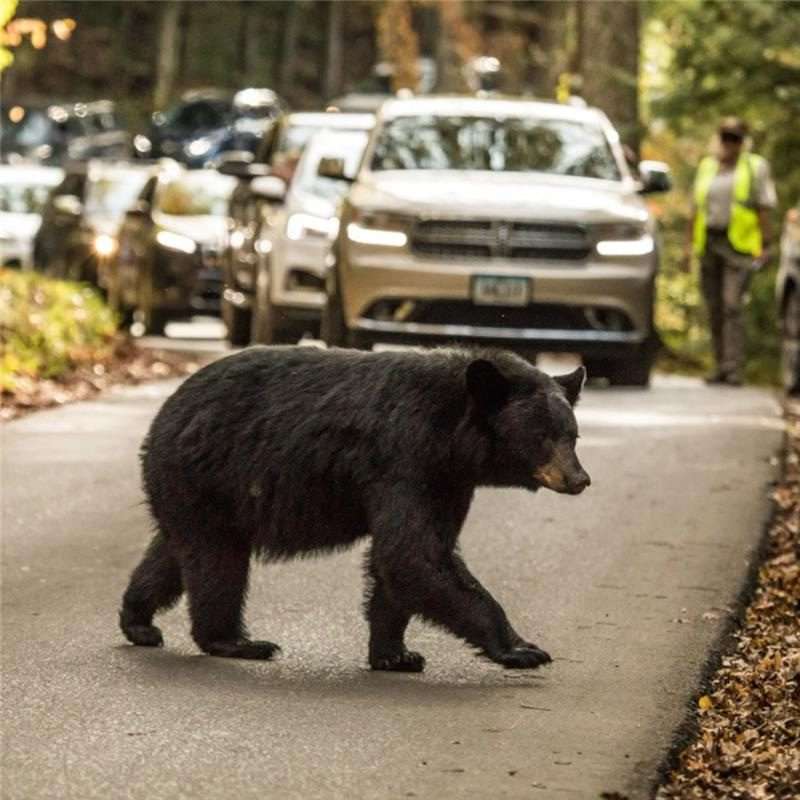
- Don’t create a bear jam. Seeing a bear from your vehicle is always exciting, but stopping in the middle of the road creates hazards for wildlife, increases emergency response times and impacts other visitors. When viewing a bear from your car, remain inside the vehicle and move on from the bear quickly so as not to impede traffic.
- Secure food and trash. Keep all food, trash and scented items in a locked, hard-sided vehicle and lock vehicle doors. In backcountry areas, use bear cables to hang food or scented items, and do not store these items in a tent or shelter. Pack out all trash and food scraps when hiking.
- Never feed a bear. Feeding wildlife in the park is a federal offense and can result in fines of up to $5,000 or imprisonment for up to six months. Feeding a bear even once can result in that bear becoming conditioned to human food and losing its fear of humans. Fed bears have been euthanized in the park due to visitor actions.
- Leave pets at home. Dogs can provoke defensive and predatory behavior in bears. Dogs are permitted on the Gatlinburg Trail and Oconaluftee River Trail only.
- Be prepared and stay alert. Be aware of your surroundings, especially when hiking or camping. Always stay with your group. Consider carrying bear spray and know how to use it properly. Bears in the park have exhibited predatory behavior, such as stalking, especially with solo hikers.
- Report violations and unusual bear behavior. If you see someone feeding or approaching a bear, or if you witness unnatural bear behavior, report it to park authorities immediately by calling 865-436-1230 or filling out a bear incident report.
Great Smoky Mountains National Park is home to some 1,900 American black bears. This thriving bear population, combined with high human visitation increases the likelihood of human-bear encounters.
Visitors play a crucial role in their own safety and the well-being of black bears. Following these precautions helps contribute to the conservation of black bears and foster a safer environment in the park. Learn more about black bears in the Great Smokies at nps.gov/grsm/learn/nature/black-bears.htm.
This story will be updated.
Reporting by Karen Chávez, Asheville Citizen Times / Asheville Citizen Times
USA TODAY Network via Reuters Connect