“Oh, how I wish that it would rain.”
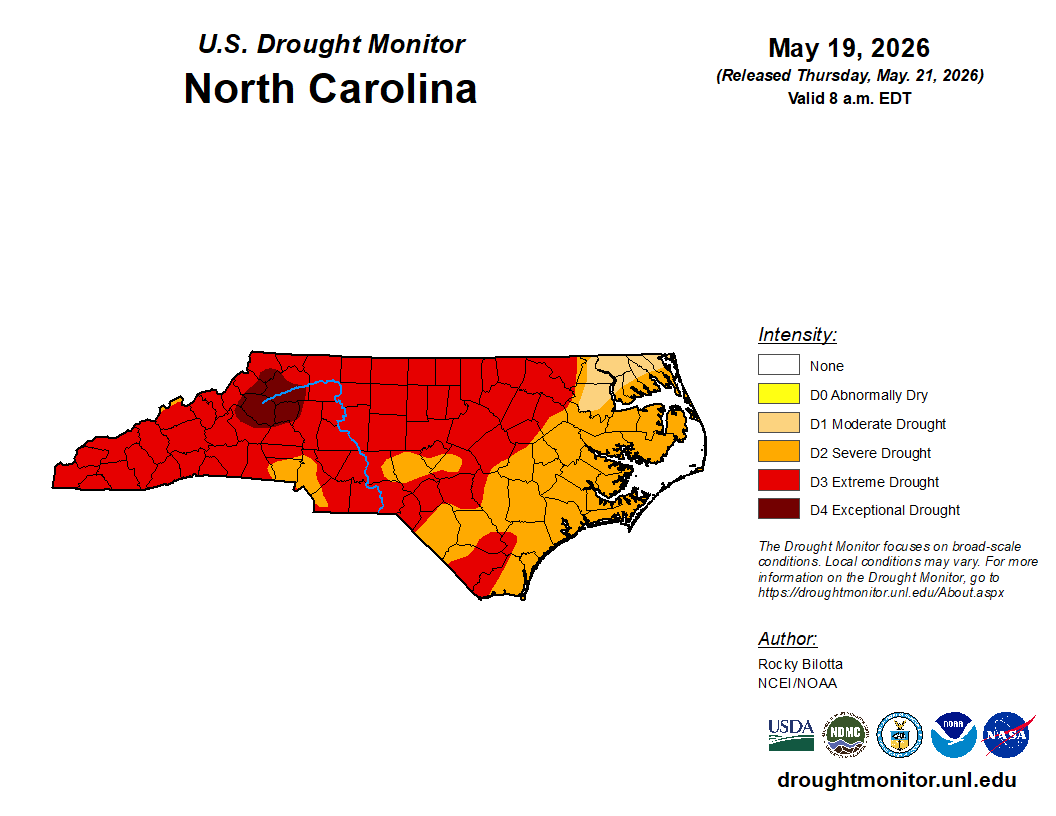
The Temptations have been on my mind lately as North Carolina has experienced historically severe drought throughout the state.
Here in Charlotte, mandatory Stage 2 water restrictions took effect on May 15, placing limits on lawn irrigation, vehicle washing, and other discretionary outdoor water uses.
But this is Good News Friday, so what’s with all the drought talk?! Well, as I write this column on Thursday evening, the rain has just begun and, looking at the forecast for the coming week, there’s a good chance it won’t fully stop until Friday … meaning next Friday, May 29.
I felt like someone straight out of those Progressive commercials about becoming your parents when I looked at that forecast and said, “Yeah, but we really need it.”
Speaking of water usage, let’s get to our Good News Friday topics as lawmakers try to rein in the rapid increase in data center construction until we can get a better understanding of how these facilities use water and impact the energy grid.
The bipartisan effort to regulate data center proliferation
As towns and counties across the state impose moratoriums on the construction of data centers, state lawmakers have begun seeking action to regulate the accelerating growth of these facilities.
One of multiple attempts at state regulation currently floating around the North Carolina General Assembly is Senate Bill 730, or the “Ratepayer Protection Act,” which the NC House Energy and Public Utilities Committee advanced on Wednesday.
If passed, the bill would prohibit local tax incentives for data centers and create more regulatory hoops for the companies that want to build them to jump through.
For instance, large-scale data centers—often called hyperscale, cloud, or AI data centers—would need to conduct noise studies before getting the go-ahead for construction.
Locally, the bill would grant more power to municipalities to assess impacts on water, air quality, agricultural resources, and other factors before approving the construction of data centers.
The rise of artificial intelligence has driven the increase in data center construction and the largest concerns are that this proliferation will not only suck up water resources—usage varies widely based on the size of a facility and the cooling system used there—but drive up energy rates.
According to a presentation given to Charlotte City Council earlier this month before that body voted to take the next step toward a moratorium of its own, Duke Energy said that, while data centers account for less than 1% of the current share of statewide peak electric demand, they are projected to account for 10% by 2030.
UNC to host new multi-day arts festival
UNC-Chapel Hill will be home to “All. Together. Now.,” a new festival featuring dance, theatre, music, film, and myriad other performances, workshops, and events over four days in February.
Carolina Performing Arts announced the launch of the festival on Tuesday. It’s scheduled to take place across the UNC campus and downtown Chapel Hill between Feb. 18-22, 2027.
“Spend the afternoon immersed in a performance inside a planetarium, join a public conversation at a coffee shop, experience a work-in-progress inside a theater, or stumble onto a late-night jam session,” the website reads. “From major performances to spontaneous discoveries, the festival reimagines spaces as a connected, dynamic playground for creativity, curiosity, and shared discovery.”
In true university fashion, the festival will be as much about conversing as creating, with “ask-an-expert” experiences, research in action, public conversations, and artists talks included in the long list of cool things to check out.
Organizers plan to hold “Pass Events” comprising full-length performances, films, and special events while the “Open Gatherings” such as public art, student showcases, and jam sessions will be free and open for anyone to stumble upon.
Two new pro women’s sports teams launch in NC
The Charlotte Crown, one of North Carolina’s two new pro women’s basketball teams, played its first home game in front of a sold-out crowd at Bojangles Coliseum on Thursday night.
The home debut came six days after the Crown beat the Jacksonville Waves in Florida, winning the inaugural game for the new UPSHOT League.
Another North Carolina UPSHOT team, the Greensboro Groove, also took home a win later that night against the Savannah Steel at the Novant Health Fieldhouse in Greensboro, beating the same team again the next night to start its inaugural season 2-0. The Groove will face off against the Steel for a third time tonight in Savannah.
The two North Carolina teams aren’t set to play one another until a June 17 matchup in Charlotte.
“This is bigger than basketball,” Charlotte Crown officials wrote in a statement leading up to Thursday’s home game. “It’s about giving Charlotte fans—especially young girls—a new generation of players, role models, and moments to rally behind.”
The UPSHOT League currently consists of four teams—the Wave, Groove, Crown, and Steel—with teams from Nashville and Baltimore set to join in May 2027.