One of the most impactful races this year will be towards the end of voters’ ballots.
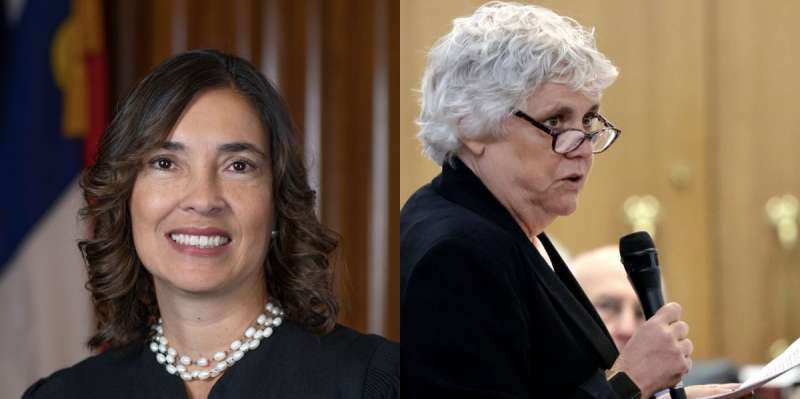
Democrat Anita Earls, the incumbent, is running for a second term on the North Carolina Supreme Court. Earls was first elected to the Court in 2018 and previously worked as a civil rights attorney who founded the Southern Coalition for Social Justice.
She will face Republican nominee Sarah Stevens, a Mount Airy-based attorney who served nine terms in the North Carolina House of Representatives.
One of the last bills Stevens pushed through the General Assembly was HB 377, which passed the General Assembly in early August. If it becomes law, it would expand the powers of Chief Justice Paul Newby, a fellow Republican.
The law would give the serving chief justice the power to prevent judges from hearing cases and strip them of pay if they are under investigation.
Currently, Republicans hold a 5-2 majority on the Court. The balance of power of the Court will not change regardless of November’s outcome, but an Earls victory sets the stage for Democrats to seek a majority on the court in the future.
The direction of the Court hangs in the balance
If Earls wins, Democrats will have an opportunity to flip the Court in 2028, when three seats will be on the ballot.
Seats currently held by Chief Justice Newby, as well as Associate Justices Phil Berger Jr. and Tamara Barringer, will be up for re-election in two years.
In a perfect scenario for Democrats, they would have a 5-2 majority if Earls retains her seat and they flip all three seats in 2028.
Should Stevens defeat Earls, the GOP would hold a commanding 6-1 majority, with Justice Allison Riggs as the only Democrat on the Court. It would likely ensure Republican control of the Court through at least 2030.
This would mean issues such as education, the environment, healthcare, and workers’ rights would be put before a very conservative Court and have lasting implications.
The recent Leandro ruling highlights the contrasts between having a Democratic- or Republican-controlled Court.
In 2022, the Court, then controlled by Democrats, ordered the Legislature to fund North Carolina’s public schools to the tune of hundreds of millions of dollars. After Republicans retook control, the Court reheard the case, and ruled in April that the Legislature could not be compelled to provide the funding.