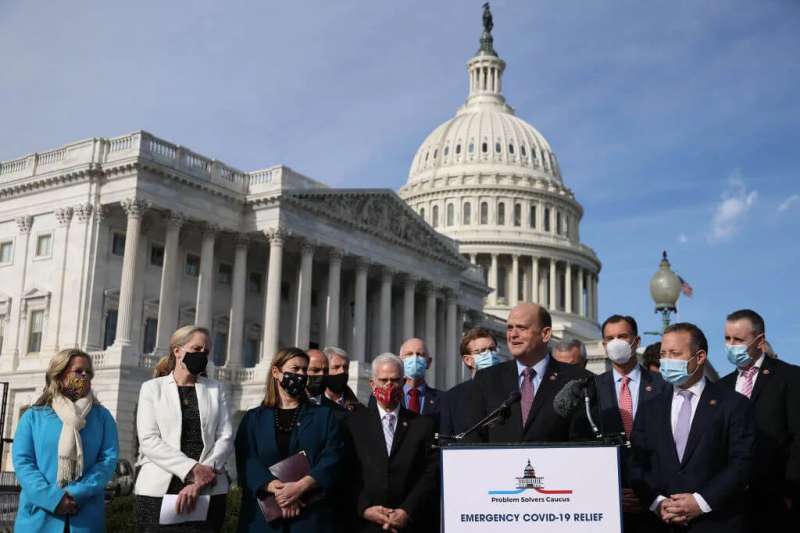
After months of no progress, congressional leaders say there is real hope for a deal that extends unemployment assistance and gets funding to state and local governments.
A stimulus deal proposed by a bipartisan group of legislators is gaining support in Congress as lawmakers scramble to pass COVID-19 relief aid before the end of the year.
The $908 billion stimulus package is a compromise proposed by Democratic and Republican senators and House representative. For months, leaders on both sides of the aisle have struggled to find a compromise stimulus package. Meanwhile, millions of Americans are facing a financial cliff at the end of 2020, as aid programs are set to expire without intervention from Congress.
The newest stimulus package is much smaller than the $2.2 trillion package Democrats recently proposed. For Republicans, the proposal is much higher than their other frameworks. Senate Majority Leader Mitch McConnell, for example, offered a plan that would cost only $500 billion.
So far Democrats have placed their support behind the proposal.
“In the spirit of compromise, we believe the bipartisan framework introduced by Senators yesterday should be used as the basis for immediate bipartisan, bicameral negotiations,” Speaker of the House Nancy Pelosi and Senate Minority Leader Chuck Schumer said in a joint statement Thursday.
Here’s a look at what the proposal includes:
- $160 billion for state and local governments
- $180 billion for additional unemployment benefits. This benefit would provide unemployed people an additional $300 per week.
- $288 billion for the Paycheck Protection Program for small businesses
- A temporary liability shield for firms and other entities facing COVID-19 related lawsuits
Notably, the proposal does not include another round of individual stimulus checks for Americans.
“Of course, we and others will offer improvements, but the need to act is immediate and we believe that with good faith negotiations we could come to an agreement,” Schumer and Pelosi wrote.
The proposal also has the support of President-elect Joe Biden. He said it is a necessary step towards passing a deal. The compromise bill “wouldn’t be the answer but it would be immediate help for a lot of things, quickly,” Biden said at a virtual event with laid-off workers earlier this week.
McConnell, on the other hand, has said he opposes spending $908 billion and wants to pass a stimulus bill about half its size.
Earlier this week McConnell proposed his own stimulus package that meets very few Democratic priorities, but in a speech on the Senate floor he said he was confident the two sides could reach a deal.
“Compromise is within reach,” he said Wednesday. “We know where we agree. We can do this.”
Despite McConnell’s refusal to support the bipartisan bill, a slowly growing number of lawmakers are signaling their support. Sens. Joni Ernst (R-Iowa) and John Cornyn (R-Texas) have indicated they would be willing to support the bill.
“I think it’s moving in the right direction,” Cornyn said of the proposal on Thursday. He added that support from senior Democrats “represents progress.”