North Carolina Agricultural and Technical State University has joined a federal clean-economy initiative that seeks to turn crops grown in rural Alabama and Tennessee into materials for vehicles, construction, and packaging. University officials said the work could create new pathways to higher-wage jobs for North Carolinians.
The National Science Foundation BRIDGES Engine—short for Biobased Rural Innovation for Domestic Growth and Economic Security—received an initial $15 million and could receive up to $160 million over the next 10 years if it meets program milestones. Led by the HudsonAlpha Institute for Biotechnology, the partnership comprises 18 academic institutions—including A&T as a core partner—42 industry collaborators, 10 commercialization partners, and 15 stakeholder organizations.
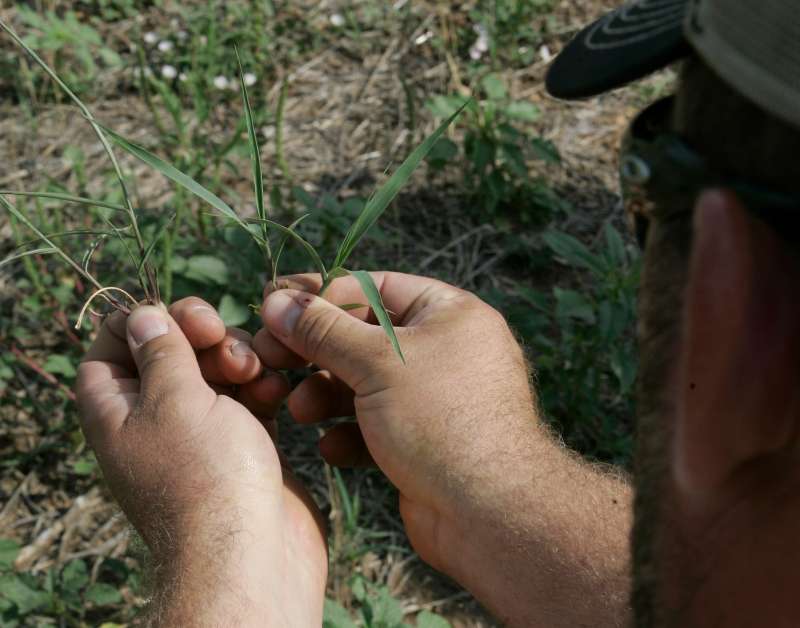
The project’s core activity is in Alabama and Tennessee, where partners plan to grow perennial grasses, such as switchgrass and miscanthus, on underused farmland and use their fibers as feedstock for automotive, construction, and packaging products. A&T’s role is to help develop the workforce that could support the wider regional supply chain.
“I am excited to begin the real work with our 85 partners to create new markets for farmers, create new manufacturing jobs, and provide skills training to workers in rural communities across the region,” said BRIDGES CEO Sam Jackson, Ph.D., in a press release.
BRIDGES is A&T’s second NSF Engines partnership as a core partner. In 2024, another A&T team joined the Piedmont Triad Regenerative Medicine Engine, one of 10 inaugural NSF Engines selected for up to $160 million over 10 years.
According to HudsonAlpha, the plan is estimated to generate $30 million in farm income each year, bring more than $2 billion in private investment to rural communities, create over 4,000 manufacturing and supply jobs worth $280 million in annual wages, and train more than 10,000 workers across agricultural, technical, and manufacturing sectors.
Michael Curry, Ph.D., and Jerald Dumas Ph.D., professors in the Joint School of Nanoscience and Nanoengineering at the university will help lead the workforce development efforts while contributing expertise in sustainable biomanufacturing and biorenewable materials. They said with the knowledge they create in Alabama and Tennessee, they will apply it to all 100 counties in North Carolina.
According to the university, Curry is expected to receive a $400,000 subaward during the first two years.
“Part of my background is the usage of bio-based materials such as cellulose and creation of products that can go into the packing industry, the automotive industry and even the tissue engineering industry,” said Curry in a press release.
In a statement to Cardinal & Pine, Curry said North Carolina could be positioned for high-value opportunities in agricultural technology, biotechnology, advanced biomanufacturing, engineering, data science, and professional services.
“This would create pathways to jobs for geneticists, Ag-tech researchers, laboratory technicians, engineers, data scientists, skilled manufacturing professionals, and other specialized workers,” he said. “North Carolina A&T serves as a bridge connecting regional economic growth to rural North Carolina residents, education, workforce development, and higher-wage careers.”