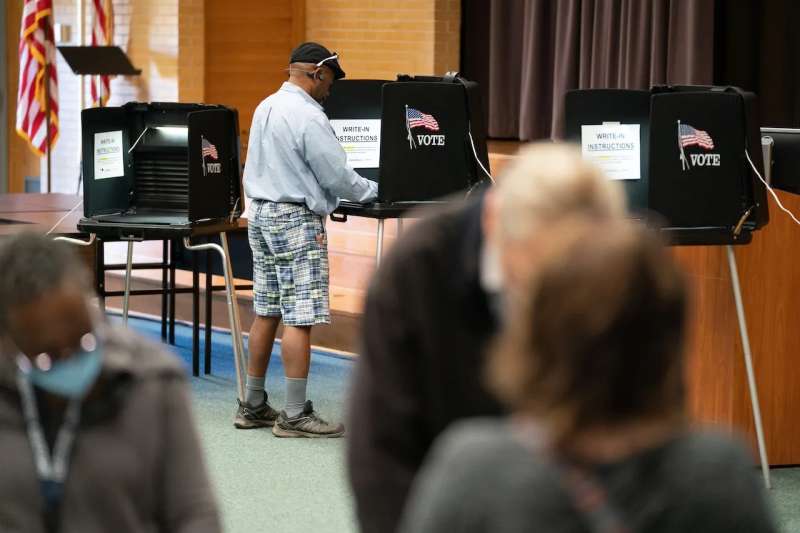
Early voting is the most popular option in North Carolina, offering a more convenient and less crowded way than Election Day to cast your vote.
Thursday, Feb. 15 is the first day of the early voting period for North Carolina’s 2024 primary elections, when voters will determine their party’s nominees for key races, including governor and attorney general.
So that means that until the early voting period ends on March 2, you can vote in person anytime you want, while avoiding the crowds of Election Day (March 5).
Early voting is the most popular option for voters of either party. More than 3.6 million people cast their votes this way in 2020.
Make sure you go to an early voting site in the county you live in. Click here for a list of the early voting sites in your county.
Here’s what else you need to know.
What you’ll need
-
- You’ll need to show a voter ID. A list of eligible IDs can be found here.
- If you don’t have an ID, don’t worry: You can still fill out an ID Exception form.
Why vote early?
- It’s more convenient. On Election Day, March 5, you can vote only at your designated polling site, but during the early voting period you can vote at any site in your home county. And you have two weeks to find a time that best fits your schedule. Each voting site may have different hours of operation, so click here for a complete schedule.
- You can register to vote and cast your vote at the same time. This is your last chance to register to vote in the primary.
- Fill out the registration paperwork at the early voting site, provide proof of residence in your home county, and you’re all set to vote right there. Proof of residence can be an up-to-date valid driver’s license, passport, or utility bill.College students who live on campus can get a document from their university to verify their residence.
What’s at stake
The 2024 general election is on Tuesday, Nov. 5, and it’s a big one. Though the primaries are not over yet, President Joe Biden is almost certainly going to face Donald Trump again this fall. The differences in policy and approach couldn’t be clearer.
The differences are just as clear in the candidates for North Carolina governor, attorney general, Congress, and in the state legislature.
Abortion rights, climate change, public school funding, rural health, and infrastructure improvements are key issues on the ballot.