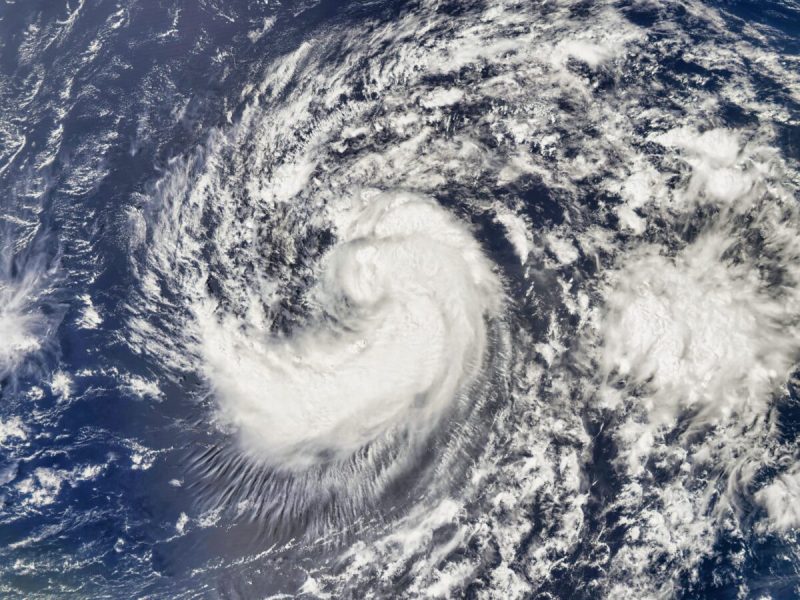
From deadly hurricanes to terrifying tornadoes, discover extreme weather events in North Carolina that were caught on tape (& watch the footage for yourself).
North Carolina’s desirable climate—i.e., warm summers and mild winters—draws people to the Tar Heel State, either for vacation or a more permanent stay. However, North Carolina is also prone to extreme weather events, such as tornadoes, floods, and hurricanes.
North Carolina was affected by 121 weather events with losses exceeding $1 billion from 1980 to 2024, and the frequency of these extreme events is increasing in the state—and nationwide. Many of these weather events in North Carolina were so intense and devastating that they made national headlines, and local residents, storm chasers, and news teams captured footage showing the storms in action and their aftermath.
Keep reading to learn more about some of North Carolina’s extreme weather events and watch footage of them unfolding.
1. Potential Tropical Cyclone Eight
In mid-September 2024, a storm system referred to as Potential Tropical Cyclone Eight brought heavy rainfall and strong winds to North Carolina. In a span of just 12 hours, Carolina Beach, Southport, and Boiling Spring Lakes received 18 inches of rain, resulting in widespread flooding. With roads washed away and 100+ homes destroyed, more than 100 people required rescuing, and one individual died.
2. Hurricane Helene
About 10 days after Potential Tropical Cyclone Eight flooded North Carolina, Hurricane Helene hit the state on September 27, 2024. Western North Carolina, particularly the Appalachian region, was hardest hit by the Category 4 hurricane, with severe flooding and landslides destroying many communities. Parks and other areas along the Blue Ridge Parkway received about 30 inches of rain and sustained winds of up to 60 miles per hour. Statewide, more than 100,000 homes were damaged or destroyed, and thousands of miles of roads and bridges sustained damage. A December 2024 report estimated damages from the hurricane exceeded $59 billion across the state.
Hurricane Helene caused 108 confirmed fatalities in North Carolina (and at least 250 total).
3. Tropical Storm Debby
Tropical Storm Debby hit North Carolina on August 8, 2024, and 10 tornadoes sprang up as a result. For reference, North Carolina experiences an average of about 28 tornadoes per year. One of the tornadoes, which reached EF-3 strength, had winds of up to 140 miles per hour—unusually high for a tornado associated with a tropical storm system. (Tornadoes with wind speeds ranging from 136 to 165 mph are categorized as EF-3s.)
In addition to the tornadoes, Debby, which was a Category 1 hurricane when it made landfall over Florida, brought devastating rains, major flooding, and strong winds to many parts of North Carolina. Some areas of the state, such as Wilmington, received more than 10 inches of rain.
Four people were killed in North Carolina as a result of Debby.
4. Tropical Depression Chantal
Chantal is one of the most recent headline-making weather events to hit North Carolina, reaching the state on July 6, 2025. A tropical storm when it reached South Carolina, Chantal eventually weakened to a tropical depression while over North Carolina, but the damage was still significant.
Much like Debby, Chantal was a slow-moving, moderate-strength storm that brought heavy rainfall to North Carolina—between five and 10 inches of rain fell within 12 hours. Homes and businesses throughout Orange, Person, Alamance, Chatham, and Durham counties were destroyed as a result of flooding.
At the time of writing, there wasn’t an official fatality total, but at least six people were confirmed dead in North Carolina.
5. EF-U Tornado
An EF-U tornado touched down in Lowesville on May 4, 2025, and a storm chaser was able to capture some incredible footage with a drone. (The U in EF-U stands for unknown, and tornadoes are given this rating when there is no confirmed or known damage.) The tornado had a peak wind speed of 70 mph and a maximum width of about 20 yards. It lasted for about 1.36 miles.
6. EF-3 Tornado
A July 19, 2023, tornado that touched down in the Dortches-Battleboro area was the first EF-3 observed in central North Carolina during the month of July. The tornado produced peak winds of about 150 mph and had a maximum width of about 150 yards. It was on the ground for 16.5 miles and lasted about 30 minutes.
Homes and businesses, such as Pfizer’s Rocky Mount facility, suffered severe damage, and there were approximately 16 injuries—but no fatalities. Additionally, Interstate 95 was briefly shut down in both directions due to fallen trees.
7. Microburst Wind Event
In January 2020, several Union Intermediate School students were injured as a storm ripped through their gymnasium. The damage was caused by a microburst, which is a column of sinking air within a thunderstorm. There were more than 20 students in the gym at the time of the event, which produced winds up to 85 mph and caused the building’s roof and part of a wall to collapse.
8. Hurricane Florence
Hurricane Florence struck North Carolina on September 14, 2018, as a Category 1 storm. While wind gusts of more than 100 mph caused significant damage, Florence is remembered for its devastating downpours. Some parts of North Carolina recorded more than 30 inches of rain, and the resulting flooding destroyed thousands of homes and businesses. An estimated 74,563 structures were flooded, with about 5,214 people rescued from flooding.
Forty-two fatalities were recorded in North Carolina, and damage estimates reached almost $17 billion.
9. Hurricane Matthew
Like Hurricane Florence, Hurricane Matthew, an October 2016 Category 1 hurricane, is also remembered for the devastating rainfall and flooding it produced. Between 12 and 18 inches of rain fell, and wind gusts reached almost 100 mph in some areas.
There were 25 deaths in North Carolina, with the majority due to flooding. Because of the destruction Matthew caused (about $10.3 billion), the name was officially retired from the list of Atlantic hurricane names.
10. Hurricane Arthur
In July 2014, Hurricane Arthur made North Carolina history as the earliest hurricane to hit the state in a season since 1851, when record keeping began. The Category 2 hurricane sustained peak winds of 100 mph.
The Outer Banks suffered significant storm surge flooding, with the highest measured surge about 4.48 feet above normal tide levels. Two tornadoes related to Arthur were also reported in North Carolina, but there were no known fatalities associated with the hurricane. Damage didn’t meet the $25 million threshold required in order for a storm to be considered a catastrophe.
11. Hurricane Michael
When Hurricane Michael reached Florida on October 10, 2018, it was the third-most-intense hurricane to make landfall in the U.S. The Category 4 hurricane produced winds of up to 155 mph. It weakened to a tropical storm as it moved across North Carolina, where wind gusts reached approximately 74 mph, and 4 to 9 inches of rain fell over a 24-hour period. The Outer Banks were once again among the hardest hit areas, with surge flooding impacting areas like Kitty Hawk, Kill Devil Hills, and Manteo.
At least four deaths in North Carolina were attributed to Michael, with about 100 other individuals being rescued from flash flooding in the state.
You can watch the footage here.
This article first appeared on Good Info News Wire and is republished here under a Creative Commons license.