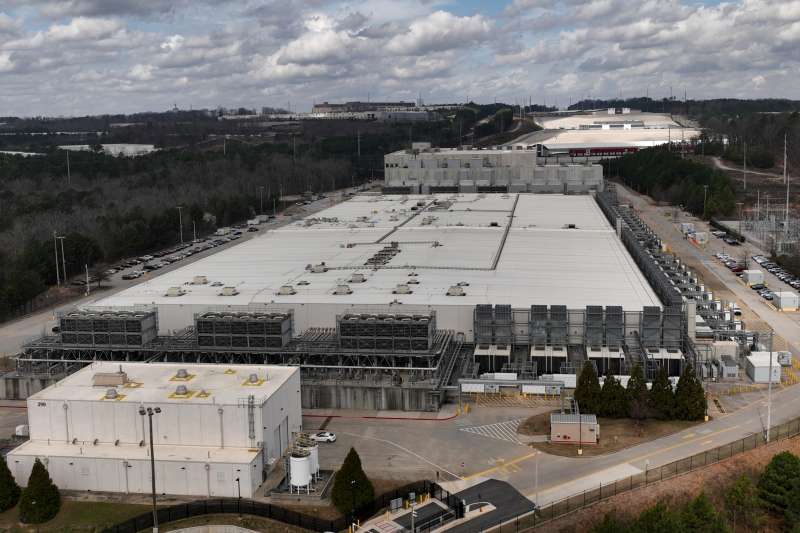
With concerns about rising energy costs and threats to the environment, lawmakers have proposed a bill to reign in data centers by requiring them to disclose their impact on energy consumption.
Across North Carolina and the US, local and state governments are grappling with how to respond to the rush to build data centers.
In late April, four Democratic members of the North Carolina House of Representatives proposed legislation to regulate data centers and address concerns from local communities. The Ratepayer and Resource Protection Act would prevent companies building data centers from receiving tax incentives, protect consumers from bearing the brunt of increased energy costs from these facilities, and establish a regulatory standard for approving new data centers in the state.
“We know that large-scale data centers place enormous demands on electricity, water, and local infrastructure, and residents are rightfully concerned about the impact. They deserve transparency, protection, and swift action,” state Rep. Beth Helfrich (D-Mecklenburg County), who is among the lead sponsors of the bill, said in a statement.
Currently, 43 data centers in North Carolina are operational, while another 40 projects have been announced. Twelve additional data centers are currently under construction.
At least 13 counties and towns have passed temporary moratoriums on building data centers, with other communities actively considering temporary bans.
State Rep. Lindsey Prather (D-Buncombe County), a primary cosponsor of the new legislation, says the bill will help communities that are trying to determine how to approach the issue.
“Cities and counties are doing their best to act on proposed data centers on a case-by-case basis, but the legislature can be a strong leader in creating a consistent and transparent policy that keeps the cost burden of data centers on the centers themselves, not on taxpayers,” she said in a statement.
What the bill would do
One of the key provisions of the The Ratepayer and Resource Protection Act is to prevent data centers from receiving tax incentives. Prather says data centers are coming to North Carolina regardless of monetary incentives.
“These companies are coming to North Carolina even without the incentives. It’s incumbent upon the legislature to make sure our state benefits as much as possible,” she said.
Gov. Josh Stein has also signaled his concerns about tax breaks being provided to companies building data centers.
“Do we really want to subsidize data centers’ consumption of energy and electricity, when they make everyone else’s power bills go up?” Stein said in early April.
The bill would also require any company seeking to build a data center to provide the North Carolina Utilities Commission, the Department of Environmental Quality, and the local governments where the site would be built with information about the overall impact of the site on the community. For example, if a company wants to build a data center, under the legislation, they would be required to provide information about the facility’s estimated annual energy and water consumption, as well as what cooling technology would be used on site.
This would apply to any data center with peak power demand of 40 kilowatts or greater and/or any data center that consumes one billion gallons of water per year or more.
A significant amount of energy is required to power data centers. ABC 11 reports that the T-5 data center in Kings Mountain, the state’s largest, takes as much energy to operate as every home in Durham County combined.
A large-scale data center may also require up to 5 million gallons of water consumption per day, draining resources from communities.
The Democrats’ bill seeks to address rising costs from data centers by shifting the costs associated with data centers from consumers to the data centers themselves.
“The people and communities I serve in northern Mecklenburg County are already navigating the strain of rapid growth and rising costs,” Helfrich said. “We can support economic growth without asking residents to simply absorb the costs, both financial and environmental, that come with it.”