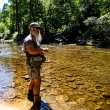
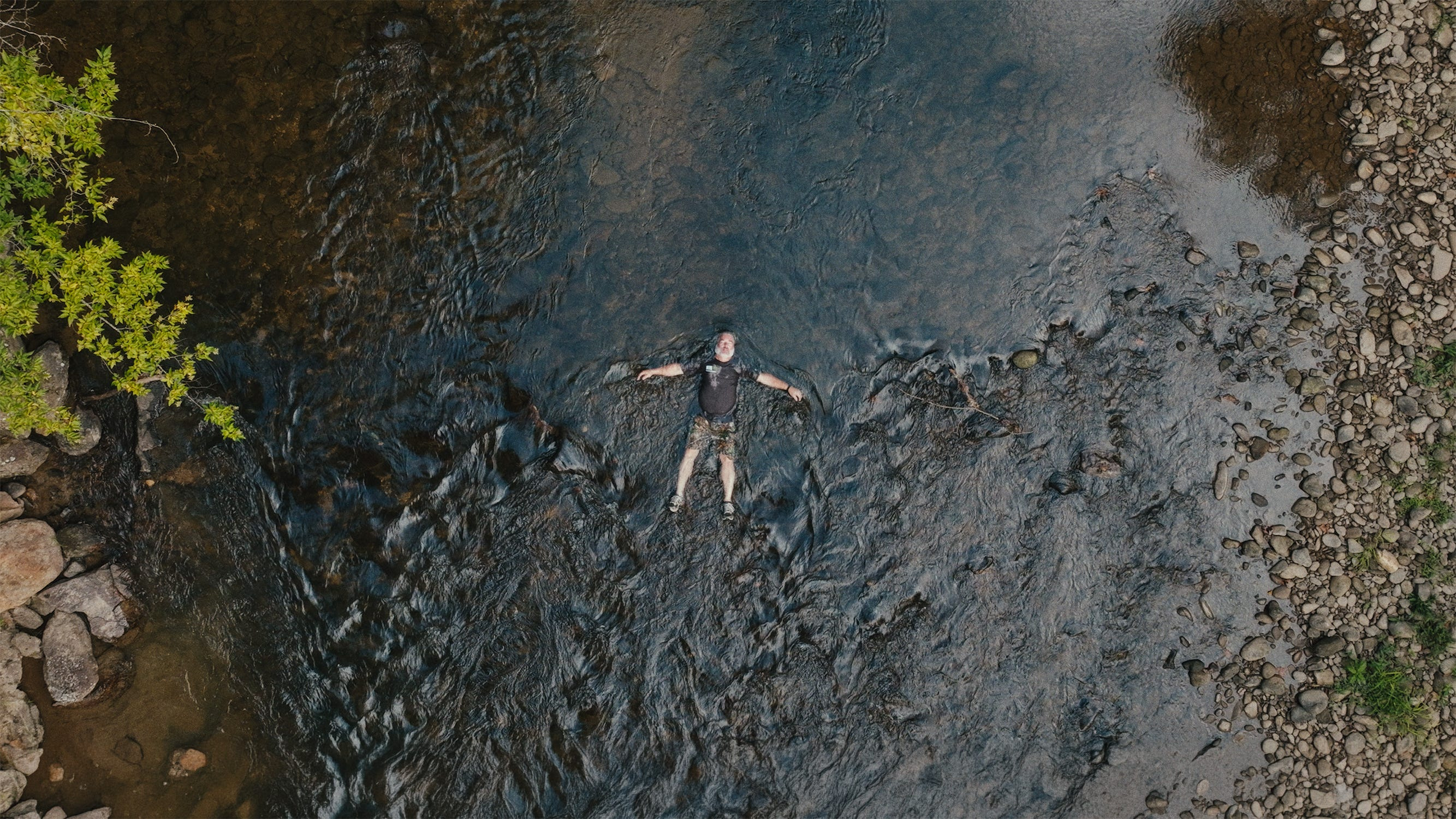
The rushing water of the Pigeon River flows over former Canton Mill employee Roger Frady as a song fades in.
For many in the small town of roughly 4,300, its words, sung by Dave Matthews, are familiar, if not biographical — it’s the story of someone who has lived in the mountains of North Carolina all their life and the uncertain future that comes when the local economy begins to collapse.
It is the final scene of the new movie “Papertown,” a documentary filmed by New Union Studios shortly after it was announced that Canton’s paper mill, owned by Pactiv Evergreen, was set to close.
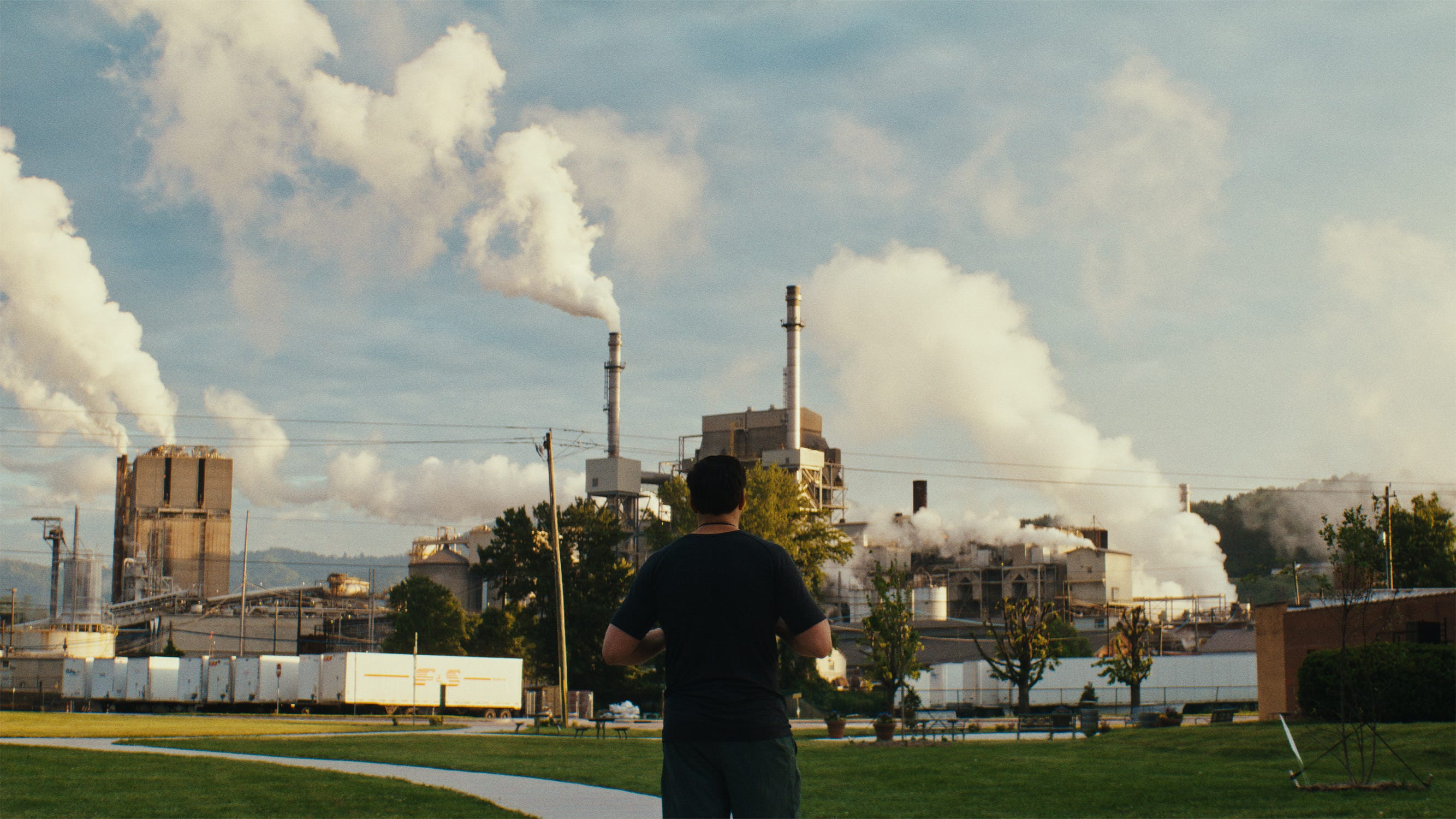
The closure of the 115-year-old mill led to what Western North Carolina’s leaders described as a regional economic crisis that has since impacted tens of thousands, the Citizen Times reported. Roughly 1,200 were laid off in the closure.
Started as a passion project by a group of six unpaid filmmakers, Papertown premiered in Canton in early May before making its way to Mountainfilm Festival in Telluride, Colorado, for its world premiere.
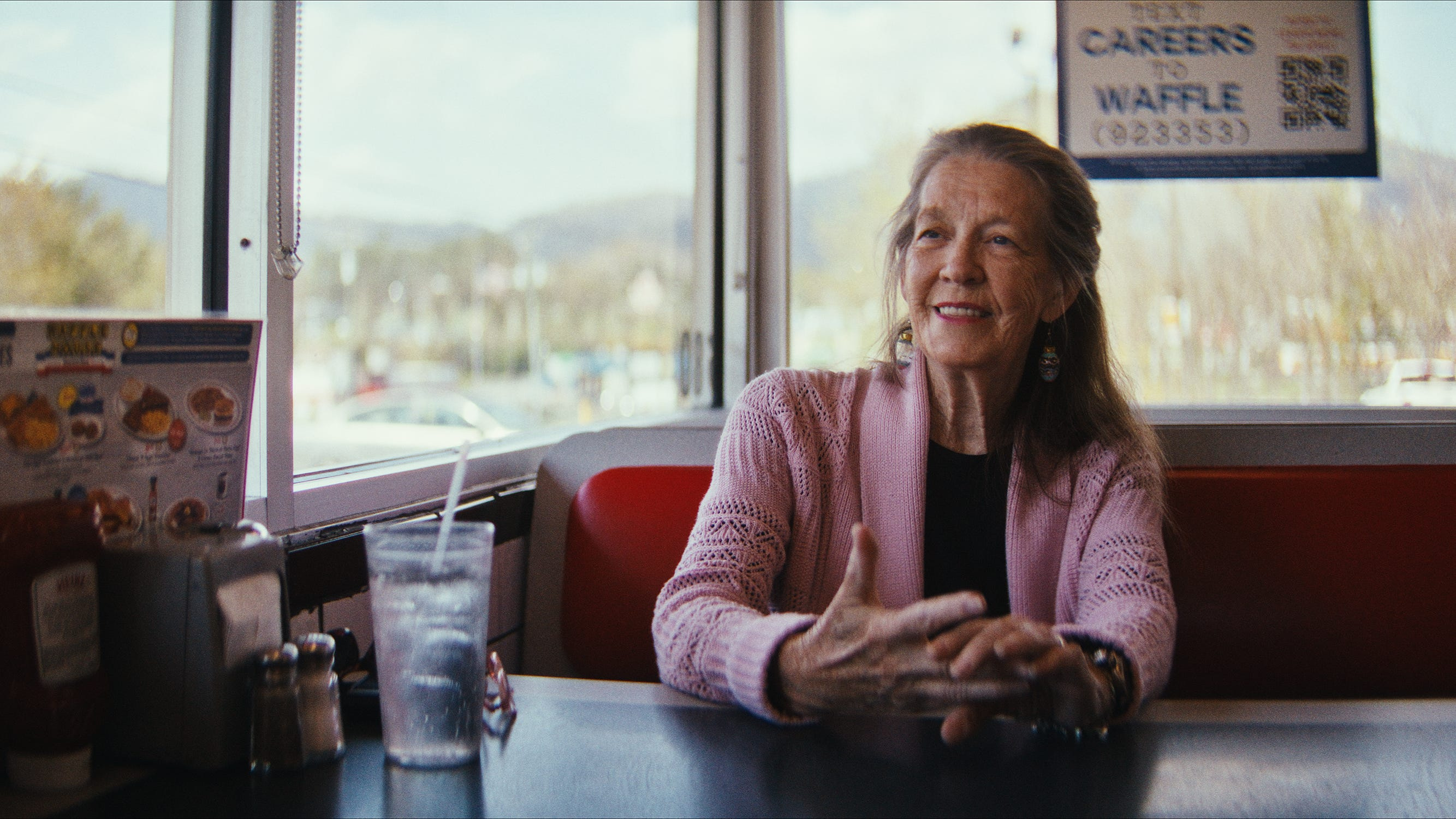
Chronicling the mill closure from the ground, the documentary profiles residents, local leaders and mill workers as the impending “last whistle” approaches during the months of March to May 2023. Pactiv Evergreen, which has since sold the mill property, declined to participate in the project.
After it was filmed, the movie earned grants from the Catapult Film Fund, Ford Foundation, and Foundation for the Carolinas, collectively worth $150,000.
It’s director, Jeremy Seifert, spoke with the Asheville Citizen Times about the making of the film, how they navigated the mill’s closure, its reception and how the song with Matthews, who serves as executive producer on the film, came about. (Spoiler: A text message goes a long way.)
More information can be found about the documentary at www.newunionfilms.com/papertowndoc.
The following has been edited and condensed for length and clarity.
Citizen Times: The choice to film the closure of the Canton paper mill seemingly came about quickly after it was announced. How did you decide to start working on the documentary?
Jeremy Seifert: (It was) completely spontaneous. I was driving around Asheville — I think I was on my way to a coffee shop — and Blue Ridge Public Radio was on, and they made the announcement of the story. I think the mill workers had just found out a day before.
The BPR story was like: Woah. The mill’s closing. It’s been around for 115 years. It captured my imagination as a filmmaker. So, I called Colby Sexton (a producer on the film) and he said he had the same thought and actually Jake (Directory of Photography on Papertown) and Colby filmed at a prayer vigil for the mill the night before.
I think that same day or the next day, this team of six filmmakers in Asheville, Canton and Waynesville — we all hopped on it. I think two days later we were filming our key interview with Matt Boyston.
CT: How did you choose the people to interview in the film?
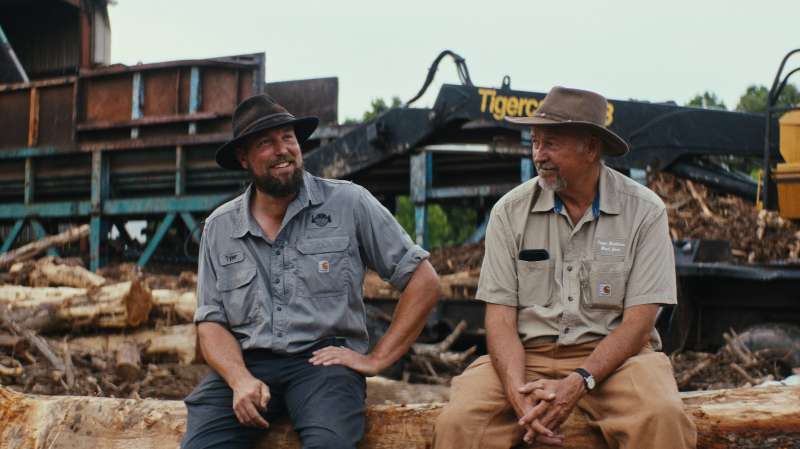
Seifert: Producer Chris Pruitt lives in Canton and his next-door neighbor is Nancy, who is Matt’s mother. That’s how the whole film went. We’d be interviewing Matt, and he’d say, “Hey, man, go talk to this guy.” Then everyone said you should go talk to Gail Mull, the secretary of the union hall.
That decision to center it on the mill workers and the townspeople came really early on. We had all sorts of ideas, like, “What about this? What about that? We should interview a professor who wrote this book…”
I just kept saying, “No,” to these things that were outside and analyzing or looking in. Let’s just stay right in it with them and if they (community members, mill workers) want to bring up environmental issues, they can bring up environmental issues. You know, the cold open where Matt talks about what a hillbilly is: I didn’t ask him about it. He just started telling us.
That’s a lot of the film. Shut up and be present and listen.
CT: Did you feel like you took away any lessons from centering it on everyday people? Some scenes reference politics, but the documentary feels more grounded in community.
Seifert: I think the power of this film and its importance is that neighborliness is more important than political allegiance. That being a community and living together should take precedence over agreements or disagreements on political issues.
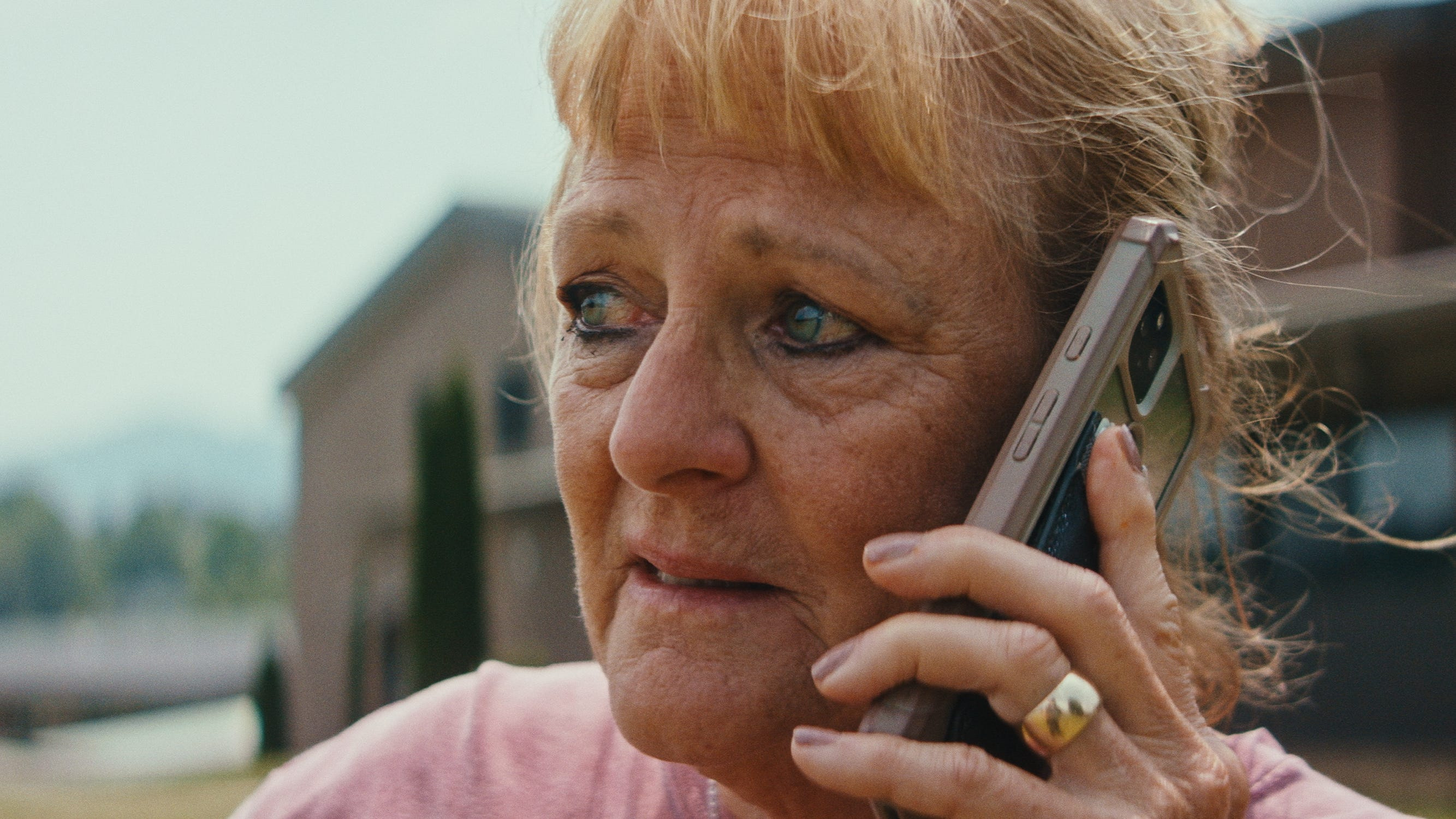
We’re going to disagree on things, but we can still love each other. Gail, who is a hardcore Democrat, hugged a woman with a MAGA shirt on at the last whistle and said, “I love you.” She’s not just saying that. She means it.
We have a lot in common and we have a lot of struggles — if they are not couched in language that’s polarizing, we do agree on a lot of things. We can still help a neighbor change his or her tire or bring them a bowl of sugar, even though we disagree politically.
CT: Pactiv Evergreen chose not to participate in this documentary. What did you make of that? Did it change the film at all?
Seifert: I wasn’t surprised. Especially when we were in the three month window from announcement to closure, we had problems with mill workers wanting to talk to us because they were afraid they weren’t going to get their severance pay if they rocked the boat.
We asked many higher-ups within Pactiv who were in Canton for interviews. Some of them said, “No,” and others just kicked the can down the road. To do due diligence, we tried (then) and we tried after the closure. But we wanted to live through it as if we were a part of the community and having the same access they had.
CT: How did filming at Pisgah High School’s pulp and paper class come about?
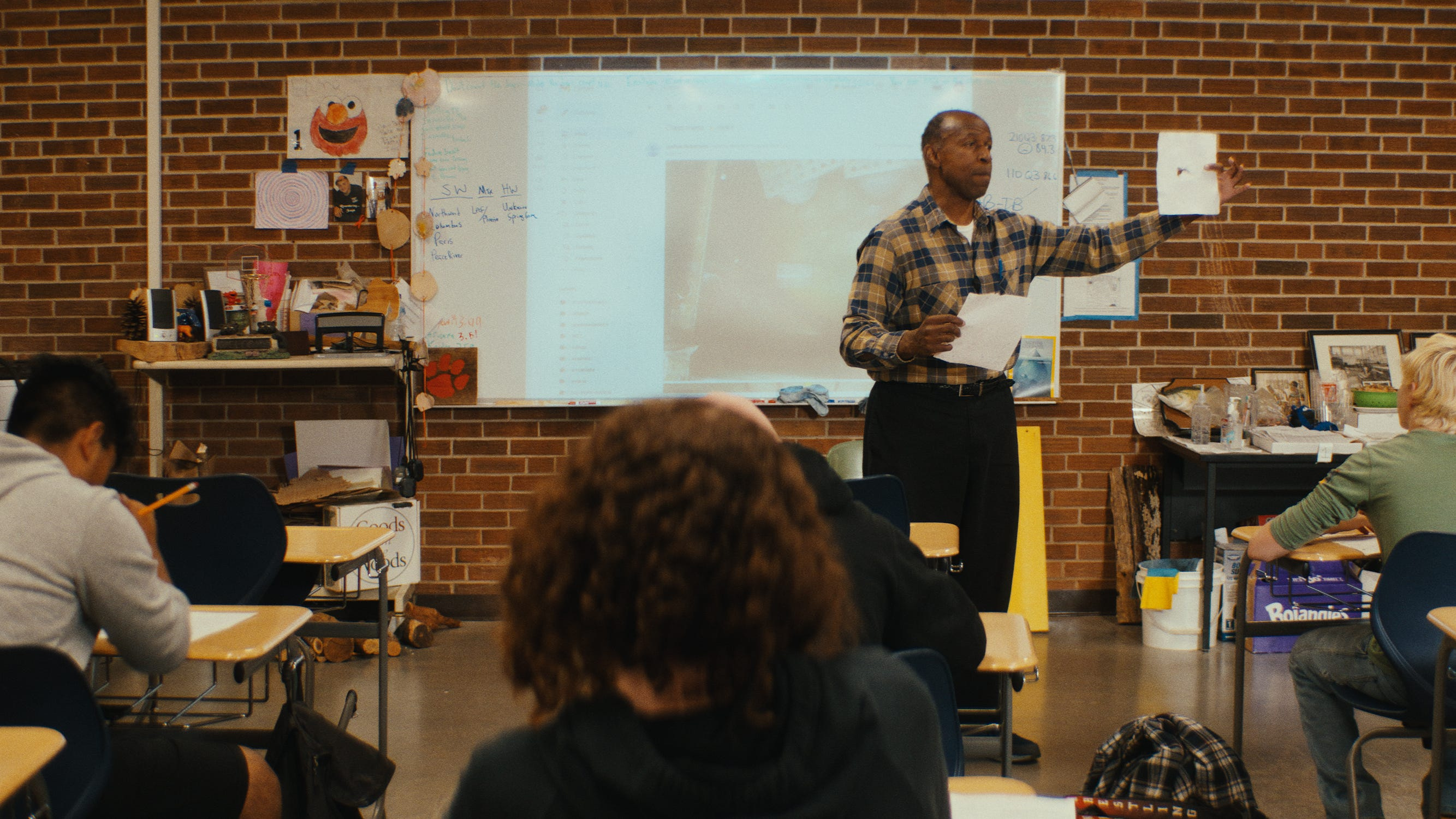
Seifert: It was within the first couple weeks of filming and someone told us, “Did you know that there’s a pulp and paper class at the high school? It’s the only one in the state of North Carolina.” We were like, “We are going!”
Wendell Godfrey (the class teacher) is amazing. It was one more thing to show how intimately tied the community — the town — is to the mill.
CT: How did the song with Dave Matthews come about?
Seifert: I texted Dave Matthews and said, “Check out this film…”
He gave support to a film I did years ago called GMO OMG with two little amazing grants. I met him back then and would text him updates on the film, and then, you know, at a certain point, I was like, “I need to stop texting Dave Matthews.” (Seifert laughs)
It had been over a decade, and this was only like 10-12 weeks ago that I heard him play a song on Instagram that was just him with a guitar and he was responding to ICE in Minneapolis. The song he wrote was just great. So, I just texted him and told him I thought he would like the film and would love for him to take a look. He said, “Send it to me…” and then he said you can have any song of mine you want.
It was awesome… Then he said, “Maybe there’s a world where I write something…” Then two weeks later he’s like, “I’m working on something.” And then he sent this song and we were all just blown away. He was texting me about certain parts of the film and people in the movie and facts like, “Did you know that the Pigeon River is named because there used to be tons of carrier pigeons in that area?”
He really connected with the film in a powerful way and it shows. He is so generous… He’s a busy dude doing a lot of stuff. Then we asked him to come on as an executive producer.
CT: Did Tropical Storm Helene, which is not mentioned, change the movie?
Seifert: It disrupted the film on many levels. It flooded the basement of Ben’s home and he was editing the film at the time and had to go up to his parents’ home in Boone… We were all chainsawing neighbors’ trees and helping out and getting water. It put everything on hold for the film for months. At the same time we were filming because we didn’t know. We thought (Helene) would be part of the film…
How Helene disrupted all of our lives, it was almost almost too big of a disruption to the storyline of the film. It was important, because they (Canton residents) can’t get a break, but it was just too much. So you hear references to the flood in the film, but mainly those are references to Tropical Storm Fred.
CT: How was the movie received in Canton?
Seifert: It was insane… A documentary that has very little money to do a screening for the local community is usually like 100 people in a small theater. I think we had close estimates of 2,000 people showing up for the screening. It was really incredible.
Many people were in tears and there were big laughs throughout. It was a huge success and really a cathartic moment for the whole community. Just a beautiful way to kick off our festival runs.
CT: Is the Papertown team working on anything else right now?
Seifert: Because of the making of Papertown, that group of six people who showed up day after day for free, we formed a new company called New Union. We do commercial work, as well as branded content, short documentaries and features.
We aren’t working on another feature documentary yet. We want to and I think there are some amazing, hugely important stories… Why we are not is because it’s almost impossible to make a feature documentary, an independent documentary, right now. We raised about one-eighth of our budget (for Papertown). I have not been paid as the director of Papertown. The money we got from those grants we put into editing, music, sound and color.
It’s a daunting task right now to go create an (independent) feature-length film and we desperately need the support of not only foundations but wealthy individuals who want to tell powerful stories. All independent filmmakers — we need support.
CT: Where can readers view the film next?
Seifert: I wish I had a great answer for you. We have no clue. We’ve submitted to quite a few film festivals, but unfortunately the summer is like this weird gap… We want to do local screenings in Asheville and that could be this summer. You can stay updated on our Instagram and our Facebook.
This article originally appeared on Asheville Citizen Times: ‘Papertown’ film explores Canton mill closure, features new Dave Matthews song
Reporting by Will Hofmann, Asheville Citizen Times / Asheville Citizen Times
USA TODAY Network via Reuters Connect