This opinion column is syndicated by Beacon Media
I was diagnosed with colorectal cancer in 2014 and given a one-in-three chance of surviving five years. But I was lucky. I qualified for a clinical trial that took my Stage 3 tumor and turned it into scar tissue. Some researcher was supported by the federal National Institutes of Health money to develop a molecule and then attach it to a tumor-seeking nanoparticle — which effectively annihilated my tumor.
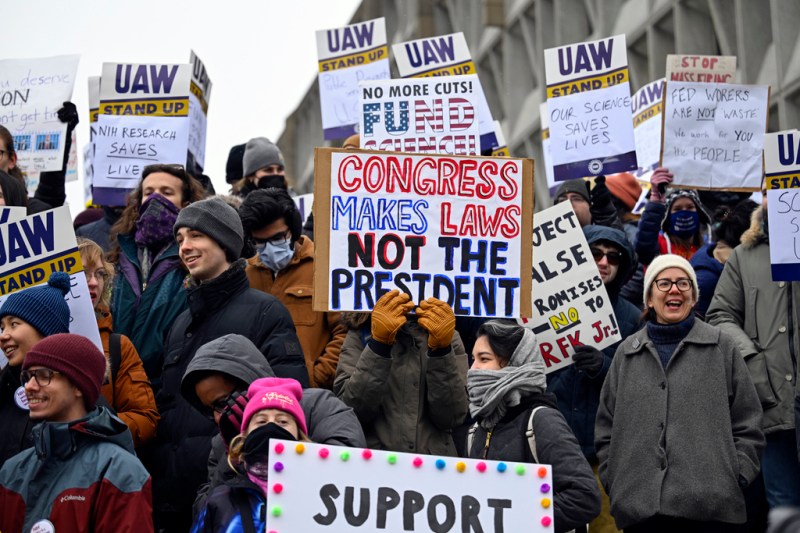
The research infrastructure that saved my life, and that of countless others, was upended in early February when the Trump administration slashed the amount that research institutions receiving grants from the NIH can claim as overhead, or indirect cost. Now those indirect costs will be capped at 15 percent of the grant total.
In the NIH announcement of the move, the authors stated that the average indirect cost rate reported by NIH has averaged between 27 percent and 28 percent over time, but many research universities and other entities withhold much more to cover overhead. At UNC Chapel Hill, that amount is 55 percent, Duke’s is 61.5 percent.
The announcement also makes comparison with private-sector rates paid by organizations such as the Gates Foundation, which pays 10 percent for overhead or the Rockefeller Foundation, which pays 15 percent.
But as AI researcher Delip Rao points out in a Substack post that the logic of the cut misses the point that those foundations were able to add low overhead percentages because the infrastructure is already there at those institutions. “The stark reality is most universities have never operated their NIH-funded projects on such a lean overhead allowance,” he wrote.
What qualifies as overhead? Well, for starters, there’s buildings and land. Then there’s people to staff and maintain and manage those buildings. Indirect costs pay for administrative support, compliance oversight (Institutional Review Boards, animal care, radiation safety), graduate student services, information technology, libraries. When a researcher goes to license their intellectual property, patent lawyers working for the university get paid out of this overhead.
The list is long, in part because research universities are complex organizations.
Could they take less in overhead? Likely. But this draconian cut seems designed to blow a hole in their budgets — for what? Slow down the research enterprise? Teach the eggheads some kind of lesson?
A quick back of the envelope calculation indicates that just in the Triangle alone, this will translate into at least $750 million in lost dollars that would have gone toward research. These cuts also apply across the state .Wake Forest University and its health system stand to lose some $50 million overnight. Other UNC campuses — Pembroke, Wilmington, Asheville, Charlotte — all are on the receiving end of federal research money.
In a missive to its research community, leaders from UNC’s office of research said, “Clearly this change in policy would have a significant and negative impact on all universities’ ability to support critical research infrastructure.” They also talked about inevitable court fights over this change.
All told, the NIH justified that this cut would save about $4 billion in taxpayer dollars. But it seems to me that whoever decided this policy will end up killing the proverbial goose that lays the golden eggs. NIH itself has pointed out that each dollar of research money invested generates some $2.64 in economic activity. That’s a lotta coin floating around North Carolina — which boasts some of the highest totals of research dollars flowing to any state — that will suddenly go away. Not to mention that all this research and resulting products contribute to U.S. technological and intellectual advancement that is the envy of the world.
And the folks chortling over this cut online (don’t go to X, formerly Twitter, just don’t!) might not laugh when they get cancer — and a treatment like the one that saved me isn’t there because of these funding cuts.