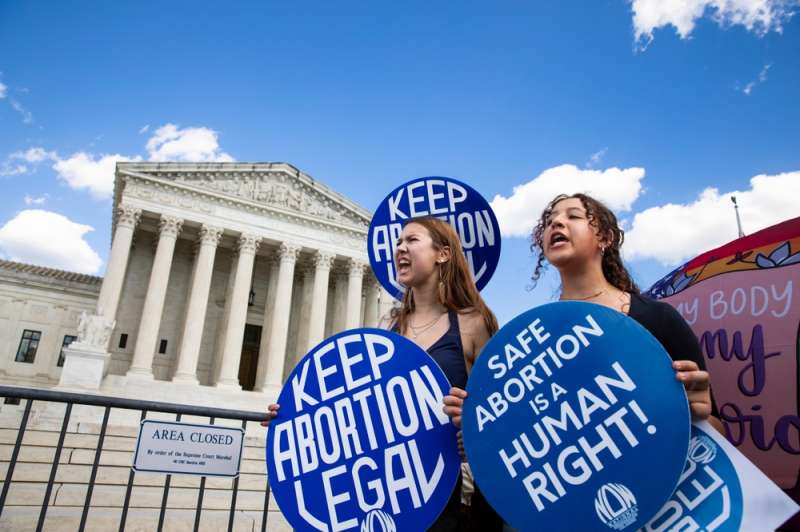
As judges and senators debate mifepristone, North Carolinians tell how a 25-year-old medication that has already become standard care for abortion and miscarriage management, for themselves and those around them.
At 20, Charlotte Isenberg was staring down a crisis.
In 2024, just as she was accepted into Appalachian State University as the first in her family to attend a four-year university, her birth control failed. Living in a part of North Carolina where abortion clinics are scarce and public transportation is nearly nonexistent, carrying the pregnancy to term would almost certainly mean abandoning school and returning to the cycle of trauma she’d grown up in.
This was not the first time pregnancy had upended her life. As a 15-year-old teenager, Isenberg became pregnant after years of sexual abuse. She miscarried alone in a high school bathroom after being 10 weeks pregnant.
After that, she turned to social media to share her experiences through videos and posts. Because of the online platform she had, in the years that followed, anti-abortion groups found Isenberg and turned her story into a kind of cautionary tale, repurposing her story about rape and miscarriage into an argument against abortion without her consent, or data to prove their false narratives.
“When the anti-abortion lobby can focus on these specific narratives from specific people, rather than showing data that backs their ideas which don’t exist, it allows them to push this narrative of protecting women from ourselves,” Isenberg said. “And it’s easy for people to not look too critically into that when presented with those really compelling narratives,
But when she found herself pregnant again in 2024, those same groups did not offer the material support she would have needed to continue the pregnancy. Instead, some urged her to visit crisis pregnancy centers (CPCs)—fake medical clinics run by anti-abortion radicals—by flooding her phone with calls, and even attempting to initiate a 72-hour involuntary psychiatric hold on her, to stop her from having an abortion.
RELATED: ‘They knew I wanted an abortion’: What she got instead at a ‘crisis pregnancy center’ in NC
Isenberg ultimately had a medication abortion, using pills prescribed safely under current Food and Drug Administration (FDA) rules and taken at home. Without the pills, Isenberg said her life would have been changed forever.
“I would not have been able to travel out of state to Virginia, like so many North Carolina abortion seekers have to do,” she said. “I would have had to remain pregnant, and that’s terrifying to me, because I would not have been able to go to university to be the first person in my family to ever graduate and get a bachelor’s degree. I would not be going to grad school right now.”
Now, those same rules that made her abortion possible are before the US Supreme Court, and one of the pills she used is at the center of a broader campaign in the courts and in Congress that could significantly limit access in North Carolina and across the country.
The 25-year-old drug in a new legal fight
The medication Isenberg took, mifepristone, has been part of US reproductive healthcare for nearly a quarter century. It’s used in miscarriage management, to help treat Cushing’s Syndrome, to induce labor, to manage the painful growth of tissue that comes with endometriosis, and even to help patients have easier IUD insertions. In 2000, the FDA approved it to end early pregnancies. Since then, 7.5 million Americans have used mifepristone safely.
Because of its safety and effectiveness, mifepristone is now approved for prescription via telehealth visits and mail-order dispensing.
A two-pill regimen of mifepristone followed by the drug misoprostol has become the most common method of abortion in the country. According to Guttmacher, medication abortions accounted for 63% of all abortions in the US in 2023.
Dr. Jenna Beckham, a North Carolina OB-GYN certified in complex family planning, said the pill is used throughout the world and is incredibly safe.
“It is also preferred by many patients because it is less invasive,” she said. “It doesn’t require a procedure, it can be more cost effective, and [patients] have a faster appointment—it gives a little more control over the timing of when something happens. You can do things in the privacy and comfort of your own home”
The US Supreme Court’s 2022 decision in Dobbs v. Jackson, which overturned Roe v. Wade and allowed states to ban abortion outright, made that prescription even more important. As clinics closed and reduced services in red states across much of the South, medication abortion, and the ability to prescribe pills across a distance, became a critical path to care.
For Gabby Long, outreach coordinator and patient advocate at A Women’s Choice, which operates clinics in North Carolina, Virginia, and Florida, that shift has shown up as confusion and fear on the other end of the phone.
“A lot of people are confused, and a lot of people have no idea about the bans and restrictions in our state,” Long said. “They hear one thing on the news, and then they’ll read something and then, the state decides to do one thing, and then the next day, they’re going to do something else. There is so much confusion that is going on, and it just breaks my heart for people to have to go through that.”
The states v. the FDA
SCOTUS has already confronted one attempt by religiously driven politicians and activists to ban the use of mifepristone. In a 2024 ruling, the justices unanimously dismissed a case brought by anti-abortion physicians in Texas, finding that the doctors had not shown the kind of direct legal injury required to challenge the FDA’s decisions.
That ruling closed one door. But more opened when other states filed too, including Louisiana when the state government filed its own lawsuit against the FDA last year.
Unlike the Texas doctors, the state of Louisiana is not challenging the original 2000 approval of mifepristone. Instead, it is targeting the agency’s more recent decisions to allow telehealth prescribing and mail-order dispensing.
The lawsuit Louisiana v. FDA asks federal courts to roll back the FDA’s 2023 mifepristone policies and reinstate an earlier requirement that patients must receive the drug in person. Crucially, Louisiana wants that requirement applied nationwide, including in states where abortion is legal.
In late April, a three-judge panel of the 5th US Circuit Court of Appeals largely agreed, concluding that Louisiana is likely to prevail on at least part of its claims. That order would effectively end telehealth and mail-order access to mifepristone across the country and sideline pharmacies that only recently became part of the abortion-care landscape.
But on May 4, US Supreme Court Justice Samuel Alito issued a short-term stay, temporarily freezing the 5th Circuit’s ruling—and again on May 11, stating that access to mifepristone would remain unchanged “until at least Thursday” while the full Court considers whether to keep the lower court’s order on hold during the appeal.
That meant through May 14, patients like Isenberg continued to obtain mifepristone via telehealth, by mail, and at certified pharmacies. However on Thursday evening, the justices went further, lifting the 5th Circuit’s order and fully restoring the FDA’s 2023 telehealth and mail-order rules for now, while the lawsuit continues.
North Carolina enters the fight
The courtroom battle is not the only threat to mifepristone.
In March, Missouri Sen. Josh Hawley introduced the “Safeguarding Women from Chemical Abortion Act,” a bill that would direct the FDA to withdraw approval of mifepristone for abortion and make it unlawful to distribute or label the drug for that purpose anywhere in the United States. Approval for other uses, such as treatment of Cushing’s Syndrome, would remain legal.
Republican North Carolina Sen. Ted Budd quickly joined as a co-sponsor.
Beckham said the political battlefield for reproductive rights is both infuriating and frustrating.
“It makes me upset for my patients and for my own colleagues, other healthcare clinicians, that one, we even have to think about these things,” she said. “And now I have to add this onto the top of it, of thinking of what is the newest sort of threat that often, when they come from politicians, they are not founded in science or evidence. They have political agendas and they are harmful to clinicians and to patients.”
Beckham, who is licensed in both North Carolina and Virginia, said she prescribes both mifepristone and misoprostol at least once every week for abortions and miscarriage management.
“Not only am I a physician who prescribes the medication, I have patients who use it, but I’m also trained to interpret medical literature and scientific evidence,” she said. “Most politicians, the ones that are supporting this bill or not, are making sort of large assumptions based on information that’s not a reliable, reputable, rigorous, scientific source that shows that mifepristone has been approved by the FDA since 2000.”
And as a person once involved with anti-abortion advocates herself, Isenberg said this playbook politicians are using seems similar to the ones anti-abortion groups use.
“What feels familiar to me is this idea of protecting women, pregnant people, from ourselves,” Isenberg said. “This idea that it’s their responsibility to come in and tell us about our healthcare because we actually don’t know what’s best for us in our bodies and our bodies and our communities, and it’s just this very patronizing language that I think marginalized people are very used to hearing.”
She said that anti-abortion lobbyists don’t know what’s best for communities or their healthcare, and that anti-abortionists’ best interest is donor money and political power.
“That’s a consistent through line that I see in the anti abortion movement,” Isenberg said. “The people that these legislation proposals are going to affect, are going to be rural people. It’s going to be poor people in North Carolina, and it’s going to be communities like mine. It’s not going to be people who are sitting in their mansions in Raleigh.”
For patients in North Carolina, the combination of Louisiana’s lawsuit and Hawley’s bill represents the two-pronged strategy now being deployed against medication abortion: one track aimed at limiting how mifepristone can be accessed, and another aimed at removing it from the abortion toolkit altogether.