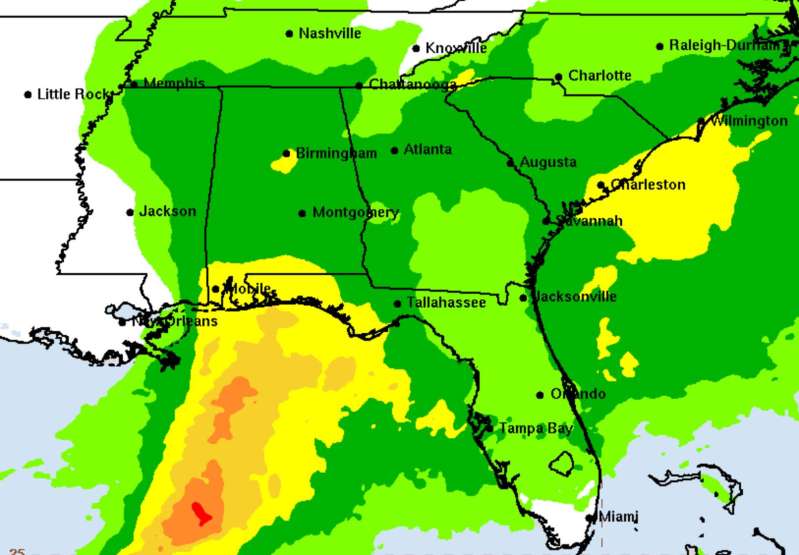
A storm heading for the U.S. Gulf Coast has strengthened into Hurricane Isaias, with landfall expected late Friday, Oct. 9.
By the time Isaias hits the U.S. coast, the National Oceanic and Atmospheric Administration expects it to be a particularly dangerous hurricane, with life-threatening storm surge, damaging winds and rain heavy enough to cause significant flooding.
Read More: It’s peak hurricane season in NC, so where are the storms?
Isaias is expected to be the first hurricane to strike the U.S. since Hurricane Milton in 2024, and marks the first hurricane of the 2026 Atlantic hurricane season. The storm became a hurricane less than 20 hours after becoming a tropical storm, according to an announcement from the National Hurricane Center at 11:30 p.m. on Wednesday, Oct. 7.
As of 7 a.m. on Thursday, Oct. 8, Isaias was a Category 1 hurricane, moving east-northeast at 9 mph with sustained winds of 80 mph. NOAA has warned residents in areas expected to see the worst impacts to prepare for the possibility of long-duration power outages.
Never miss a North Carolina update. Get Cardinal & Pine’s free, award-winning newsletter.
Is Isaias a hurricane yet?
Yes. Isaias is a hurricane and is expected to strengthen into a strong hurricane as it approaches the Gulf Coast Friday, Oct. 9. Life-threatening storm surge is expected along a portion of the northern Gulf Coast, with a Storm Surge Warning in effect from the mouth of the Mississippi River to Steinhatchee, Florida.
Will Hurricane Isaias affect North Carolina?
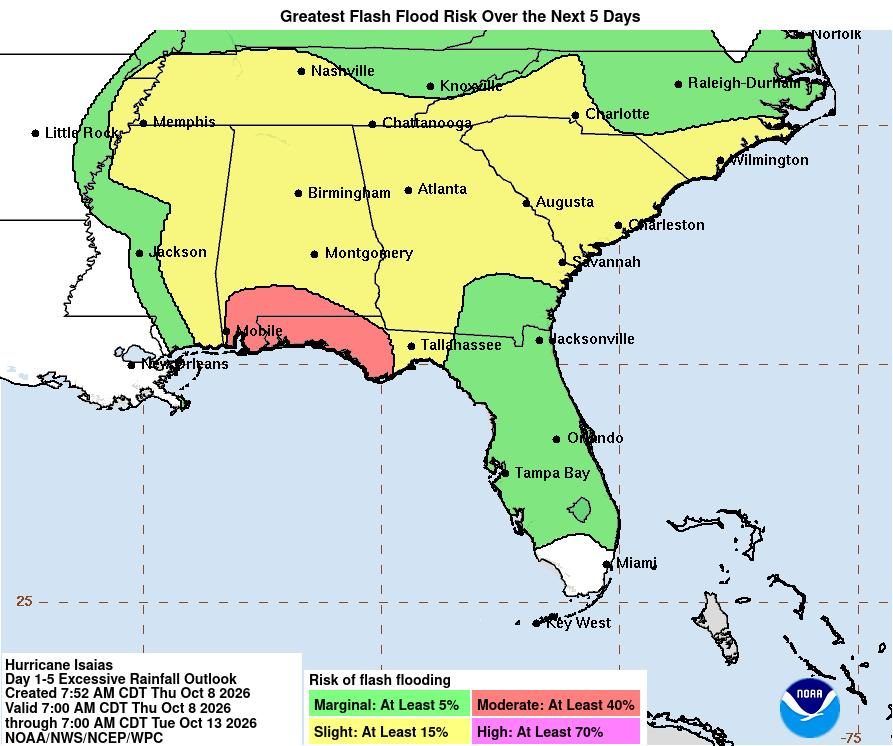
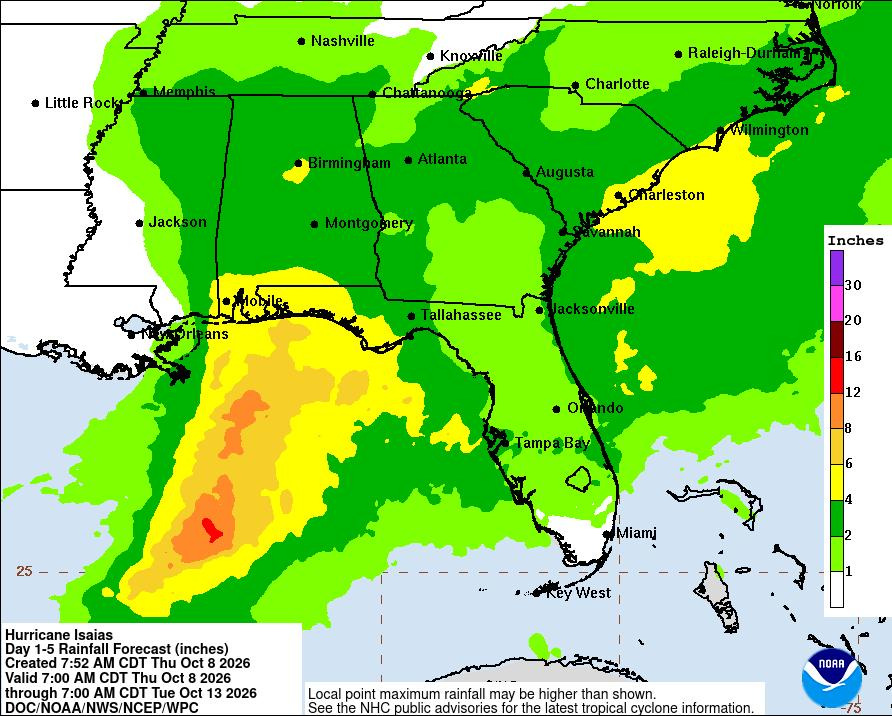
Heavy rainfall is expected through much of the Southeast, including Asheville and Western North Carolina starting Friday and continuing through the weekend, Oct. 9-11. NOAA predicts flash and urban flooding along with isolated river flooding for areas impacted by the storm.
How much rain will the areas impacted by Helene get?
According to the most recent maps from NOAA, Western N.C. could see between 1-6 inches of rain associated with Hurricane Isaias.
Will Hurricane Isaias cause flooding in western NC?
According to most recent maps from NOAA, parts of Western N.C. could see up to a 15% chance of flooding, as well as parts of the Southern region of the state and along the coast.
Reporting by Iris Seaton, Asheville Citizen Times / Asheville Citizen Times
USA TODAY Network via Reuters Connect