On Saturday, July 4, the United States will commemorate the 250th anniversary of the signing of the Declaration of Independence. Celebrations and events will take place across North Carolina and the country as the nation marks the semiquincentennial.
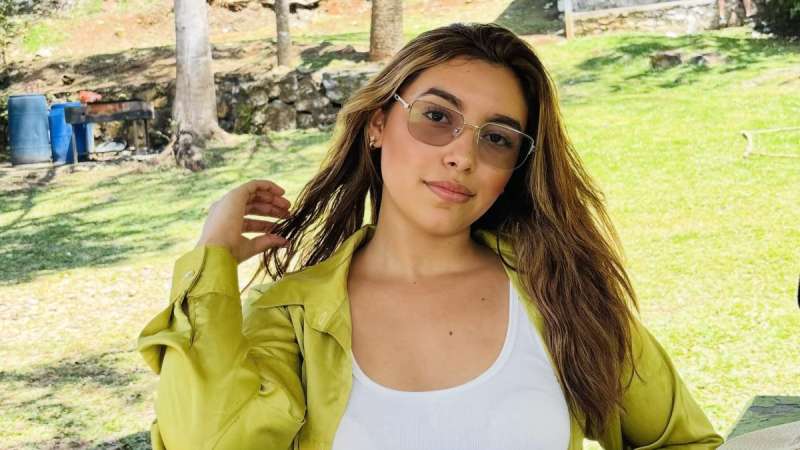
One person who longs to be in America but finds herself locked out of the country she calls home is 21-year-old Allison Bustillo.
In a video call conversation with Cardinal & Pine from Honduras, Bustillo reflected on her memories of celebrating the Fourth of July in North Carolina.
“We would go to Chimney Rock every year. We would go swimming in that little beach area. We would go there. We would make burgers, the usual typical food that you make during the Fourth of July. And to end off the night, we would do s’mores and the fireworks,” Bustillo said.
Cardinal & Pine first interviewed Bustillo last summer while she was being detained without charges by Immigration & Customs Enforcement (ICE) at the Stewart Detention Center in Lumpkin, Georgia. She was there for seven months.
In September, Bustillo made the decision to self-deport via a commercial flight to her home country of Honduras.
Nearly a year later, she lives near Honduras’ capital city of Tegucigalpa. Despite being born there, Bustillo considers herself a stranger in the country.
Last year, when she spoke to Cardinal & Pine while in ICE detention, she said she considers English her first language.
“A lot of people, when I walk by or when they just see my actions or the way that I speak Spanish, they do turn over and look at me and they comment, and they say ‘Where are you from?’ or ‘How did you get here?’ or ’Why do you talk that way?’ I do get questioned a lot and yeah, I feel very weird. I don’t feel like I fit in here since most of my childhood was spent in the US,” she said.
When she self-deported, Bustillo left behind her mom and three brothers, who live in Charlotte. Though they can stay in touch, being separated from them has been difficult.
“My mental health has not been well. I’m missing my family a lot,” she said.
Allison’s journey from migrant to self-deportation
Bustillo first came to the United States as an eight-year-old from Honduras. She made the journey through Central America, along with her mother, Keily Chinchilla, and younger brother, Hanzel.
Upon entering the US via Mexico in April 2014, the family took a bus to Charlotte, North Carolina, and eventually settled in nearby Shelby, where she would grow up.
“Most of my life I spent in Shelby. They took me as, you know, one of their own,” she told Cardinal & Pine. “It was very pretty. Very country. Very Southern.”
Bustillo spoke no English when she arrived in North Carolina, but recalls Maritza Lesassier, her English as a second language teacher at Springmore Elementary School, helped her learn.
“She was very determined that I was going to learn English. And that took only six months,” Bustillo said.
Bustillo would go on to graduate from Crest High School, become a nursing assistant , and complete some college-level nursing courses at Cleveland Community College. She planned to pursue a bachelor’s degree in nursing when her life was turned upside down on Feb. 20, 2025.
That morning, Bustillo was at home in Charlotte with her three brothers while their mom was at work on a construction job.
FBI Agents raided the apartment looking for a previous resident as part of a drug trafficking investigation, Bustillo and her mother told Cardinal & Pine last year. Bustillo also says she was not the target of the search and has never met the person investigators were seeking.
Last year, the FBI told Cardinal & Pine that agents executed a court-authorized search warrant at Bustillo’s residence as part of a drug trafficking investigation. The agency would not confirm or deny whether Bustillo was a target of the search. An FBI spokesperson also declined to say whether the agency contacted ICE, referring only to previous comments that “the FBI does not have authority over who ICE detains.”
During the search, Bustillo recounts that ICE agents detained her, her mother, and her oldest brother, Hanzel. Her two younger siblings, who are American citizens born after the family arrived in the US, weren’t detained.
After a week of being held at a hotel in Charlotte, her mother and brother were released with ankle monitors. Bustillo’s detention, however, was just beginning.
She was transferred to the Stewart Detention Center in Georgia, a facility operated by CoreCivic, a private prison contractor.
Detained for over seven months without being charged with a crime, Bustillo said her mental and physical health deteriorated.
“When I first got there, the first thing that I told them was that I suffer from anxiety, and that I needed to see a therapist. I didn’t see that therapist until two months or a month-and-a-half before I left Stewart,” she said. “I would write to the doctors almost every day. I would tell them that I needed a therapist, that I was not doing okay mentally, and that I really needed help. Also, I started getting sick. I had really severe stomach issues, bloody stool. I had a lot of stomach pain, very excruciating pain. I would vomit the food every time I would eat.”
After months of detention and physical and mental decline, an agreement was made that she would self-deport via a commercial flight from Atlanta to Honduras in September 2025.
After arriving in Honduras, she says a local doctor discovered part of the source of her constant sickness.
“I did have a very harmful amoeba in my stomach. I went to see a specialist and he did say that it was very harmful and that’s the reason why I was sick for so long,” Bustillo said.
The doctor told her it likely came from contaminated meat, vegetables, or fruit.
When asked for further comment on the specific claims from Bustillo, CoreCivic Senior Director of Public Affairs Ryan Gustin referred back to a statement he provided Cardinal & Pine last summer.
“The safety, health, and well-being of the individuals entrusted to our care and our dedicated staff at all our facilities, including Stewart Detention Center (SDC) is our top priority. While we are unable to comment on a specific individual’s medical record due to our own policies, those of our government partners, and restrictions tied to medical privacy laws, such as HIPAA, I can share that the individual you asked about is being regularly monitored by facility medical staff, with all known medical issues being addressed.”
Despite her struggles, she never wanted to leave America and is actively seeking a path to return.
Her pathways back
Bustillo is actively seeking out pathways to return to the US and be reunited with her family who still live in North Carolina.
She is being represented pro bono by the Texas-based Saenz-Garcia Law firm, which specializes in immigration matters. Cardinal & Pine spoke with attorney Arvin Saenz about his firm’s efforts to assist Bustillo.
“Legally, she has a lot of avenues to come back. She was technically not deported. But she was in the country for a while without status, and the law as of 1997 has established a few bars to re-entry,” he said. “Those bars, however, can be cured with waivers of inadmissibility. We can ask for, in layman’s terms, a pardon.”
Having been brought here as a minor, he says Bustillo’s unlawful entry into the US was not intentional.
“She came in as a child. There’s very little culpability or criminal mind there,” Saenz said.
Saenz says that given the Trump Administration’s past refusal to follow court orders, even a judge may find it difficult to secure Bustillo’s return.
“It is still up in the air if a federal court can order her back…we’ve had people removed after winning relief. After an immigration judge told them they could stay in the country. DHS [Department of Homeland Security] still removed them. And we’ve had a hard time getting those people back,” he said.
After taking office in January 2025, the Trump administration quickly ramped up its mass deportation program. In March of that same year, a federal judge, James Boasberg, ordered a flight deporting Venezuelan nationals to El Salvador to return to the US. That order was refused by the administration.
However, Saenz says Bustillo has merit-based avenues to return to the US.
“She has progressed somewhat in her ambition to become a nurse. So we’re thinking she can come in as a student. There is a waiver she can fill out. She can come in and study and finish her career,” he said.
As of last year, 13% of nursing jobs in North Carolina went unfilled, higher than the national average.
She still dreams of a life in America
If Bustillo could be in North Carolina, the place she calls home, with her family as America celebrates its 250th anniversary, she knows how she would spend the day
“I would probably be out there celebrating with fireworks, at the beach eating burgers, hot dogs, and just having a fun time,” she said.
If she were able to return to the US, she would continue pursuing her goal to become a nurse, something she is unable to do at the moment in Honduras.
“I have a lot of plans. I want to go back to school. I want to finish my career. I want to work as a nurse,” she said.
Bustillo also reflected on what America has meant to her in the years since she arrived as a child.
“It was a country full of opportunities, freedom, and it’s something that just always stuck to me was justice for all. I just kept reminding myself when I would stand for the pledge of allegiance at school and I would keep repeating that every day,” she said. “The US means everything to me. Like I’ve said before, I consider the US as my very first home, the place that gave me the opportunity to go to school, that took me as their own. And I want people to understand that what happened to me was very unfair.”
Cardinal & Pine reached out to ICE for comment for this story but did not hear back at the time of publishing.