Anyone who has paid a bill in the last year knows that food, gas, rent, utilities, clothing, medicine, furniture, cars, and toys have all gotten a lot more expensive in the second Trump administration.
The affordability crisis in North Carolina is hardly breaking news, but a new report by Defend America Action, an advocacy group aligned with Democrats, compiles all the rising costs, stagnant wages, and cuts to essential services into one document, showing that the biggest threats to North Carolina’s economy and household budgets are not lone wolves—they hunt in packs.
The Trump administration’s economic actions and policies, including tariffs, the Iran war, and cuts to Medicaid, are “obliterating the economic security” of a huge swath of North Carolinians, the report says.
The country’s affordability crisis is accelerating, the report says, and the simultaneous cuts to federal and state assistance threaten to “rip away” safety nets when they are needed the most.
The report, titled “The Tar Heel Affordability Crisis,” will be released publicly on Friday, but Cardinal & Pine got an early copy.
It pulls together several studies, surveys, and news reports about the cost of living in North Carolina, one of the biggest concerns for most people in the state. More than 75% of North Carolinians say they are stressed about their everyday expenses.
US Rep. Deborah Ross (D-Wake County), who will help promote the report on Friday, said in an interview ahead of its public release that it “explains the cumulative effect” of rising costs.
“And that effect is devastating, particularly for seniors on fixed incomes and for families who have unexpected expenses all the time because of their kids or because their car breaks down,” Ross said.
“This isn’t just a little thing that’s happening,” she said, “and the Trump administration has been taking actions that make all these different sectors more expensive at the same time.”
The Trump administration has often downplayed or denied the effects of their policies, a sign that federal officials need to listen more to the people most affected, Ross said.
“There is absolutely no connection with the lived experience of the average American in this administration. Zero. They’re not really thinking about what the consequences are for people,” Ross said.
That disconnect extends to the state legislature too, NC Sen. Michael Garrett (D-Guilford County) said.
“Wake up, Alice, you’re not in Wonderland anymore,” Garrett said of Republicans in the General Assembly, who, despite controlling both chambers, are more than 300 days late in passing a budget that would start to address some of these issues.
Without a budget, teachers and state employees are still waiting on raises to help afford the rising costs.But at the same time, Republican leadership has cited concerns over costs as justification for scrutinizing the spending in Medicaid and other state assistance programs.
“Businesses’ energy prices are going up, labor prices are going up, everything’s going up, so legislators that want to cite waste, fraud, and abuse [without acknowledging] that costs are going up, are just detached from reality,” Garrettt said. “Well, either detached from reality or trying to avoid responsibility for the situation they’ve created.”
Widespread concern
The report shows that there are few safe harbors in North Carolina’s household budgets. Costs are up across the board and people are worried.
Groceries: Tariffs have caused food prices to climb so far so fast that the majority of North Carolinians say groceries are not just expensive, but unaffordable.
Gas: The continued uncertainty over the war with Iran has caused gas prices in North Carolina and the rest of the country to climb to their highest point in more than four years. North Carolinians are paying more than a dollar more per gallon now than in February, before the war started. Prices recently jumped 30 cents in a single day.
Utilities: A majority of North Carolinians also say their household electric bills are already unaffordable, and that is before the 15% rate hike that Duke Energy is seeking over the next two years.
Healthcare: More than 63% of North Carolinians say their health insurance, doctor’s appointments, and medication are unaffordable. At the Trump administration’s insistence, Congress allowed Affordable Care Act subsidies to expire, sending rates soaring and out of reach for more than 213,000 North Carolinians who previously got their insurance through the ACA but lost their coverage this year. Add the federal Medicaid cuts that go into effect next year could and more than 500,000 North Carolinians could lose their health insurance entirely.
Housing: More than 70% of North Carolinians say their housing is unaffordable.
It’s not just households
If prices are climbing for households, they are also climbing for mom and pop stores. More than half of the small business owners in Raleigh say rising prices are an “extreme concern,” according to the report.
The collapse this week of Spirit, the discount airline, encapsulates the problem, Garrett said.
The airline cited the rising fuel costs from the Iran war as the reason it went out of business, and that’s bad news for the small businesses owners who depended on it.
“When they were in the market, Spirit Airlines brought fares down by an average of 20%,” Garrett said.
“A lot of small businesses and small business owners used Spirit.”
That option is now gone.
“I think anybody can pick up their local newspaper anywhere in this state and read about one of their latest favorite restaurants closing, because the cost of everything has gotten too much and the business model is [no longer] sustainable,” he said.
So where does that leave people and businesses if mere existence becomes too expensive?
“A lot of it comes down to the things that we know are coming and are not prepared for,” NC Sen. Lisa Grafstein (D-Wake County) told Cardinal & Pine.
“A lot of people are hurting today, but part of the deep, deep concern for me is that this is the beginning of something that could spiral really very quickly out of control.”
Now what?
Even if state and federal officials agreed on policy, it would take time to bring prices down. Officials do NOT agree on policy.
Still, there are things that can be done now, the lawmakers heralding the report said.
“We have to stop doing the things that are hurting us,” Grafstein said.
Stop bickering over a budget that was due a year ago, for instance.
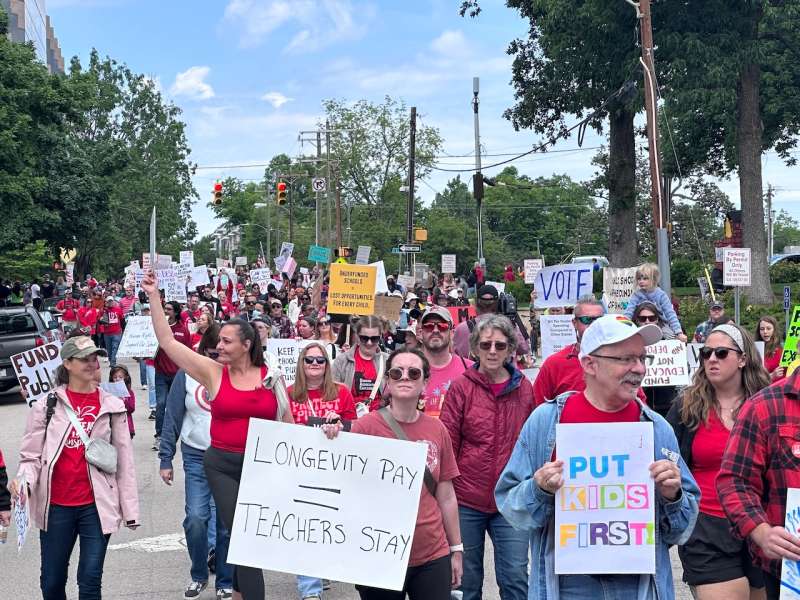
“We should have a budget, first of all, so that we can ensure that the tens of thousands of state employees and teachers across the state are able to keep up with inflation better than they have been in the past,” Grafstein said.
US Rep. Valerie Foushee, (D-Durham) said in an emailed statement that the report also highlights a fundamental difference in priorities between Democrats and Republicans.
“Over half of our state believes the job market, inflation, and national economy have all worsened under the Trump Administration,” Foushee wrote, “but still we continue to see Republican leadership use taxpayer dollars to fund wars abroad, inhumane ICE raids that terrorize our communities, and Trump’s White House ballroom over doing anything that would help the American people.”
Many Republicans have expressed worry that this divide over rising costs could cost them in the midterm elections.
Garrett and Ross say that’s the plan.
“There is no great savior coming to save folks,” Garrett said.
“No one has the power except for the people, and they have a choice this November. They need to elect people to represent them and to fight for their families that are serious about the issues that matter to them and make a difference at their kitchen table.”
Ross agreed.
“The only good thing that could happen a year from now is if Congress flips, then Congress can right some of these wrongs,” she said.
Until then, she said, people need to keep telling their story.
“Let people know what your lived experience is,” Ross said. “Use the rights that you still have. It is not too late.”
The affordability report may not be breaking news, and it may be bleak, but it once again sharpens focus on an issue that demands attention, Ross said.
“I am so glad that somebody put it all together in bold type and in very few pages,” she said. “You cannot deny it, and you cannot turn away from it.”