by Mackenzie Thomas, Carolina Public Press
September 22, 2026
Ronda, a small town situated along the Yadkin River in Wilkes County, has been on the North Carolina Local Government Commission’s Unit Assistance List for just over a decade. In that time, the LGC has highlighted concerns including late audits, budget violations and deficits in the town’s water system, according to LGC records.
On Aug. 11, Kendra Boyle, the LGC’s director of fiscal management, warned officials during a town meeting that Ronda was facing “severe and immediate financial distress” if town leaders didn’t make some serious changes.
Read More: Wake County commissioners clear the way for Atrium-WakeMed combo at contentious meeting
Town officials appeared at the latest LGC meeting on Sept. 1 and pleaded with commissioners for enough time to hold a vote that would let their citizens, rather than a state panel, decide the fate of the town.
With the town already facing the possibility of not being able to meet payroll in a few months, the commission was already questioning its viability. It gave Ronda certain tasks to complete before returning in October, but a majority of town officials decided to heed the commission’s advice and move forward with dissolution.
State Treasurer Brad Briner, chair of the LGC, commended Ronda for its decision.
“We appreciate Ronda leaders’ willingness to do what is best for their citizens and taxpayers,” Briner said in an LGC statement.
“These elected leaders took the Town’s financial challenges seriously and our staff is ready to work with them, Wilkes County and other stakeholders to ensure a smooth transition.”
To ensure a smooth dissolution process, the LGC will continue to work with the town and help officials navigate these next steps. Moving forward, questions remain about what the future holds for the struggling community.
History of financial problems in Ronda
Ronda was founded in 1907. The vast majority of the roughly 436 people who live there spent their lives working at textile mills and furniture factories, making just above minimum wage. Most of its current residents are over the age of 65, with many of them living off limited Social Security, Acting Mayor Kevin Reece said.
Its history of financial troubles isn’t new. Over the past 15 years, the town’s water system has had one issue after another related to its aging infrastructure and has bled the town’s water and general funds dry, Reece said.
As a result, the town was spending more than what it had, which is a violation of state budget law, LGC Secretary Denise Canada said.
While Reece said he believed these issues would be fixed eventually thanks to millions of dollars in grant funding the town had received from the General Assembly, it wouldn’t be resolved anytime soon.
Since fiscal year 2021, the town has submitted audits to the LGC anywhere from roughly one and a half months to almost a year late. All of its audits are now up-to-date, but Canada said turning those audits in on time is paramount to ensuring financial stability.
“One thing that I’m often saying is it’s not submitting the audits for the sake of the audit,” Canada said.
“It’s so we can assess the condition of the finances, and this is a case where we have the audits and we can assess the condition of the finances, and the finances are concerning.”

Ronda Commissioner Bobby Munsey also attributed some of the town’s issues to a past financial consultant, James Michael Boaz. He was employed with the town for at least a decade, Reece said. A former town manager in nearby Pilot Mountain, Boaz was accused of embezzling town funds during his time there and was arrested in May. His next hearing is scheduled for Oct. 12, according to court records.
High turnover in the position of mayor didn’t help either, with the town having seen five different people in the position over the past two years, Munsey said.
The town is rich in history, just not much else.
“This town’s been there a long time,” Reece said. “A lot of history, just not a lot of money.”
Decision to dissolve Ronda
Despite the concerns voiced by the LGC at the latest meeting, Reece insisted that town officials didn’t have enough “clarity” yet to determine the next best step. While he said he recognized the authority of the LGC to take control if they deemed it necessary, he argued whatever action taken next should be decided by town citizens.
“They should be able to vote to decide their fate, and they should be able to vote with facts, knowing if we want to move forward with the town, our tax rates, our property taxes are probably going to triple,” Reece said.
“Then they determine if they can afford it and if it’s worth that to them to be a town.”
At its Aug. 11 meeting, the town board voted to ask the General Assembly to grant them a referendum on dissolution, which would present the question of dissolution to Ronda residents in a direct voting process.
However, Canada said, even if approved, the earliest a referendum could be held on the issue is November 2027, which would be far too late to address the issues at hand, according to a letter sent to legislators in August.
Town officials initially believed the wait would be worth it.
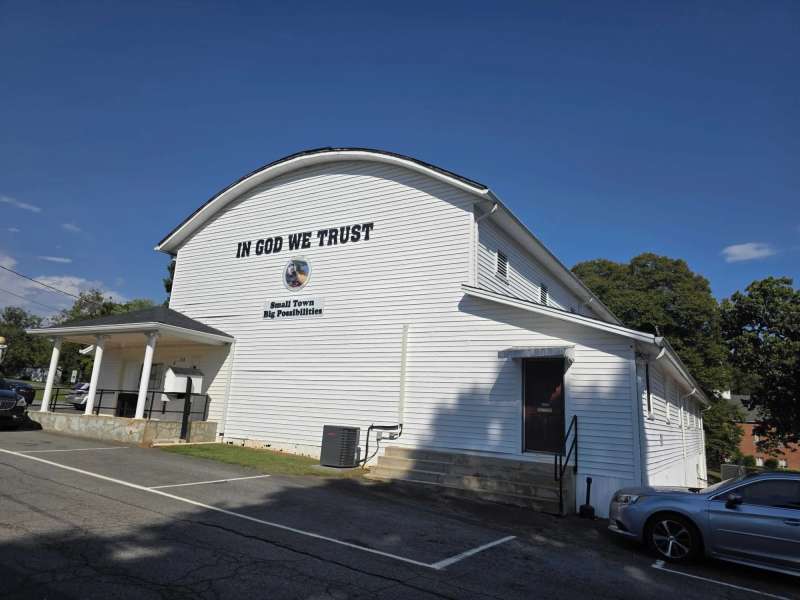
“I think we can get by long enough to put it on the ballot,” Reece said. “We got a couple hundred voters, right? We have a nice little town hall. We used to hold elections there. If it’s so important that this board and the members of the General Assembly believe that we should dissolve, I don’t know why we couldn’t have a special election.”
But it never got to that point. In a town board meeting on Sept. 8, Ronda commissioners voted 3-1 to initiate the dissolution process, which will be followed by a final vote at some point to make the dissolution official, WFMY News 2 reported.
The timing issue ended up being the deciding factor, once town officials realized a special election wouldn’t be possible, Reece said.
Joy Billings, a lifetime resident of Ronda, said that while she’s enjoyed living in Ronda and appreciates its small-town nature, she believes the dissolution has been a long time coming.
“The town should have dissolved years ago,” she said.
Billings told Carolina Public Press that she took issue with the way the water system was being run and a mysterious $3 surcharge that was just added on to her monthly bill. It went up from $52.24 to $55.24 a month, and it wasn’t addressed until the next town meeting she attended, she said.
“To me, that’s a lot of money, especially if somebody’s on a fixed income,” Billings said.
“I’m not, thankfully. I am still working, but there are some senior citizens around here that are retired.”
When asked about the surcharge, Reece said it was a recommendation from the League of Municipalities, which has been working with Ronda since it’s been on the UAL.
“With the resources that we have, we tried to share it as much as possible, and I personally tried to make sure people know about it,” he said.
Billings also pointed out that the town doesn’t have many businesses bringing in money in the first place: there’s a Dollar General, a restaurant, a convenience store, but not much else.
“There’s no money in Ronda,” she said.
However, Billings said she doesn’t think other residents necessarily feel the same way about dissolution.
“A lot of the people that live here still think that it’s a town, that’s a big deal,” Billings said. “It’s a big deal to have a town.”
Munsey is one of those people who doesn’t want to see the town go away, citing concerns about residents losing certain town services, how to continue maintaining its municipal park and cemetery and more. He voted against dissolution earlier this month.
Reece said he simply doesn’t see any other option than to dissolve.
“Financially, I don’t see how the town can afford to be a town. I don’t,” he said. “I think it’s a waste of the citizens’ money. I think it’s a waste of sales tax dollars.”
Even so, he’s still disappointed, he said.
“It bothers me that Ronda has so much history,” Reece said.
“It’s a proud community of hardworking people that’s been there since 1907, and to see it go away at no fault of the citizens is sad.”
More units in trouble
Ronda is not alone in its financial troubles and is not the only town to pursue dissolution within the past year. The town of Speed in Edgecombe County dissolved its charter in June after consistently failing to turn in audits on time, CPP previously reported.
CPP asked LGC staff whether submitting audits on time could’ve made a difference in Ronda’s case, but they said town leaders shouldn’t have to wait for an annual audit to know whether they’re operating in the black.
“LGC staff can identify concerns, provide guidance and technical assistance, and monitor units’ progress but it is ultimately the governing board’s responsibility to make the necessary decisions and operate within the unit’s financial means,” LGC staff said in a statement.
“Timely audits can provide an important independent assessment, but a governing board should not have to wait for an annual audit or LGC intervention to know whether it’s operating within its means.”
Based on fiscal year 2024’s audited financial statements, 145 units across the state were on the UAL last year. Roughly 154 units are anticipated to be on the next list based on fiscal year 2025 information, according to LGC staff.
As far as any other units that are in hot water financially, LGC staff noted there are others that they’re keeping a close eye on, three of them being issued a notice and warning — the highest level warning the commission can give — this year: Rowland, Littleton and Rocky Mount.
While a notice and warning doesn’t necessarily mean a unit is headed for dissolution like Ronda, it does mean the LGC has “serious concerns” about its financial management and other issues, LGC staff said.
What’s next?
Town officials will still return to the next LGC meeting on Oct. 1, except now they’ll be hammering out the details of the dissolution. At that meeting, the LGC will be expecting a written plan from the town that addresses the concerns from the notice and warning and will include the decision to dissolve, LGC staff said.
“Our office has been in communication with the town to offer assistance and support as the Town undertakes this process,” they said.
Under GS 160A‑825, the dissolution process consists of adopting a resolution of intent to dissolve, releasing a statement to residents, conducting multiple public hearings and coming up with a plan to distribute the town’s assets before adopting a final resolution, which must get the LGC’s stamp of approval.
At this point, Ronda is currently working on the wording of the resolution and waiting on a contact person from the LGC to be assigned to the town, Reece said.
Once all steps have been completed, Ronda will no longer be officially recognized as a town, which could be as early as June 30, 2027, Reece said. It will merge into the unincorporated area of Wilkes County, which is land that doesn’t fall under any specific municipality. Instead, it’s governed by the county government, LGC staff said.
Living outside of a designated municipality means that citizens will likely have to contract with private companies to receive certain services formerly provided to them by the town. One example of this is garbage collection, which is usually a service provided by a municipality. Other services like water and sewer can vary, with some counties providing it and others not. Statewide, 42% of North Carolinians live in unincorporated areas, LGC staff said.
In Ronda’s case, it has a water system that will continue to function even after the town dissolves, but its fate will depend on whether a new water association is formed, or if another comes and takes it over, Reece said.
Ronda will also still have bills to pay. It currently owes roughly $200,000 toward a loan to expand the lines for its water system, which would likely be paid off by 2032 if the town made payments of roughly $30,000 per year, Reece said.
However, Munsey said this is far from over. Even though the town is pursuing voluntary dissolution, the process can be so drawn out that the town could still turn things around financially and reverse the decision at a later date, before the dissolution is finalized.
“We’re working tirelessly to try to resolve all the issues we’ve had,” Munsey said.
“LGC’s been here, they’re helping us to get things resolved. It’s not a cut-and-dry deal.”
If and when those issues will be resolved remains to be seen.
Despite its troubles, Ronda and its residents remain a close-knit community.

“I had my house burned down eight months ago to the ground, and the town of Ronda, they just came out and supported us, helped us rebuild and everything,” one Ronda resident said during the LGC meeting.
“They’re just a great town of people out there. I never would have thought that in the years I’ve been alive, a small town like that would come together and help people that you really didn’t know.”
Reece said he believes it’s this spirit that will help carry the community through whatever challenge they face next.
“Growing up around there, riding my bicycle, walking through the community. I knew everybody. I’ve probably had a drink of water or soda or something to eat in about everybody’s house when I was little,” he said.
“We were a wonderful community, and everybody helped everybody.”
This article first appeared on Carolina Public Press and is republished here under a Creative Commons Attribution-NoDerivatives 4.0 International License.