Many corners of the scientific world have been profoundly impacted by the work of women. They’ve blazed a trail across every field, breaking down barriers for themselves and others in the process. These extraordinary women have discovered comets, created classification systems, and stared into the abyss of black holes.
In recognition of Women’s History Month, we’re celebrating the lives and careers of seven pioneering women who have made history with their scientific achievements. From the first Indian woman in space to the “Hidden Figures” of NASA, these women have made significant contributions to astronomy and beyond.
Dr. Nancy Grace Roman
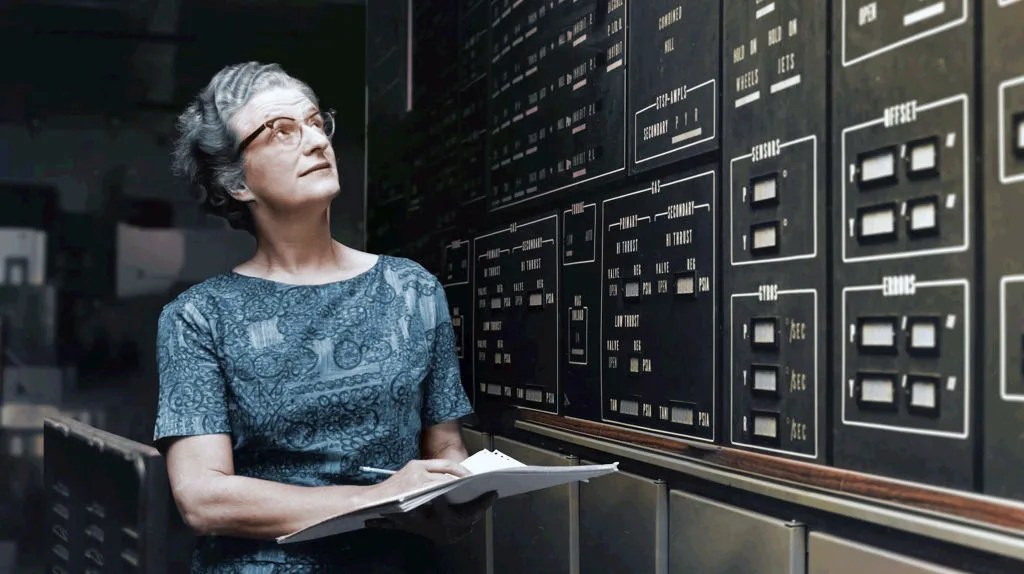
According to Space.com, astronomer Dr. Nancy Grace Roman was “the first chief of astronomy in the Office of Space Science at NASA Headquarters, and the first woman to hold an executive position at the space agency.” Her most notable achievement was championing and managing the now-famous Hubble Telescope, which affectionately earned her the nickname “Mother of Hubble.”
She first became involved at NASA in 1959 after volunteering to spearhead a space-based astronomy program. By 1960 she “was serving as NASA’s Chief of Astronomy and Relativity.” One of her main duties was to secure and administer funding for grants, which ultimately led her to champion the idea of a space-based telescope. According to NASA, Roman spent nearly 20 years working to secure “congressional approval and funding for what would become the Hubble Space Telescope,” and remained involved in the process through its planning and completion.
For more on Roman’s life, career, and accomplishments, click here for Space.com’s biography and here for NASA’s biography of the beloved astronomer.
Dr. Serena Auñón-Chancellor
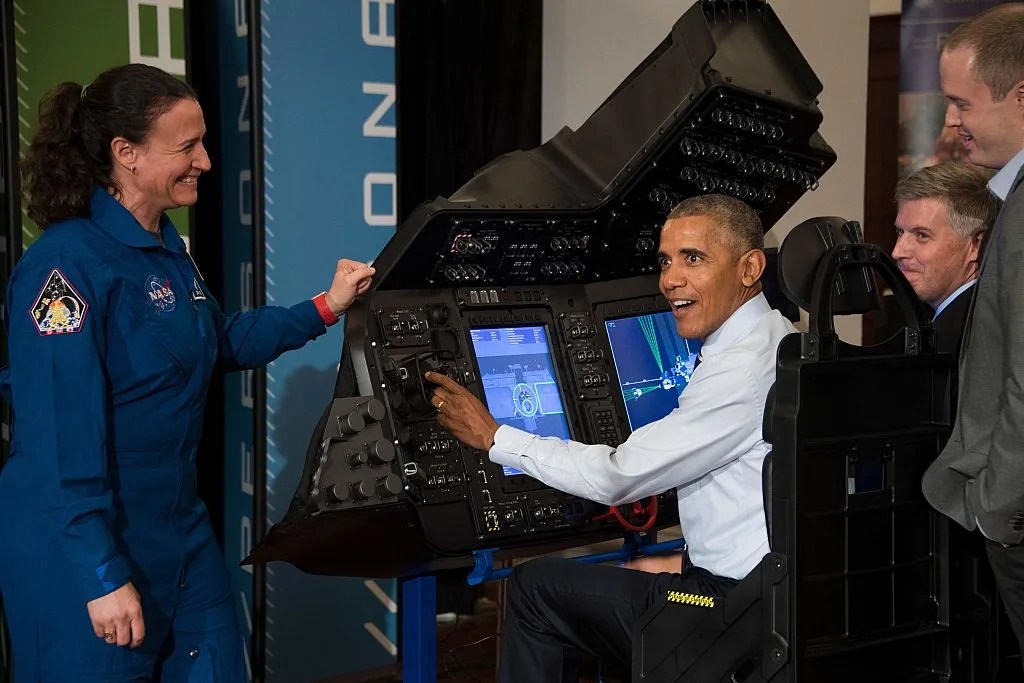
Dr. Serena Auñón-Chancellor was selected by NASA in 2009 and in 2018 she became the second Hispanic woman to fly to space after initially joining the Johnson Space Center three years prior as a flight surgeon. Since then, she has gone on to serve as a Flight Engineer for Expeditions 56 and 57 on the International Space Station, according to NASA.
During her expeditions, Dr. Auñón-Chancellor worked with the crew to conduct hundreds of experiments, including those focused on discovering new cancer treatment methods and to studying algae growth in space. Currently, she provides on-orbit support to the Astronaut Office and covers medical issues as well.
To learn more about Dr. Auñón-Chancellor’s background in education and her career in the astronomical sciences, click here to access her astronaut biography.
Dr. Kalpana Chawla
View this post on Instagram
Dr. Kalpana Chawla was selected by NASA as an astronaut candidate in 1994. In 1997, she became the first Indian woman in space when she completed her first mission. She was an operator for the remote manipulator arm on the Columbia space shuttle, according to the Association For Women In Science. She returned to the Columbia in 2003 during the flight’s fatal mission that tragically killed her and the other six crew members on board. Part of the shuttle’s insulation broke off during re-entry into Earth’s orbit, which damaged the thermal protection system. The team was only 16 minutes away from landing at the time of the accident.
In 2010, Dr. Chawla was honored by the University of Texas with a memorial to her at the Arlington College of Engineering. To learn more about Dr. Chawla’s life and NASA career, click here to read her full astronaut biography.
Dr. Beth Brown
View this post on Instagram
Astrophysicist Dr. Beth Brown was the first Black woman to earn a Ph.D. in Astronomy from the University of Michigan, where she graduated as class valedictorian in 1987. She became a research associate at NASA’s Goddard Space Flight Center as part of the organization’s National Academy of Sciences/National Research Council.
During her time at the Goddard Center, Dr. Brown continued her thesis on x-ray emissions from galaxies and went on to join the National Space Science Data Center (NSSDC) as an astrophysicist, according to BlackPast. She worked to empower and elevate women of color who were interested in joining the scientific community and became a mentor in the National Society of Black Physicists.
Considered a “rising star in astronomy,” Dr. Brown died unexpectedly in 2008 from a pulmonary embolism. She was 39 years old. To learn more about her life, work, and career, click here to read NASA’s tribute to Dr. Brown.
Mary Jackson, Dorothy Vaughan, and Katherine Johnson
View this post on Instagram
Obviously we can’t talk about astronomy, the final frontier, and the women who broke barriers here without acknowledging the contributions of Mary Jackson, Dorothy Vaughan, and Katherine Johnson. These women literally made travel to space possible. The 2016 movie “Hidden Figures” shone a spotlight on the incredible accomplishments of these three Black women who worked at NASA during the Space Race.
Jackson, Vaughan, and Johnson were mathematicians known as “human computers,” meaning they completed the orbital calculations needed to successfully navigate America’s first trip to space. According to Scientific American, “The job title designated someone who performed mathematical equations and calculations by hand.”
The three women worked at the segregated Langley Research Center in the West Area Computing Section, where their contributions led to the success of the Project Mercury missions that sent the Mercury Seven into space—including John Glenn and Alan Shepard.
According to Scientific American, “For the Mercury missions, Johnson did trajectory analysis for Shepard’s Freedom 7 mission in 1961, and (at John Glenn’s request) did the same job for his orbital mission in 1962. Despite Glenn’s trajectory being planned by computers, Glenn reportedly wanted Johnson herself to run through the equations to make sure they were safe.”
Following Project Mercury, Johnson went on to work at NASA for 33 years, where she supported the Space Shuttle program and a mission to Mars. She received the Presidential Medal of Freedom from former President Barack Obama in 2015, and was awarded the Congressional Gold Medal in 2019. She died in 2020 at the age of 101.
Jackson, meanwhile, dedicated her time to helping other women succeed in science and advised them on the educational courses they needed to achieve their own goals. She became NASA’s first Black female engineer in 1958 and was an “equal opportunity specialist” who helped “women and minorities.” Jackson retired from NASA in 1985 and died in 2005 at the age of 83. In 2021, NASA’s headquarters building, located in Washington D.C., was renamed the Mary W. Jackson NASA Headquarters.
Vaughan, for her part, became a prominent computer language programmer, according to Scientific American. She also contributed to SCOUT (Solid Controlled Orbital Utility Test), a satellite-launching rocket, and eventually retired from NASA in 1971. She died in 2008 at the age of 98, and posthumously received the Congressional Gold Medal in 2019.