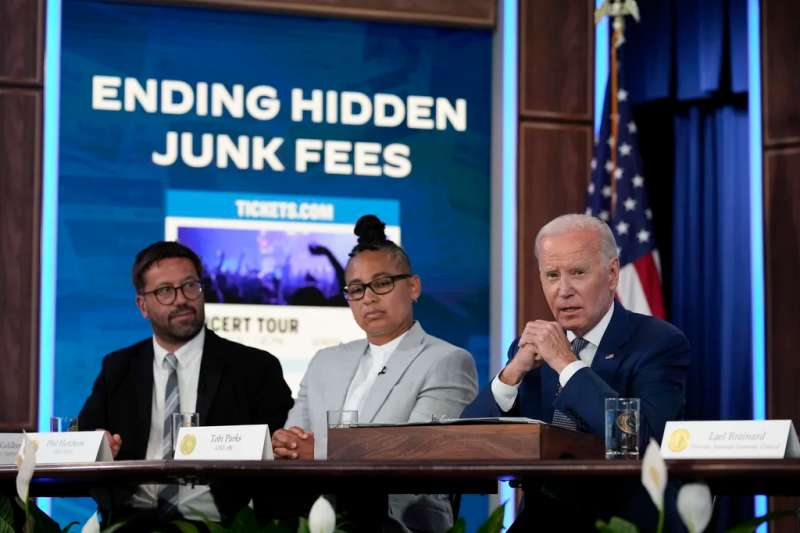
The Biden administration on Tuesday announced a finalized rule that will cap most credit card late fees at $8, the latest in a series of efforts by the White House to cut down on “junk fees” that saddle middle- and working-class Americans with extra costs.
First proposed in July, the Consumer Protection Bureau (CFPB) estimates that the final regulation will save American families more than $10 billion a year by cutting fees from an average of $32.
“For over a decade, credit card giants have been exploiting a loophole to harvest billions of dollars in junk fees from American consumers,” CFPB Director Rohit Chopra said in a statement. “Today’s rule ends the era of big credit card companies hiding behind the excuse of inflation when they hike fees on borrowers and boost their own bottom lines.”
This rule will apply to “large” credit card issuers – those that have more than one million open accounts, such as American Express, Discover, and Capital One. According to the CFPB, these large issuers represent more than 95% of the total outstanding credit card debt in the United States.
More than 45 million Americans are charged late fees on credit cards each year, according to the CFPB. Those people will now save an average of $220 annually.
This rule also aims to close a loophole that has allowed credit card companies to “exploit” borrowers, the CFPB says, by allowing them to raise fees on borrowers who made late payments.
The CFPB also proposed a rule in January that would curb excessive overdraft fees.
Chuck Bell, advocacy program director at Consumer Reports, described the new rule as a way to make a “real difference.”
“Credit card companies collect billions of dollars in excessive late fees at the expense of economically vulnerable families every year,” he said in a statement. “It’s simply unfair to impose a steep late fee penalty that far exceeds the credit card company’s costs, especially when someone is just a few hours or a couple of days late making their payment.”
The financial industry, on the other hand, slammed the rule, claiming that it will cause more people to pay their bills late, which will in turn damage their credit scores.
The US Chamber of Commerce—one of the largest lobbying groups in the country—has also said that it will “imminently” file a lawsuit against the CFPB to prevent the regulation from taking effect.
The rule is currently scheduled to take effect 60 days after it’s published in the Federal Register, which is expected to happen in a few weeks. Legal challenges to the rule could ultimately delay its implementation, however.
The finalized regulation comes as Americans continue to sink further into credit card debt, which exceeded a record $1.1 trillion last month. It’s also just the latest in the Biden administration’s efforts against the high cost of living heading into the 2024 election.
In October, President Biden proposed a new Federal Trade Commission (FTC) rule that would prohibit companies across the private sector from hiding additional fees by requiring all industries under its jurisdiction to show the full price of an item being purchased to the consumer “up-front,” meaning before they get to checkout.
The administration proposed another regulation last year that would require cable companies and satellite providers to show the full price of their services upfront, as well. The Federal Communications Commission (FCC) also proposed a rule in Nov. 2022 that would require internet companies to publish prices, data allowances, and other important information on “easy-to-understand labels” for consumers as they compare services by the end of 2024.