Martin Luther King Jr. was killed 14 years before I was born, but like most children of the South, I knew about him before I could tie my own shoes.
I knew his face, some of his words, and, of course, his holiday, which is today. At first, I knew it because it meant we got out of school, then because it seemed to make some people emotional. Some of our grandparents and parents groused about him getting a holiday. Some of them still do.
He life looms so large even today, and not just for Black Americans. He’s a giant because you can extrapolate his message to anyone who’s been kicked or held down, anyone who couldn’t afford their light bill or went to the “poor school” or had their rights put to a vote.
NC was a hotbed of hate during King’s lifetime. But it was also home to a generation of new civil rights leaders graduating from local HBCUs like NC A&T and NC Central. So King was here often.
This MLK Day, we wanted to talk about a few of the places he visited in NC during his life and why they’re so important. Scroll below for 5 of them to remember.
Thanks for reading, friends. Happy MLK Day, NC.
|
|
|
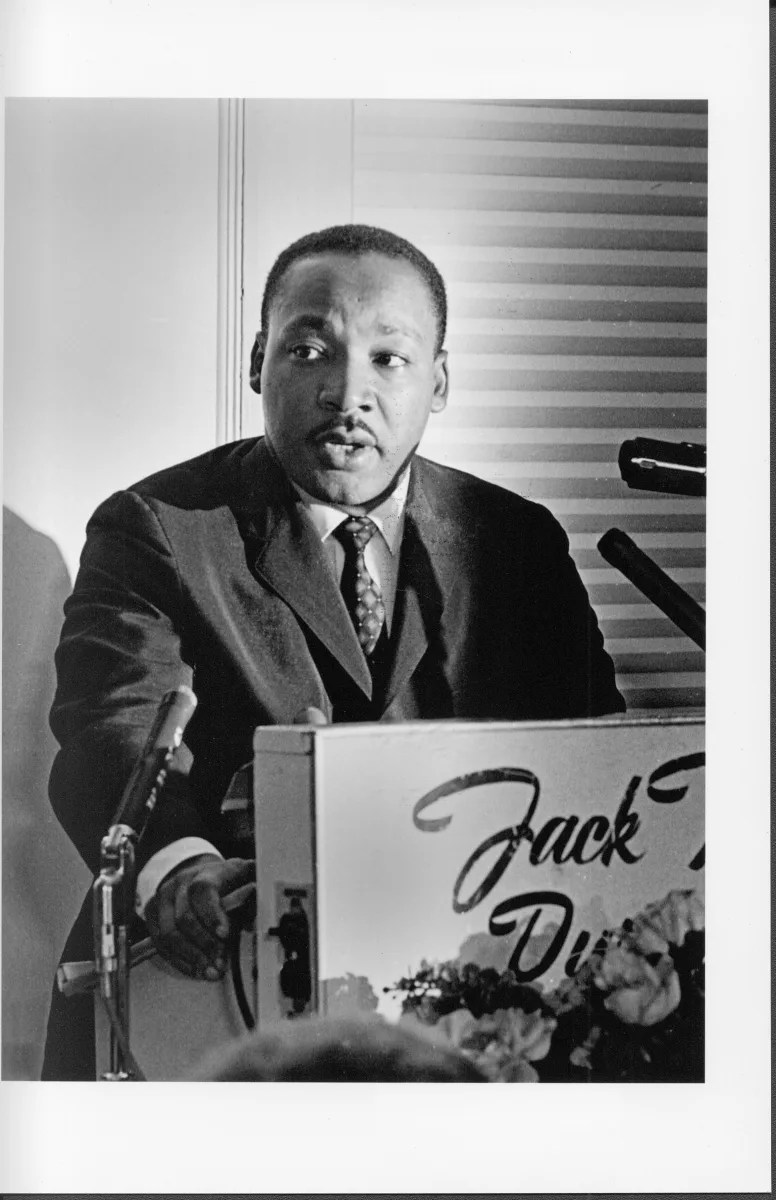
Martin Luther King, Jr., addresses the Southern Political Science Association at Durham’s Jack Tar Hotel in November 1964. (Photo via Durham County Library)
|
One of his most significant speeches in NC was at Bennett College, a private, historically Black college for women in Greensboro.
City leaders didn’t want him there but the college did. Wherever there were big moments in racial justice in the South, an HBCU was down the street. King’s “Realistic Look at Race Relations,” as he titled his Bennett address, centered on voting.
“I have no political ambitions,” he said. “I don’t think the Republican party is a party full of the almighty God nor is the Democratic party. They both have weaknesses. And I’m not inextricably bound to either party. I’m not concerned about telling you what party to vote for. But what I’m saying is this, that we must gain the ballot and use it wisely.”
|
|
|
King is a pillar of the church. He took his message from a pulpit, but that doesn’t mean the faith leaders of his day recognized him for the giant he was.
In one 1960 visit to Chapel Hill, students asked King to come and speak at a local Baptist church. King was a Baptist preacher, but the mostly white church didn’t want his kind of “controversy” in their sanctuary.
So he spoke in the church’s basement.
|
|
|
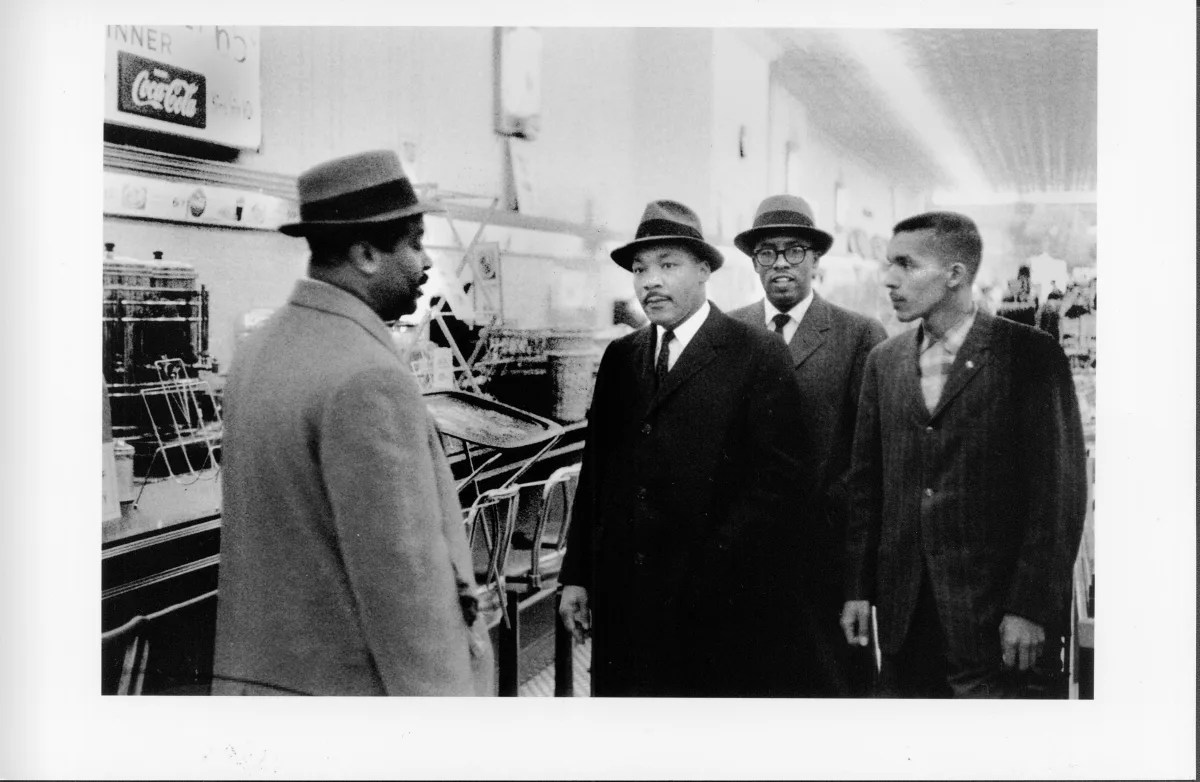
Martin Luther King, Jr., center, visits the Woolworth’s lunch counter in Durham, February 1960. The store had closed the counter after sit-in demonstrations there the previous week. With King are civil rights activist Rev. Ralph Abernathy at left; Rev. Douglas Moore, who led Durham’s first sit-in, in 1957 at the Royal Ice Cream Company, right of King; and an unidentified man at far right. (Photo via Durham County Library. Photographer: Jim Thornton, Durham Herald Sun.
|
Durham notched a special place in King’s life. It’s not hard to see why. The Bull City had a Black middle class to speak of, something denied to Black Southerners in most places.
It also had a strong faith community, and a local HBCU that churned out civil rights icons. One of King’s trips to Durham came amid the Woolworth’s sit-ins, which had begun days earlier in Greensboro.
“Let us not fear going to jail if the officials threaten to arrest us for standing up for our rights,” King told a local church. “Maybe it will take this willingness to stay in jail to arouse the dozing conscience of our nation.”
|
|
|
Eastern NC is where you find NC’s “Black belt,” the rural counties where descendants of formerly enslaved people still live.
So it meant something every time King went east, and his trip to a high school gymnasium in Rocky Mount is one of the most epic.
There, King delivered an early version of the “I have a dream” speech that should be carved into Mt. Rushmore.
|
Western NC didn’t get a lot of recorded visits from MLK. But his 1964 visit to Black Mountain stands astride an enormous moment in American history.
His trip to the Southern Christian Leadership Conference in January 1964 was at a time of transition in the Civil Rights Movement. John F. Kennedy Jr., one of America’s more moderate white voices on race, was dead.
Six months later, King coaxed President Lyndon Johnson into the Civil Rights Act of 1964, a groundbreaking moment for racial justice in America.
That year, King went from an idealist to change-maker. That act forever altered the way we think about government’s role in racial justice even today.
|
|
|
Thanks for reading. This newsletter was written by Billy Ball. Cardinal & Pine is happily free to read for everyone. Your financial support means a lot to us. Donate here.
Send us your feedback and news tips to info@cardinalpine.com
|
|
|
Copyright © 2023 Courier Newsroom. All rights reserved.
You are receiving this email because you opted in via our website.
|
|
|
|