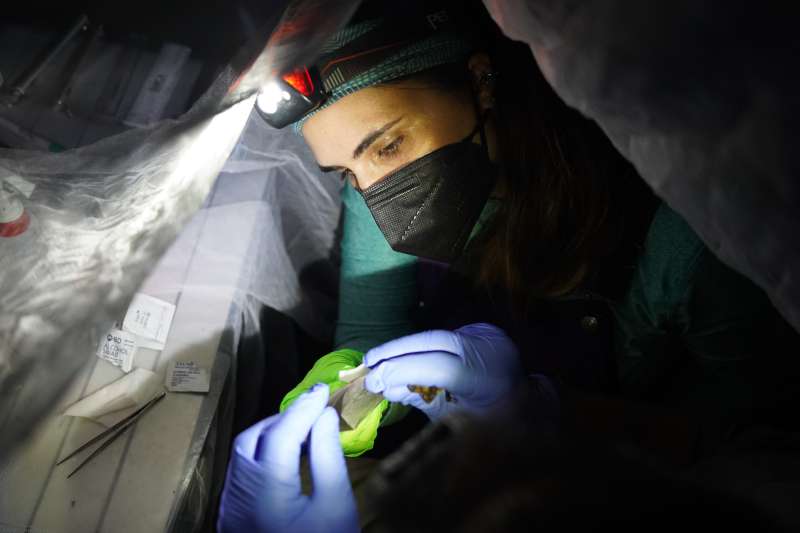
In late August 2026, dozens of volunteers fanned out in the middle of the night across Pender and neighboring counties for the first time in a decade to gather data on one of North Carolina’s least seen and misunderstood animals.
Bats are an intricate and vital part of North Carolina’s environment, especially along the state’s coastal plain. But they have an unwarranted reputation that for many can be hard to shake.
The only flying mammal, bats have been compared to airborne rats and, thanks to Hollywood and centuries of history, portrayed as the accomplices of demons and vampires that carry rabies and do little but torment people’s dreams and get caught in their hair.
Nothing could be farther from the truth, researchers and bat supporters say.
“Bats are cool, really cool,” said Lisa Gatens, collection manager in mammalogy at the N.C. Museum of Natural Sciences and co-organizer of this year’s three-night “Bat Blitz” in Southeastern North Carolina. “From pollinating to eating lots of insects, they are just good for us and good for the environment.”
‘A stronghold for bats’
North Carolina is home to 17 species of bats, about a dozen of which can be found in the Cape Fear region. Many of those have special federal and state protections due to concerns over falling populations, habitat loss and impacts from disease.
Still, bats seem to be hanging on just fine in the Wilmington area.
“It’s kind of a stronghold for bats,” Gatens said of Southeastern North Carolina. “Because there’s so much good habitat down there, such as old growth bottomland forests, we expected to find bats, and we did.”
Using mist nets, researchers and volunteers captured bats to document their health, take samples, and collect other vital information. Among the groups and agencies participating in the survey − along with the state museum − were N.C. State Parks, Bat Conservation International, Biodiversity Research Institute, college students, and government biologists.
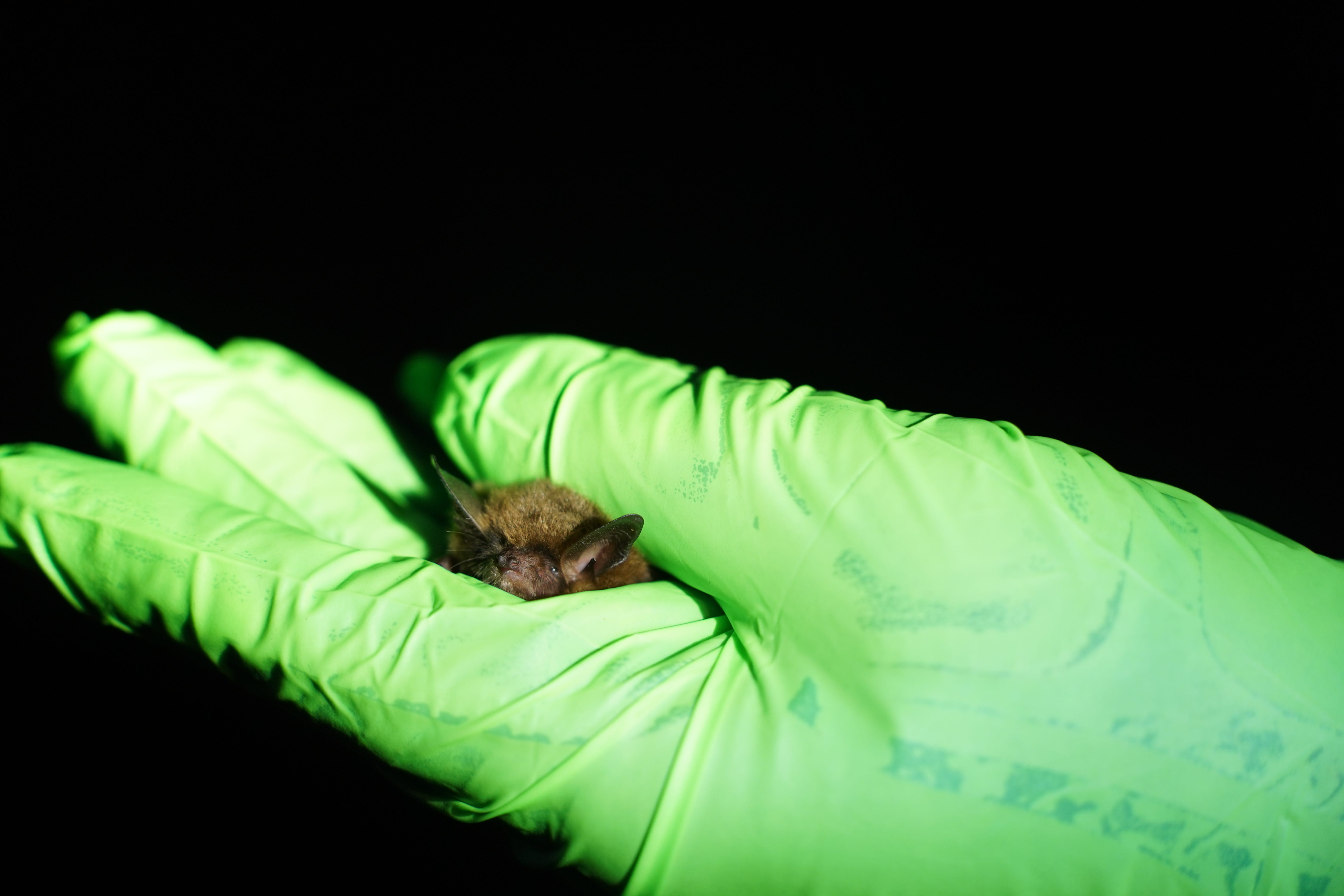
Gatens said most of the bats captured were common species, like the big brown and Eastern red bat.
“There was the potential to catch some of the less common species, and we did,” she said. “But the real reason for conducting the survey is to simply know what’s there and how they’re doing.”
That doesn’t mean local bats don’t face challenges, like the loss of habitat — particularly old growth trees and hollow trees that serve as roosting areas − and degradation of the environment that many species face. For migratory bats, the growth of onshore wind farms is another growing problem, although researchers are still trying to determine why the animals are so attracted to the giant spinning turbines.
But the one big advantage the coast has is that white-nose syndrome, a fungus that has devastated bat populations nationwide, including in Western N.C., with a mortality rate of up to 90% in some colonies, has yet to be a huge problem in the coastal plain. The fungus thrives in damp, cold and dark environments like caves. Since Eastern North Carolina doesn’t have many large rock formations, coastal bats tend to live in the crevices under tree bark or in hollow trees. If those aren’t available or have been removed, they’ll use human structures like attics and abandoned buildings to roost and establish colonies.
Voracious bug eaters
This year’s event didn’t catch as many bats as previous ones, which Gatens said was a bit disappointing. She largely blames the drought that gripped much of the Tar Heel State for most of 2026 for the low numbers, which also impacted insect numbers − the bats’ primary food source.
“But it’s still data, so that’s important,” Gatens said, ticking off the value of conducting periodic surveys in the same area to track population numbers, health, and diversity of bat species over time. The last “Bat Blitz” in the region took place a decade ago, and also was centered around Singletary Lake State Park in Bladen County. Researchers also tagged some bats to track their migratory patterns, with Gatens noting that some bats from Southeastern North Carolina have been previously tracked to Georgia and Maryland.
Talking about insects, bats can eat up to their body weight in bugs every night. In areas like North Carolina’s coastal plain, where the largely temperate climate means the flying mammals hibernate for only short periods of time if at all, that’s a big year-round ecological service bats are supplying for free.
“That’s a staggering amount,” Gatens said of the bats’ voracious bug appetite. “But beyond the economic benefit, especially for farmers by taking care of agricultural pests, it’s good for the environment as a whole and helps keep insect numbers in check.”
Dealing with bat conflicts and misconceptions
While obviously a big bat booster, Gatens said human-bat conflicts can occur. That includes when bats decide a human home is a good place to establish a domicile, too, because bat guano can become a petri dish for fungi that can cause a myriad of health woes.
But the threat of a rabid bat shouldn’t be a major concern. Bats are mammals, and all mammals can carry the fatal disease. According to the N.C. State Laboratory of Public Health, which tests all wild and domestic animals for suspected rabies in the state, less than 3% of the 4,300 bats tested by the lab in the past four years were found to be rabid. The lab tests roughly 3,500 animals a year, with the average positive rate around 6.4%.
While direct contact with bats is one of the leading vectors of rabies in humans, actual cases are extremely rare, Gatens said. And the intrinsic value bats bring to the environment goes well beyond their economic value to humans and any health threats they pose.
“When you see them out there flying around, navigating at night and catching bugs in midair, it’s just special watching them,” she said. “Oh, and they’re just cool.”
Reporting by Gareth McGrath, USA TODAY NETWORK / Wilmington StarNews
USA TODAY Network via Reuters Connect