Grants approved by the Biden administration last week will help the state prepare its infrastructure to deal with the effects of climate change.
The Biden administration last week announced the North Carolina Department of Transportation would receive roughly $3.7 million dollars for two highway infrastructure projects in Eastern North Carolina as part of the president’s continued focus on investing in climate-resilient infrastructure.
These grants were awarded through the US Department of Transportation’s PROTECT Discretionary Grant Program, which funds projects to mitigate the climate crisis.
Roughly half of the funds—$1.8 million dollars—will go towards supporting the embankment and shoulder of US 74 where it crosses the Lumbee River in Columbus County. This area is part of an evacuation route between Wilmington and Charlotte.
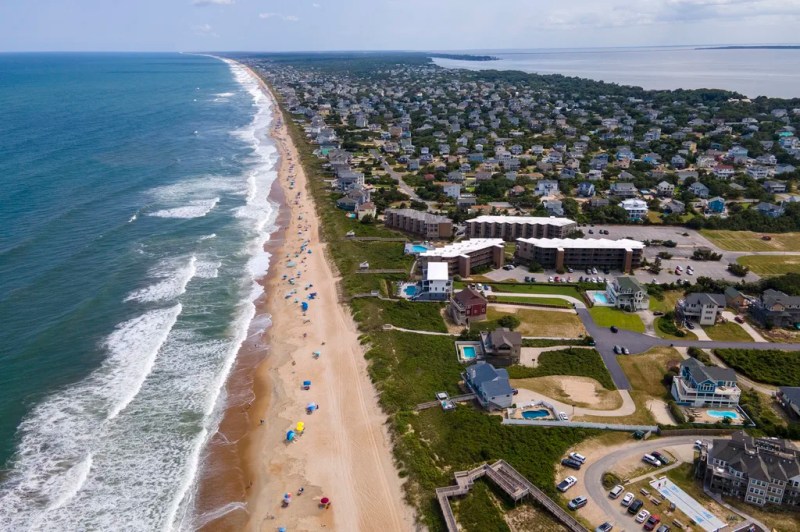
The other $1.8 million was awarded to fund a study of an 11-mile portion of Highway 12, located between Pea Island and Oregon Inlet in Dare County. The study will determine how to keep the road accessible in times of storms and flooding.
The funding comes as the impacts of climate change continue to be felt more frequently, with North Carolina at particular risk of hurricanes, floods, and other extreme weather events.
The Impact of Climate Change in North Carolina
In the last decade, North Carolina’s coastal communities have felt the impacts of hurricanes. In 2016, Hurricane Matthew killed 31 people and caused just under $5 billion dollars in damage. Fifty counties were given an emergency declaration, and Cumberland, Robeson, Edgecombe, and Wayne counties saw extensive damage.
A few years later, in 2018, Hurricane Florence also devastated North Carolina, killing 45 people and causing $17 billion dollars worth of damage. Ninety percent of New Hanover County lost power as a result of the storm.
The Environmental Protection Agency (EPA) estimates that climate change will have a profound impact on North Carolina in the coming decades, making investments in climate-resilient infrastructure all the more essential.
In addition to increased winds and rainfall from hurricanes, climate change could cause the state to experience higher temperatures that impact both human health and farming.
Furthermore, the EPA believes if sea levels rise above two feet by 2100, coastal communities along the Outer Banks could be threatened.