by Christine Zhu, NC Newsline
August 24, 2026
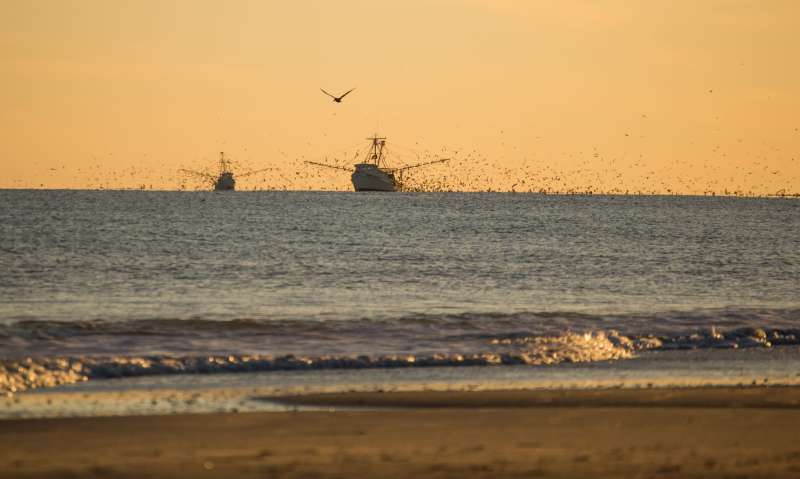
North Carolina’s coastal fisheries are in danger. The state failed to protect them, according to a landmark Superior Court ruling.
Following a six-year lawsuit, Judge Bryan Collins ruled last week in favor of the Coastal Conservation Association of North Carolina, saying the state’s mishandling has led to depleted fish stocks along the coast.
“The court affirmed what we have said for years: the state has a responsibility to protect and manage our fisheries for the benefit of all citizens and future generations, and our current system has failed to meet that responsibility.”
None of North Carolina’s 13 state-managed coastal fish stocks is currently viable for the long term, according to the court’s 190-page ruling. These include southern flounder, shrimp, and speckled trout.
“The court affirmed what we have said for years: the state has a responsibility to protect and manage our fisheries for the benefit of all citizens and future generations, and our current system has failed to meet that responsibility,” CCA NC Executive Director David Sneed told NC Newsline in an email.
Never miss an update from Cardinal & Pine. Sign up for our free, award-winning newsletter here.
CCA NC and 86 citizen plaintiffs, including five former members of North Carolina’s Marine Fisheries Commission, filed the lawsuit in 2020.
They claimed the state has a legal responsibility to keep fisheries healthy and available to the public over the long term, which it failed to do.
In particular, plaintiffs say shrimp trawling and overfishing contributed to the lower quantities of aquatic animals along the coast.
The General Assembly introduced legislation last year to ban inland shrimp trawling. Hundreds of fishermen left their boats for Raleigh to oppose the bill, leading House Republicans to drop it. No action was taken on that bill in the short session.
While the court ruled in favor of CCA NC, Sneed said it isn’t a moment for celebration.
“There is no real victory when our fisheries are depleted,” he said. “The important thing now is that the magnitude of the problem has been recognized.”
Collins said in the ruling it will take “drastic management changes” for North Carolina to rebuild its fisheries.
“We look forward to a day when our fisheries management is not the laughingstock of the country,” North Carolina Wildlife Federation CEO Tim Gestwicki told NC Newsline.
Sneed said moving forward, there needs to be collaboration between the general public, scientists, fisheries managers, and policymakers to protect and restore North Carolina’s fisheries.
It’s also a time for unity between commercial fishermen, recreational anglers, charter captains, seafood businesses, and coastal communities, which all depend on the same resource.
“The opportunity we have now is to bring those groups together and focus on practical solutions that rebuild our fisheries,” Sneed said.
Rep. Pricey Harrison, a Democrat from Guilford County who has served on the Coastal Resources and Marine Fisheries Commissions, said the ruling seemed very one-sided in favor of CCA.
She said she isn’t sure the judge took other impacts on fisheries into account. These include issues like climate change, habitat degradation, and coastal development, all of which affect water quality and aquatic life.
“It’s a very nuanced, complicated situation that the judge’s opinion didn’t take into consideration all sides,” Harrison told NC Newsline. “Each species needs to be considered individually.”
A spokesperson for the North Carolina Department of Environmental Quality said the Division of Marine Fisheries is reviewing the judge’s findings, but the division will not comment further, as the case is ongoing.
Collins ordered attorneys representing both sides to meet and submit a joint report with any future considerations. That will determine a timeline for the remedy phase, which could dictate if certain waters are closed to fishing or if changes are made to fisheries policies.
NC Newsline is part of States Newsroom, a nonprofit news network supported by grants and a coalition of donors as a 501c(3) public charity. NC Newsline maintains editorial independence. Contact Editor Laura Leslie for questions: info@ncnewsline.com.