[Good News Friday is Cardinal & Pine’s weekly roundup of positive news stories from around NC. For past editions of Good News Friday, tap here.]
In today’s edition of Good News Friday:
- Asheville takes on neglectful landlords
- Attorney General Jeff Jackson touts $590 million PFAS settlement with DuPont, Chemours
- Mail-in ballots are going out in North Carolina
Good news is subjective, and oftentimes comes with its own bad news attached.
For example, let’s look at a couple stories from this week reported by NC Newsline, a nonprofit newsroom I admire for its refusal to take things at face value.
On Labor Day, Clayton Henkel reported that, while North Carolina continues to rank at the top of the country for places to do business (good news), the Tar Heel State has once again found itself at the bottom of a list ranking the best states for workers (bad news that likely drove the good news in the first place).
For everything you need to know about North Carolina’s 2026 elections, check out Cardinal & Pine’s Voter Hub.
Then on Tuesday, Henkel followed that story up with a report showing that the NC Education Lottery is selling more tickets than ever, which is great news if you consider that the point of the lottery is to put proceeds toward public schools. Right?!
Not so fast. Despite a sharp hike in gross ticket sales, a new audit has found that the percentage of funds going to public education has been on a downward trend over the past three years.
Cardinal & Pine reported as much in a recent episode of Billy Ball Explains NC.
It’s enough to make your head spin, and a reminder to always look behind the curtain when something looks too good to be true. It’s often, at the very least, complicated.
Asheville City Council sides with tenants over slumlords
Asheville City Council on Tuesday unanimously approved an amendment to the city’s housing code that tenants’ rights organizers are calling “No Rent for Slumlords.” The change will allow tenants to seek refunds for rent paid at rental properties that have been deemed unsafe, as reported by WLOS.
Under the new ordinance, supported by the Asheville Area Tenants’ Union, residents are asked to notify the city of conditions that make their rental properties unsafe. A city inspector will then visit the property and, if necessary, order the landlord to address the issue. If it goes unresolved, the tenant may be eligible for a refund of rent.
The city laid out 18 criteria that could lead to a rental unit being ruled as unsafe including lack of hot water, the presence of raw sewage, or no smoke detectors.
Some officials, including Asheville Mayor Esther Manheimer, have said the ordinance is mostly symbolic due to state law prohibiting a tenant from withholding rent, as reported by Blue Ridge Public Radio (BRPR), but advocates for the change say that’s not the case.
“It shifts the power balance so that tenants now have more of an avenue to be compensated or get their unsafe living conditions fixed,” Jen Hampton with the tenants’ union told BRPR. “This is definitely not symbolic. It will have some teeth and it will hold some landlords accountable once we start actually putting it into practice.”
NC Attorney General Jeff Jackson announces largest environmental settlement in state history

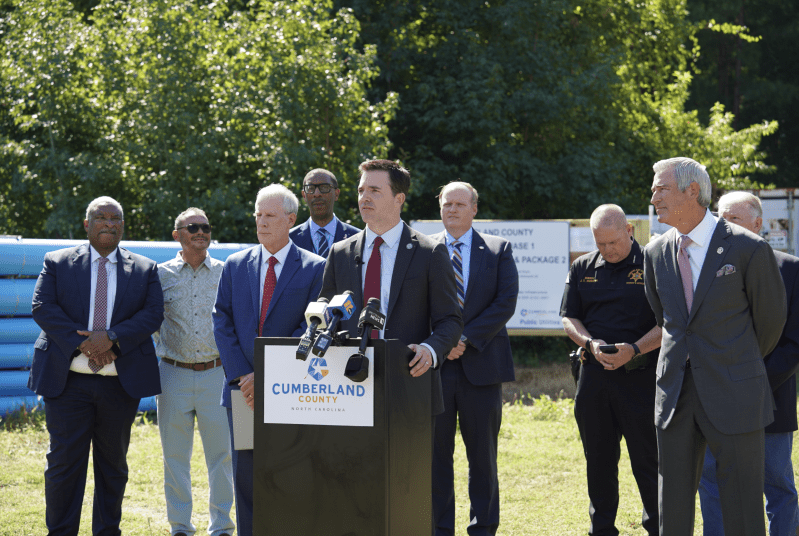
NC Attorney General Jeff Jackson and Department of Environmental Quality Secretary Reid Wilson on Thursday announced that they had reached a deal with DuPont and Chemours that will see the corporations pay out $590 million to the state and 11 local municipalities over PFAS contamination in North Carolina.
When combined with the nearly $1.2 billion that Chemours spent to comply with a 2019 consent order to stop discharging contaminants from its Fayetteville Works facility into the Cape Fear River and air, Thursday’s settlement marks the largest total environmental damages recovery in the state’s history.
The deal obliges Chemours to provide clean drinking water and repair the damage done to southeastern North Carolina.
“Chemours and DuPont devastated North Carolina’s water and natural resources for decades,” said Jeff Jackson in a release announcing the settlement. “This deal forces them to pay for the harm they caused the people of southeastern North Carolina, and gives our local governments more resources to help ensure clean drinking water for families.
“It is a massive step forward in giving our state more dollars to help fund clean water programs. This settlement puts even more teeth behind the consent order with NCDEQ. Chemours made this mess, and we’re making sure Chemours cleans it up.”
Visit the NC AG office’s website for a list of the counties involved in the lawsuit and a breakdown of how the dollars will be allocated over the next 10-15 years.


Mail-in ballots begin arriving in North Carolina mailboxes
Despite the persistent efforts of the Trump administration to halt mail-in voting and place tighter controls on the process, ballots were sent out in North Carolina on Friday, Sept. 4, and began arriving in the mailboxes of the nearly 50,000 people who have already requested them this week, according to WRAL.
Registered voters can still request an absentee ballot before 5 p.m. on Tuesday, Oct. 20.
The NC Board of Elections is encouraging voters to act well before that deadline, however, as a 2023 change to state law made it so that ballots not received by Election Day will be eliminated and not counted, regardless of when they were mailed.