If proposed changes from the Federal Emergency Management Agency Review Council appointed by President Donald Trump were to be implemented, disaster survivors in small and rural communities might be disproportionately impacted, multiple state disaster agencies wrote in response to the council’s final report.
The council — formed to reform FEMA in the aftermath of several disasters, including Tropical Storm Helene and Hurricane Milton — wrapped up its final report in May, making some recommendations supported by both Democratic and Republican lawmakers.
Some recommendations include suggestions the council believes will reduce bureaucracy, increase training resources for state, local, tribal and territorial governments and streamline services for survivors.
Helene caused an estimated $60 billion in damages in Western North Carolina and killed over 100 in the state. The report was released May 7.
Opinion: Trump accused Biden of abandoning NC after Helene. Now, he’s doing just that
But some of the report’s recommendations — one of which includes “closing the chapter” on the agency’s brand, suggesting a change of name — may complicate future disaster response efforts and shift the burden to states and local municipalities, disaster response officials from North Carolina, Maine and New Hampshire said in comments responding to the plan. Public comment on the report closed June 8.
Co-chaired by Secretary of Homeland Security Mullin — and before him, Kristi Noem — along with Secretary of Defense Pete Hegseth, the FEMA Review Council was launched in January 2025 shortly after Trump visited disaster sites in Western North Carolina and California. The North Carolina resident on the council is Michael Whatley, the former Republican National Committee chairman who is in a Senate race against former Gov. Roy Cooper.
One of the report’s suggestions involves capping homeowner assistance at 15% of locally assessed property values with a maximum payment of $150,000. Aid would only be provided to residents “whose homes are uninhabitable” as opposed to those with minor damage, according to the report.
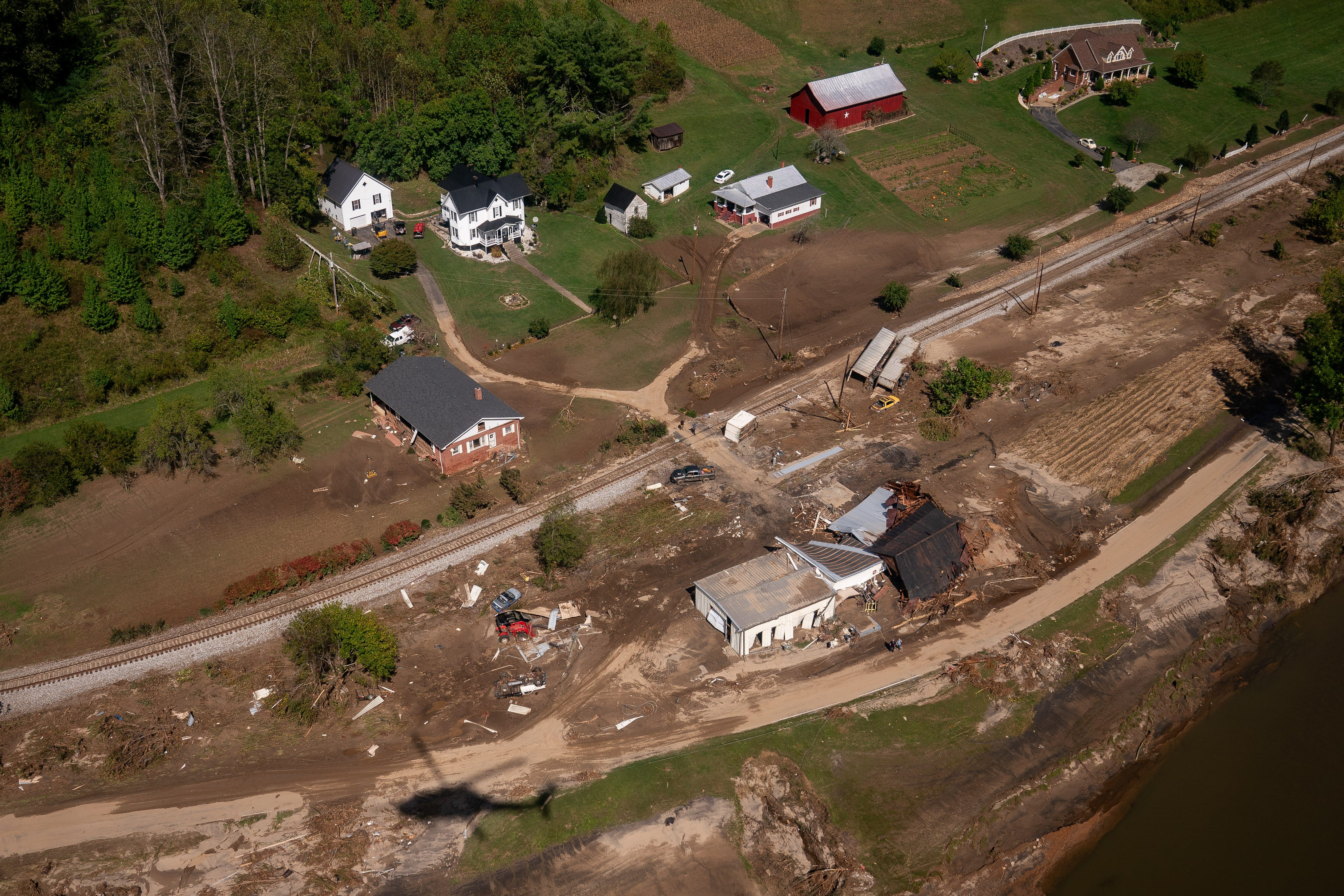
The decision would “systematically shortchange modest rural, older, and manufactured homes that are expensive to rebuild,” North Carolina’s top disaster response officials, Matt Calabria and William C. Ray, wrote in their comment to the FEMA Review Council. The June 8 comment said the two “agree with the thrust” of the report, but articulated “concerns and considerations.”
In North Carolina, nearly a quarter of owner-occupied homes are assessed at below $150,000, and 22 counties have a majority below that threshold, Calabria and Ray wrote, citing data from the North Carolina Department of Commerce. Most homeowners in that range would not even receive the currently offered maximum payout of $43,600.
Other recommendations from the council, such as privatizing the National Flood Insurance Program, reducing agency staffing and requiring more state investment for disaster recovery “risks either leaving survivors with less robust aid or shifting costs from the federal government onto smaller and less flexible state and local budgets at a time when those government entities may be at their most devastated,” Calabria and Ray wrote.
“North Carolina shares the Council’s ambition for a disaster system that moves faster, costs less to administer, and treats states as the capable partners they are. We have lived the cost of a system that is too slow, and we want this reform to work,” Ray and Calabria wrote.
“Of course, speed achieved by shifting undue burdens onto states, local governments, and survivors is not constructive reform.”
Plan describes previous FEMA reform efforts as failures
The final report comes at a time when the Trump Administration has sought to shrink the federal government’s role in disaster response, but also as the agency has gone without a permanent head since he took office. Previously fired FEMA head Cameron Hamilton was renominated for the role in early May.
Department of Homeland Security Secretary Markwayne Mullin has described FEMA as needing to be streamlined, while his ousted predecessor, Noem, called on ending the agency. Noem had instituted a spending rule preventing any expenditure above $100,000 as requiring her direct approval, a move that local and state government officials pointed to as significantly slowing down disaster response efforts.
Lawmakers and disaster response officials have long sought to reform FEMA, especially after major disasters. After Hurricane Katrina hit New Orleans in 2005, FEMA’s then-administrator had resigned and President George W. Bush faced criticism for the perceived slow response to the storm, which killed an estimated 1,833. Washington lawmakers sought solutions.
They landed on passing a 2006 law that expanded the agency’s power and made it a distinct entity within the Department of Homeland Security — the “Post-Katrina Emergency Management Reform Act.” At the time, it was designed to address the agency’s faults and shortcomings in response to Katrina, providing it more authority.
The final report describes the 2006 post-Katrina legislation and subsequent legislation in 2013, which sought to streamline processes, and 2018, which funded resilient infrastructure grants, as “reactive legislation” cumulatively saddling the agency with “additional roles, responsibilities, and benefits has ultimately pulled FEMA away from its core mission.”
But local and state governments have now built those responsibilities into their budgets, and some have expressed hesitation over whether they could meet demand when natural disasters occur. The report suggests removing some of those supports and setting performance requirements for states to receive disaster declaration aid.
Robert Buxton, Director of New Hampshire’s Division of Homeland Security and Emergency Management, described the council’s suggestions as having “disregard for capacity and capability.”
“It is not feasible for a state with a population of 1.6 million to have the same capability and capacity as a state with a population of 23 million. To have an expectation that all states and communities are going to meet the same performance requirements for incentives does not seem achievable,” Buxton wrote.
It is unclear what the next steps for the final report are, though suggestions include a three-year “phased approach” to transform FEMA into a “new lean agency.”
The Department of Homeland Security and FEMA did not respond to a Citizen Times request for comment June 9.
Reporting by Will Hofmann, Asheville Citizen Times / Asheville Citizen Times
USA TODAY Network via Reuters Connect