A Charlotte parent on racial equity in public school systems and the GOP’s bogus Critical Race Theory panic.
[Editor’s Note: Leaders in Charlotte-Mecklenburg Schools, North Carolina’s second-largest school system, are facing a backlash from some conservatives over their stated goals to be more racially equitable and inclusive in a plan combating educational achievement gaps. The following is a response to conservative critics from a longtime advocate for racially equitable policies in Charlotte.]
In a manufactured crisis to distract from NC’s continued underfunding of K-12 public education and our university system, some of North Carolina’s top Republican leaders are dangling the boogeyman of “Critical Race Theory.”
And just as no one ever pressed our former president to explain what era he was speaking of when he vowed to “Make America Great Again,” no one is asking these people: What, exactly, is Critical Race Theory?
In reality, it’s a decades-old legal theory about how racial inequality has been written into the laws and policies of the nation. In the GOP’s distorted definition, CRT blames white people for all the ills of society. The GOP definition is incorrect, but they already know this. It is simply an attempt to distract and frighten voters with the Republican Party’s latest wedge issue.
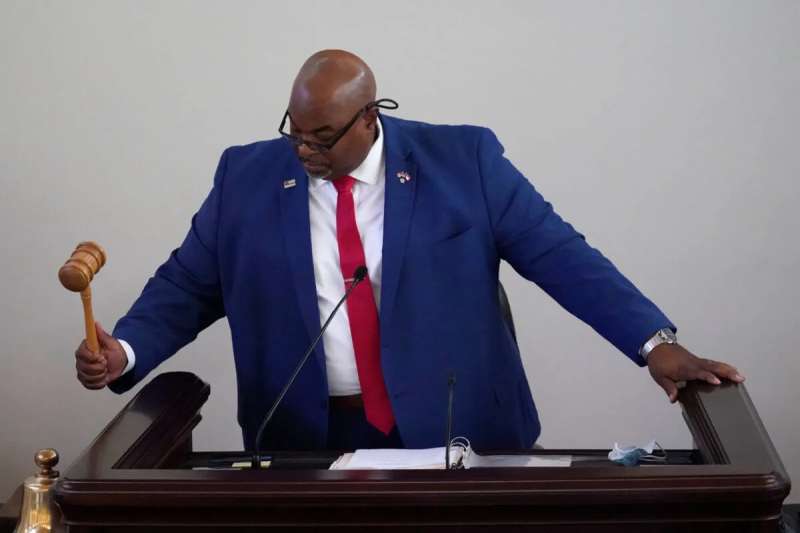
Most recently, Lt Governor Mark Robinson and state Senate leader Phil Berger presented faux outrage that Charlotte-Mecklenburg Schools, in an effort to become an “anti-racist” school district, paid $25,000 for a speech and Q&A session with historian and activist Dr. Ibram X. Kendi.
Kendi—the author of influential books like “How to Be an Antiracist”—made it clear in his speech as he does in his writing that all individuals (including himself) could hold both racist and antiracist ideas. He explained that, in his view, no one is inherently an oppressor. And he pointed out that beyond personal transformation, his work combats structural racism by advancing racially equitable policies.
To their credit, both Berger and Robinson admitted they did not see the talk, even if it was easily accessible online. However, it did not prevent them from criticizing what they assumed was going on.
Berger, who is white, said in a statement through this office that Kendi “advocates for racial discrimination.” Robinson, who is Black, said Kendi is “bringing back a racial divide and not unity.”
This is peak irony.
Robinson has promoted “birther” conspiracy propaganda against former President Barack Obama—the one Black president this country has had—while insinuating that former First Lady Michelle Obama is a man.
Is this the unity we are trying to work toward?
I always find it interesting that people can frame antiracism as a bad thing. The only way to do so would be to state out loud that racism is a good thing.
The Blind Spots in North Carolina Schools
In CMS’ “Breaking the Link” report on poverty and educational outcomes, the school system acknowledged patterns of structural racism in discipline, access to higher level classes, and access to experienced and qualified educators, amongst other things.
In suspension data, it was revealed that Black and white students had similar suspension rates for acts requiring mandatory suspension with Black students being suspended much more frequently for “discretionary” matters.
Similarly, Black students were underrepresented in talent development and gifted classes, even when achieving requisite test scores, while some predominantly white high schools had 5-8 times as many AP class offerings and many more certified teachers in the classrooms than some predominantly Black high schools.
Given these realities, what would be wrong about taking an antiracist approach to addressing these items? And if your response involves “colorblindness,” let me ask you: If you had a lump in your throat and you went to an oncologist, would you want to be treated by the doctor who could identify and remove malignant tumors or the one who is “tumorblind,” avoids them, and shifts the conversation to your smile? The latter is committing medical malpractice.
Leaders who claim that they can address structural racism with a colorblind approach are participating in educational malpractice, typically because of their own discomfort with racial realities.
In my career, I have served as the only man on a residential unit with adolescent girls, many of whom had trauma at the hands of men. I have also worked as the only cisgender male clinician of a women’s program where everyone else was a woman, many of whom had experienced trauma at the hands of men or because of systems created by men for men.
How effective would I be at my job if I approached those cisgender girls and women by thinking or telling them things like: “I’m sex and gender blind. I don’t even see me as a man and you as a girl/woman. Not all men are bad. What about the bad things girls and women do to boys and men? Why are you having such a victim mentality? You just need more grit. Talking bad about men’s actions is divisive and makes me tune out. Why can’t you just get over it?”
Immediately and justifiably, I would be fired with cause.
To do those jobs effectively, I had to continually educate myself on issues of sex and gender, humbly listen to my clients’ experiences, honor, and validate them before working towards solutions, and recognize that their lived experience in this area trumped any knowledge that I thought I had acquired.
Ultimately, this humility was liberating, it helped me gain trust, and has allowed me to this day to work effectively with women, including those with significant trust issues with men.
When I was a kid, I felt like girls were given the advantage because they could pinch me and I couldn’t pinch them back and that talk of feminism was “reverse sexism.”
But then I learned my blind spots. I saw the unearned privileges that being male afforded me. I am better for it and, more importantly, those who I work with are better for it too.
So why should we expect any less from political leaders and/or educators who are uncomfortable with and underinformed on race the way I was with gender and sex growing up?
If I were not willing to continually grow and work through blind spots and discomfort around sex and gender, I wouldn’t be fit to work with girls and women.
Likewise, if you are not willing to continually grow and work through blind spots and discomfort around race, you aren’t fit to work with Black, Indigenous, and other students of color who are disproportionately being harmed in your schools.