A licensed wildlife rehabilitation operator in West Asheville found herself at odds with North Carolina wildlife laws after she rescued baby raccoons, which were later seized and euthanized by the North Carolina Wildlife Resources Commission.
Michelle Cole, operator of Alleyoop Wildlife Rescue and Rehabilitation on Sand Hill Road, told the Citizen Times July 17 that she obtained the five raccoons that were seized last fall, when they were babies.
“They came to me when they were four weeks old, eyes still closed, four of them did. The other one was about five weeks old, and it had had its arm chopped off with a chainsaw,” she said. “So, I bottle fed them, raised them. … They’ve all had their rabies shots and their distemper shots.”
3 things happening in NC: The 100-mile yard sale on US Highway 21 returns this week
In the State of North Carolina, licensed wildlife rehabilitators must have a captivity license for rehabilitation, along with an additional rabies vector species certification, Buncombe County said in a July 16 news release.
“Me and my fellow colleagues have tried to make changes with Raleigh regarding this law. They don’t care. They don’t listen.”
They also must have a complete rabies pre-exposure series of vaccines to be allowed to handle and rehabilitate animal species that are at high risk of carrying rabies virus, which includes bats, raccoons, skunks, foxes, and bobcats. In Buncombe County and other counties where the US Department of Agriculture’s Oral Rabies Vaccination program is conducted, the rehabilitation and release of rabies vector species is not authorized, except for bats.
Cole said that she initially reached out to the N.C. Wildlife Resources Commission and asked how rabies vector species should be handled, although she didn’t tell them she had rescued raccoons. She said she didn’t at first know about Buncombe County’s policy, but she said she was told by state officials that she was “supposed to walk away and let them die.”
“I’m not going to kill them. I already had them. I was really looking for what to do with them, if I could take them somewhere,” she said.
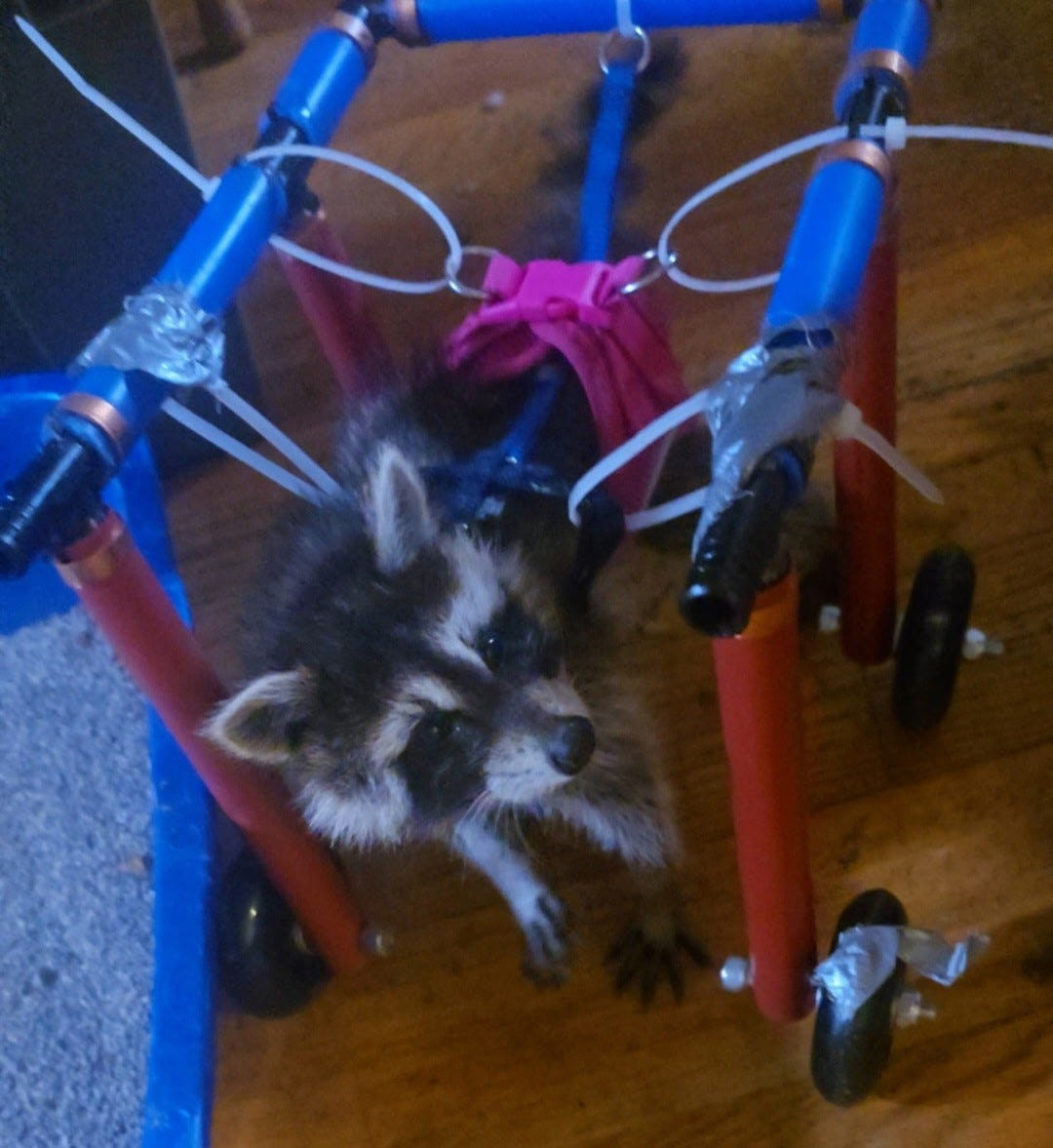
Cole feels the policy in Buncombe County is cruel, and so she kept the raccoons, with plans to release them into the wild when they were fully rehabilitated. Recently, she said someone she thought was a friend came over and saw one of the raccoons. That person reported her to wildlife officials.
“It’s ludicrous, really. No one knew about them. … No one ever went back there except me, and I’ve had my pre-exposure shots,” she said.
Cole was charged July 13 with possession of a rabies vector species without a permit, the N.C. Wildlife Resources Commission told the Citizen Times July 16.
The raccoons were seized and euthanized, according to the Wildlife Resources Commission.
“Five raccoons (an RVS) were found being held unlawfully in captivity. The raccoons were captured, secured, and placed into carriers by agency staff with Ms. Cole’s cooperation and assistance,” the organization said in a statement July 22. “The animals were euthanized following RVS/ORV rabies prevention program guidance. The consequences to wildlife are extremely difficult for everyone when laws are not followed.”
Wildlife law enforcement leadership reviewed body camera footage of enforcement actions taken by the officer during the seizure of the raccoons and confirmed that protocol was properly followed, the Wildlife Resources Commission added.
Cole feels the laws around rabies vector species are unfair.
“Me and my fellow colleagues have tried to make changes with Raleigh regarding this law. They don’t care. They don’t listen. How do you fight the state on a moral issue? If I had money, it’d be one thing. All of my money goes into saving these animals,” she said.
She said that the raccoons that were seized had been vaccinated against rabies.”They had their shots. If the reasoning is that they were euthanized because of the possibility of rabies, they were contained for a year, they obviously didn’t have rabies,” she said. “They were given their shots, and they were never introduced to the public. No one ever touched them but me.”
The N.C. Wildlife Resources Commission said that the investigation into Cole’s facility is ongoing. In a statement, N.C. Wildlife said that while Cole has a valid rehabilitator license, she was not permitted to hold rabies vector species longer than 24 hours. The Buncombe County Department of Health and Human Services warned the public in a press release July 16 that anyone who visited the facility in the last six months should obtain a rabies risk assessment. The North Carolina Wildlife Resources Commission said that the press release was a precautionary measure.
Reporting by Kara Fohner, Asheville Citizen Times / Asheville Citizen Times
USA TODAY Network via Reuters Connect