The bears in Asheville are hungry, and they are increasingly looking to humans as a source of food.
This has created a county-wide problem in Buncombe that has been worsening in recent years, and now, bears are more frequently breaking into homes to sate their desire for human-provided food, creating a threat to public safety, officials with the N.C. Wildlife Resources Commission said at a meeting in Asheville Oct. 21.
“Usually the natural food supply can help manage that bear population. That’s not what’s happening here. What’s happening in Asheville is unnatural,” said Colleen Olfenbuttel, game, mammals, and surveys supervisor for the N.C. WRC.
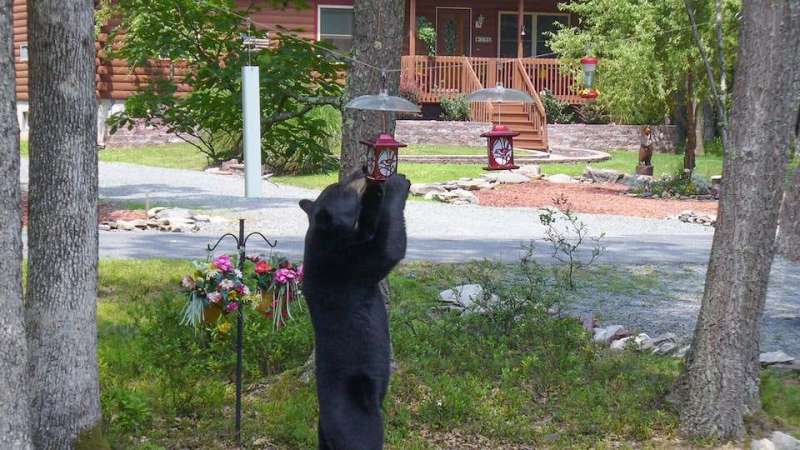
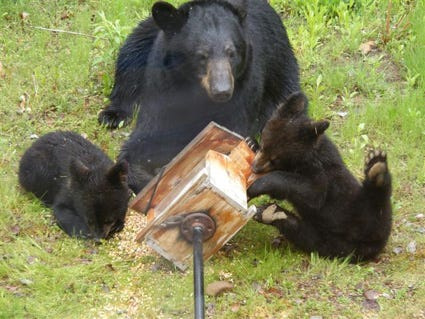
Specifically, bears in Asheville are breeding at younger ages, having more cubs, and feasting on human-provided foods, rather than their natural foods, like nuts and berries. Bears overturn trash cans, eat from bird feeders, enjoy cat or dog food that is left out, and even break windows or cause other damage to homes in attempts to get in and feed. In some cases, people knowingly feed the bears.
Now, the N.C. WRC is trying to help solve Buncombe County’s bear problem with a temporary rule aimed at prohibiting the feeding of bears. The N.C. WRC held a public hearing Oct. 21, one of the initial steps in establishing the rule. Under the proposed rule, feeding bears would be a class 3 misdemeanor with a $25 fine, plus the cost of court.
Subsequent violations within a three-year period would be a class 2 misdemeanor with a maximum fine of $1,000.
An emergency rule with the identical language as the temporary rule went into effect for Buncombe County on Oct. 19. N.C. WRC can adopt an emergency rule without prior notice or public hearing when immediate adoption is required by “a serious and unforeseen threat to public health or safety,” the commission said.
The temporary rule will replace the emergency rule, but the process to establish a temporary rule takes more time.
The N.C. WRC Board of Commissioners will review public comments and consider adoption of the temporary rule at the December 2026 commission meeting. If adopted, it will go to the Rules Review Commission at their December meeting, Gurney said. If it is approved there, the rule would go into effect Jan. 1, 2027. Temporary rules expire 270 days after they’re published in the N.C. Register.
If the temporary rule is approved, the commission will consider proposing a permanent rule at a future meeting, N.C. WRC spokesperson Anna Gurney said. The process for permanent rulemaking is similar to the temporary rule process, Gurney said. It includes a public hearing with a longer public comment period. The main difference between the processes is that if a permanent rule receives 10 letters of objection, it is referred to the N.C. General Assembly to take action to deny, change, or allow the rule to take effect.
Why the state wants a rule
Ashley Hobbs, the state biologist assigned to Buncombe County, said at the meeting that the county is responsible for 38% of the annual calls in the state about bears, an unusually high percentage that adds up to 800 to 1,000 calls a year. Because of the sheer volume of calls and the density of the bear population in and around Asheville, Buncombe County is the only county in the state with its own biologist, and Hobbs deals with calls related to only one species: bears.
Since 2023, there have been more than 140 bear-related home break-ins in Buncombe, Hobbs said.
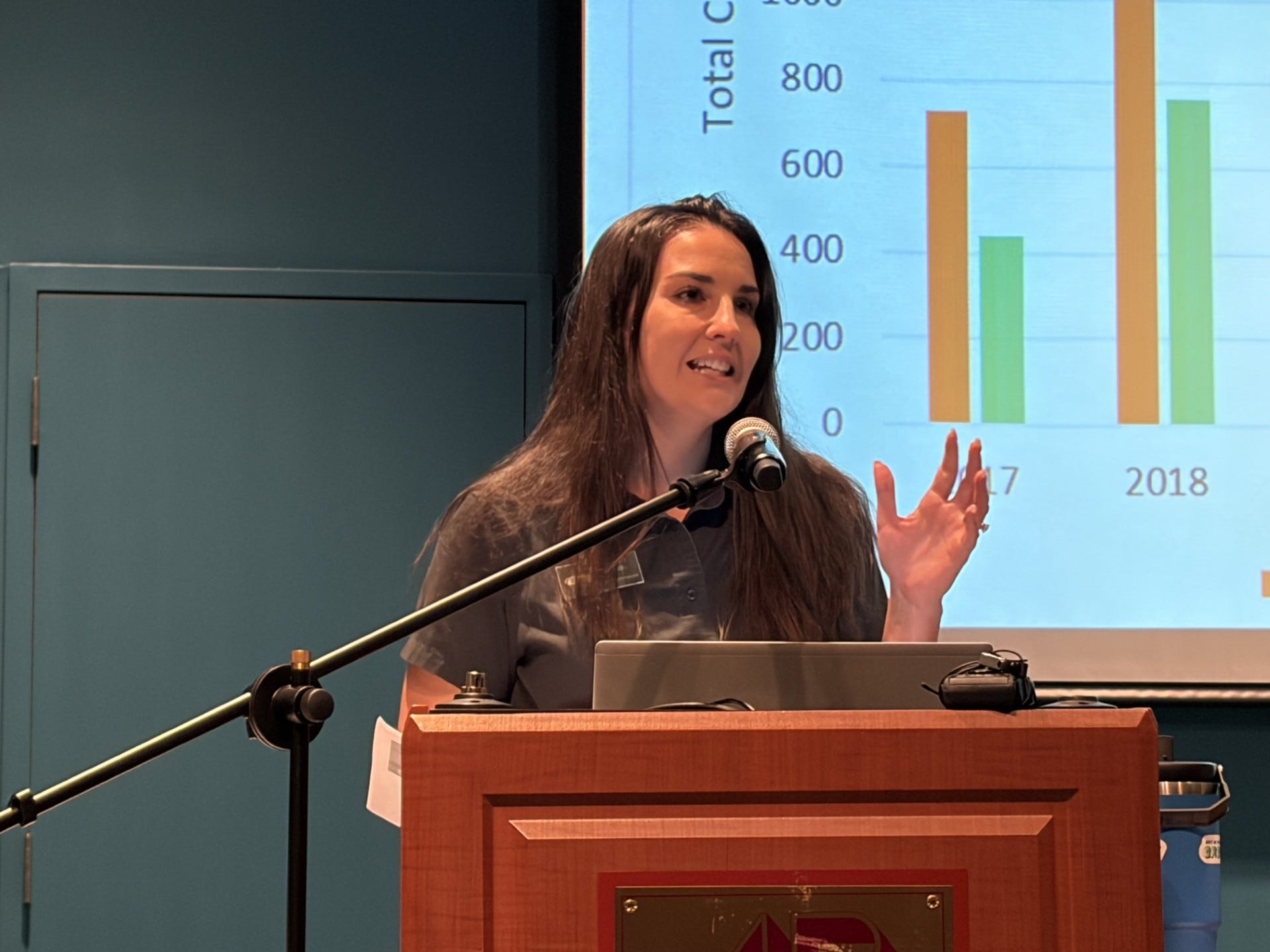
“We’re doing our own research to make sure we’re giving you the best, most effective information on how to coexist with bears in the community, so what do we need from you guys?” Hobb said. “The fact of the matter is that our agency cannot solve this problem for you.”
She said that Buncombe County residents and local leadership have to come to the table to address the issue. So far, there are local ordinances against feeding wildlife in Buncombe County.
“I worked really hard to get those in place” Hobbs said. “We need to see support from local leadership for that language that already exists. We need to see harsher penalties for that as well.”
In Asheville, new bear-resistant trash cans are not currently being funded under the FY27 budget. However, funding from the FY26 budget was reallocated to allow for the purchase of two loads of bear carts, with just over 200 per delivery, city spokesperson Kim Miller said. One of those loads has been delivered, but around 460 people still remain on the waitlist for beat-resistant trash cans, Miller said.
The elimination of the bear-resistant trash can funding “terrifies me as the local biologist,” Hobbs said. “So get with your local leadership, push them to make sure that we are funding these programs.”
There were no Asheville city leaders or Buncombe County leaders present at the meeting, but a handful of Buncombe County residents spoke in favor of the temporary rule during the hearing. A woman from Beaverdam Valley, a North Asheville neighborhood known for bear activity, said her biggest concern is that the rule is temporary.
Hannah Furgiuele, a Beaverdam Valley resident who led the campaign to “pardon Dolly,” a bear that broke into at least nine homes in Asheville, said she was disappointed that no Buncombe County elected officials were present at the meeting.
“We are in support of this rule, and we hope that it will become a permanent rule,” Furgiuele said.
Reporting by Kara Fohner, Asheville Citizen Times / Asheville Citizen Times
USA TODAY Network via Reuters Connect