“My biggest worry is keeping food on the table for my children,” said one North Carolina parent of the SNAP freeze. “Parents like me are doing everything we can to survive, and sometimes it becomes a daily struggle.”
Jessica Bollinger, a single mother of two from McDowell County, spent Saturday poring over her family budget and trying to make the numbers work. On the third of each month, she usually receives $318 in federal food assistance to buy groceries.
But this month, as the federal shutdown continues, Bollinger and many North Carolinians are anxiously waiting — uncertain when, or if, those funds will arrive.

The delay has left a sizable gap in Bollinger’s food budget and caused mounting anxiety about how to keep her 14- and 5-year-old daughters fed.
“My biggest worry is keeping food on the table for my children,” Bollinger said. “Parents like me are doing everything we can to survive, and sometimes it becomes a daily struggle.”
To cover the funds caught up in the federal government’s gridlock, Bollinger plans to shift money she’d normally use for other bills — rent, electricity, her phone — toward groceries. Not because she has extra to spare, but because she has no choice. She said her landlord has already agreed to let her pay half her rent at the start of the month and the rest at the end of the month.
[optin-monster slug=”rgdyr2iwoc6i4fjovuok” followrules=”true”]
The sudden loss of Supplemental Nutrition Assistance Program benefits — which Bollinger calls a lifeline — has left her in a precarious position. Even with her full-time job as a case manager at The Friendship Home for Women and Children, a homeless shelter in Marion, she said she has little margin to make ends meet as a single parent.
“The insecurity hits fast,” Bollinger said. “Food runs low, the kids start to worry and stress fills the house. It is not just about hunger.”
Her 14-year-old daughter recently asked, “Mom, what are we gonna do? Are we gonna have food?”
Bollinger told her, “Yeah, you will have what you need,” even though she wasn’t certain herself. To help fill some of the gap, she’s turning to community resources and local food pantries.
Bollinger’s experience mirrors that of more than 1.4 million low-income North Carolinians who depend on federal assistance from SNAP to help put food on the table — including more than 580,000 kids and 151,000 seniors across the state.
SNAP payments average about $175 a month per North Carolinian recipient — more than $200 million total for the state — each month to help cover food and nutrition needs.
For several weeks, though, SNAP participants, food pantries and other social service providers and county and state officials have been bracing for that money to stop flowing amid the government shutdown that moved into its second month over the weekend.
It was a weekend of confusion for many in the food assistance world.
The U.S. Department of Agriculture, which administers the SNAP program, has about $5 billion in a contingency reserve, but questions over whether those funds can be or should be used during this shutdown are being weighed in two lawsuits pending in federal court.
Federal agriculture department officials announced Oct. 24 that they would not tap the emergency reserves to keep payments flowing to the 42 million SNAP recipients across the country, contradicting earlier communications from the agency. In other government shutdowns, SNAP was always a constant, something that was true during a shutdown in Trump’s first term.
North Carolina Attorney General Jeff Jackson joined one of the federal lawsuits last week, seeking to compel the Trump administration to continue the funding.
On Friday afternoon, Oct. 31, federal judges in Massachusetts and Rhode Island both ordered the Trump administration to provide SNAP recipients with benefits in November, either through a contingency fund at the Department of Agriculture or through continuing SNAP benefits. Trump had not announced by Sunday afternoon whether he planned to appeal those decisions.
Trump posted to his social media platform on Oct. 31 that “government lawyers do not think we have the legal authority” to continue paying for SNAP, despite the fact that his administration has tapped multiple accounts to pay military troops during the shutdown.
Amid the uncertainty, SNAP benefits didn’t flow for the first time in the program’s 60-year history. Once a plan is in place to resume SNAP funding, it will still take time for federal and state officials to distribute the benefits.
Some resources for finding food
NCCare360 resources website: NCCare360/FHLI Resources
Feeding America: Find your local food bank. www.feedingamerica.org/find-your-local-foodbank
Resources shared by readers (please send along what you know)
Advice from the Office of Gov. Josh Stein:
Continue to apply and renew: All residents should continue to apply for SNAP benefits and submit renewal paperwork on time. County DSS offices are open and processing all applications to prevent a backlog when funding is restored.
Check your balance: Any benefits currently on your EBT card are available to use. Check your balance on the ebtEDGE app, at ebtEDGE.com or by calling the number on the back of your card (1-888-622-7328).
If you or your family is in immediate need for food resources, call 2-1-1 to be connected with local resources. You can also visit the NCDHHS website dedicated to food access to find a food pantry closest to you.
Providers face an influx of need
Even before the Nov. 1 lapse, food pantries across the state saw more demand. Many reported fielding a flood of phone calls and inquiries from community members desperate to piece together ways to feed themselves and their families.
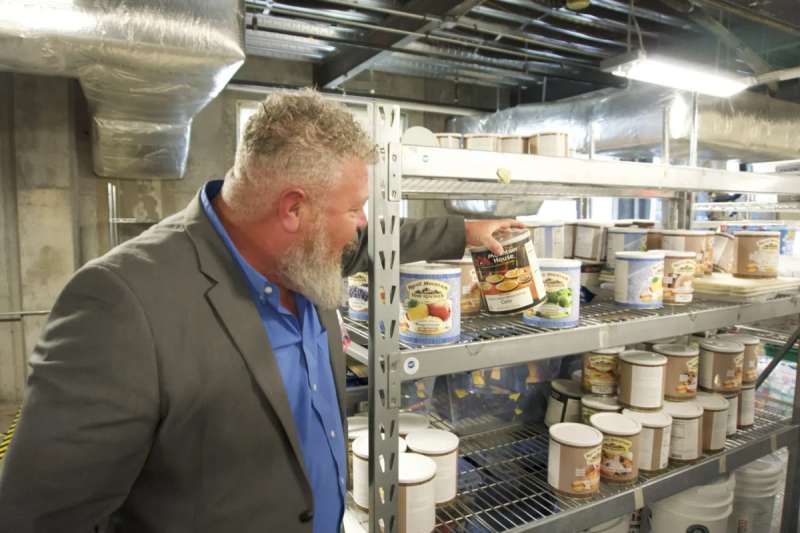
Amy Stevens, program manager at McDowell Access to Care and Health, a nonprofit dedicated to providing people with the resources they need to be healthy, found more than 50 voicemails waiting — all people asking about food resources — a week ago when she arrived at work. More than one-third of McDowell County residents report experiencing food insecurity, according to the county’s 2024 Community Health Assessment, and about 15 percent of the county relies on SNAP.
The organization operates a food box delivery program in partnership with Foothills Food Hub. Usually, they deliver about 70 boxes a week, but Stevens said they distributed more than 100 boxes on their first delivery day last week.
“The pause hadn’t even started,” Stevens said. “People are trying to prepare.”
“We’re getting calls every day about, ‘Where can I go to get food? What can you guys do to help?’” Stevens added. “People are scared, and we’re scared because the resources are slim.”
The scarcity has been exacerbated by the termination of the Medicaid-funded Healthy Opportunities Pilot, or HOP, which Stevens said had been “robust” in McDowell and provided a way to get local, fresh food to community members.
“There was this beautiful variety of fresh foods, and [we] really saw some incredible benefits, healthwise,” she said. “The cessation of HOP had already driven up the need.”
Some help is coming from the state. On Friday, Gov. Josh Stein announced that North Carolina would reallocate $10 million from the Department of Health and Human Services to local food banks across the state. Another nearly $8 million is being contributed by philanthropic foundations and other private donors.
And on Sunday afternoon, Mecklenburg County government officials said they will announce plans to devote $740,000 to support food resources for more than 126,000 SNAP recipients in the county.
That’s a drop in the bucket compared with the more than $200 million that’s needed each month in North Carolina to keep SNAP going. Private philanthropy won’t be able to fill the growing need for all the residents experiencing food insecurity, food program directors have said.
Even a short interruption of benefits has an impact, multiple providers across the state told NC Health News. Food assistance providers are anticipating a surge of individuals and families like Bollinger’s looking for sustenance without their monthly SNAP dollars.
“It may seem that one day or one week or even one month is not a big deal or not extremely impactful, but for the child, for the senior, for the adult who’s trying their best, one day is very long if you’re hungry,” said Brianna Goodwin, executive director of Robeson County Church and Community Center, which operates the county’s largest food pantry that serves at least 600 households a week.
Almost a third of Robeson County’s 116,000 residents rely on SNAP funding, the largest percentage of SNAP recipients in any county in the state.
In Forsyth County more than 56,000 residents (14 percent) rely on SNAP. At The Shalom Project, one of Winston-Salem’s longest-operating food pantries, Jeffrey Foster, program director and manager of food distribution, said they saw one of its biggest turnouts in a decade recently when they served close to 150 families in the span of three hours.

‘A gaping hole’
Jason Kanawati Stephany, vice president of communications and public policy at the Food Bank of Central and Eastern North Carolina, said SNAP is the nation’s “first line of defense against hunger” because it “puts money directly into families’ pockets to buy food.”
Research shows that SNAP increases food security, improves health outcomes, reduces poverty and decreases health care costs.
Stephany knows this well. He grew up in a food-insecure household and used food stamps — the precursor to SNAP — to feed himself as a college student. Now he spends his days working for an organization that supports more than 500,000 food insecure participants across a 34-county region of the state.
Food banks and pantries like The Shalom Project are working to scale up — but there’s a limit to what they can do. The reality is that despite best efforts, there will still be a “gaping hole” in resources, according to Monique Farrell, executive director of The Shalom Project.
That’s because for every one meal a food bank provides, SNAP provides nine, according to data from Feeding America, a nationwide network of food banks, pantries and feeding programs.
Farrell said food pantries are intended to be the safety net underneath SNAP, not to replace it. As it already stands, Farrell said many families supplement their food needs at a food pantry, as SNAP funds do not last the entire month, especially amid rising grocery prices.

“Trying to scale to 10 times is obviously unreasonable for any operation,” added Goodwin, executive director of Robeson County’s largest food pantry.
Goodwin used federal food assistance as a child growing up in Robeson County, calling it the “tie that kept us afloat” as her parents hustled between jobs to make ends meet, enduring layoffs from a loss of manufacturing jobs in the county.
“Where would I be if we hadn’t had that thread to hold that entire story together?” she wondered.
The increased demand at food banks comes as they are already reeling from federal cuts to the USDA Local Food Purchase Assistance Cooperative Agreement Program, which allowed food banks to buy directly from local farms, ranchers and producers.
“Over the last nine months, we have lost millions of dollars in federal funding to purchase food,” Stephany said. “The resources that we use to meet the rising need have been cut at a time when that need is increasing significantly.”
Families feel the impact
Some families are already hurting.
Daysi Hurtado, a young woman in Raleigh who recently learned she was pregnant, said she can’t even process the idea of losing benefits. In the past, when she faced food insecurity, she’d get by skipping some meals. But not right now.
“I have a growing baby to think of,” Hurtado said. “I need to make sure that I’m eating all the time — and the food can’t be fast food, it needs to be good, healthy food.”
Who uses SNAP in North Carolina?
- SNAP provides food benefits to one in eight North Carolinians.
- Four in five families participating in SNAP have either a child, a senior or an adult with a disability. More than 66 percent of participating families have children, and more than 34 percent of participating families include seniors or adults with disabilities.
- Between 2019 and 2023, an average of 80 percent of SNAP households across the state included someone who was working.
- More than 46,000 military veterans receive SNAP benefits.
- One in six North Carolinians living in rural areas or small towns benefited from SNAP, compared to one in nine North Carolinians living in metro areas.
Source: NC DHHS
On Saturday — the first day of interrupted SNAP benefits — 20-year-old Lynn, who asked that NC Health News only use her first name, visited the Greensboro Farmers Curb Market, which gave out $80 to every SNAP customer to help them while the federal food benefits are on hold. That help came just in time. She said she only had some noodles and a loaf of bread in the fridge that she wasn’t sure was still edible.
Lynn, a Greensboro resident, said she has just started training for a new job, which only paid enough to cover her rent. She used the $80 to fill up her cart with fresh vegetables, milk and a few pastry treats.
Others, like Bollinger, the McDowell County mom, are contemplating ways to get extra income for a while, such as starting to deliver for DoorDash. But that’s easier said than done for many.
Bollinger already works 40 hours a week, and adding to that would mean more time away from her children and put more wear and tear on her car. She doesn’t have anyone nearby who could watch her kids, meaning she would have to take them with her on delivery routes.
For now, Bollinger won’t go that route. She hopes the SNAP funds will resume sooner rather than later as she works meticulously to stretch every dollar — in a budget that is already stripped down to essentials.
Lynn, too, said she was frustrated by the delay, saying the government has a “priority problem.”
“When they needed to pay the military people, they found a way to do it,” she said. “But when it came to helping with the [food] benefits, they were like, there’s nothing we can do about it.”

‘Impossible choices’
Rachel Keever, president and CEO of the Foundation for Health Leadership and Innovation, helps manage NCCare360, a resource that can connect people to help, including food assistance. She said that her organization has launched a streamlined website that directs people to resources nearby.
“People are already short of dollars,” Keever said.
The timing of when SNAP benefits are paid out to recipients is staggered over the course of the month. Some people receive their EBT recharge earlier in the month, while others get the boost later.
For some low-income families, there’s still some time. But not much.
“There are women who literally have already been out of food stamps for 10, 15, 20 days, depending on how much they have,” said Amy Smith, executive director of the Women’s Center of Wake County.
Because so many of these families live on the edge, even a short delay — as the Trump administration makes its moves — could hurt them.
“Families who were already struggling will face impossible choices between paying for food, rent, medication or gas to get to work,” said Audrey Moore, media and marketing coordinator at McDowell Local Food Advisory Council.
“The reality looks like empty cupboards, increased stress and health impacts that ripple through families, especially children, working parents, seniors. The loss of SNAP could really push many over the edge into a real crisis,” Moore said. “People lose the proper ability to focus at work or school if they’re not fully nourished. Chronic health conditions can worsen. New conditions can arise. We’re concerned about delayed benefits impacting both immediate health and long-term health conditions.”
Even when those funds start to flow again, some SNAP recipients will face new barriers. Starting this month, more people will be required to show they’re working to continue qualifying for benefits.
“Experiencing inconsistent access to food is one of the worst feelings ever because food is such a basic need,” said Ashley Tee, executive director of community health at the YMCA of Western North Carolina, which serves Buncombe, Henderson, Haywood, McDowell and Madison counties. “There is so much that stems around being able to access food and what it does for your humanity and your dignity.”
NC Health News reporters Jaymie Baxley, Jennifer Fernandez, Ashley Fredde and Taylor Knopf contributed reporting.
This article first appeared on North Carolina Health News and is republished here under a Creative Commons Attribution-NoDerivatives 4.0 International License.