[Editor’s Note: This story originally published in Spanish at Enlace Latino NC. It has been translated by Cardinal & Pine staff with the assistance of Google Translate.]
by Emilia Rivadeneira, Enlace Latino NC
August 7, 2026
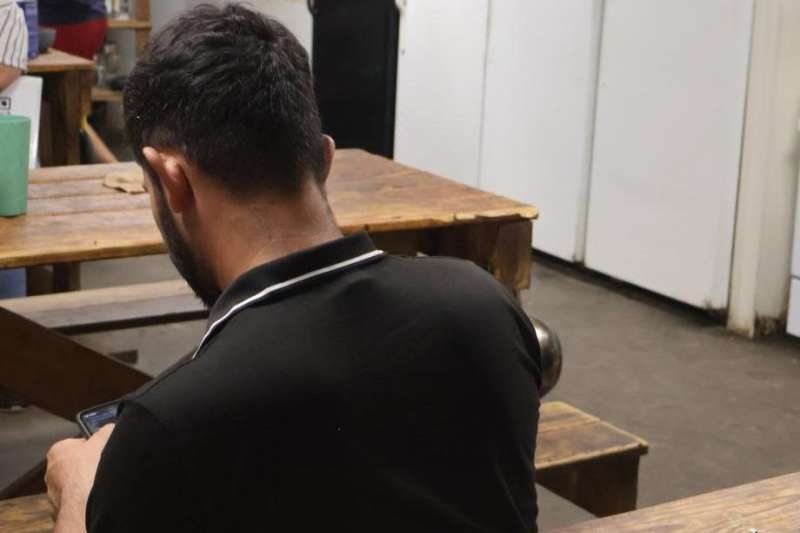
On the afternoon of July 31, Marco Hernandez developed a severe headache while cutting grass on a farm in Harnett County, North Carolina.
The 30-year-old farmworker, originally from Mexico and hired on an H-2A visa, asked for permission to leave and receive medical attention.
His supervisor’s response was negative. “We’re here close by,” he told him, according to Hernández’s account to Enlace Latino NC. Despite his discomfort, he continued working until the end of the day.
Billy Ball Explains NC: ICE arrests 13 people in Pisgah National Forest raid
That night he had a fever and was sweating; nevertheless, he went to work the next day. Once in the field, and barely having started work at 7:40 am, he began to vomit and feel dizzy.
“That’s when I said, ‘No, that’s enough.,I have to go,’” Hernández told Enlace Latino NC. He immediately told his supervisor that there was no one to take him thome, to which his boss replied, “No, there’s not. Everyone is busy with their work.”
Hernandez had to contact an acquaintance, since his supervisor did not provide transportation to his home or the hospital, paying a total of $40 for a third party to take him to and from the nearest health center, located 30 minutes away in Clayton.
There, he was informed that all his symptoms were signs of dehydration. “I felt like I was drunk,” Hernández said, describing his symptoms to Enlace Latino NC.
Hernández’s case is not unique, although it is one of the most recently reported. While he managed to find a way to receive medical attention, his case also brings to the forefront the issue of workplace negligence by employers.
Workplace negligence
Under H-2A visa rules, employers are required to provide or cover transportation for workers to emergency medical services.
“When there is a need for medical attention, it is their [the employers’] obligation. And the fact that the employer did not want to take Hernández is negligence,” explained Leticia Zavala, co-coordinator of El Futuro es Nuestro, to Enlace Latino NC.
Denying mandatory transportation to a farmworker who was ill is alarming, given that between 2023 and the end of 2025, there have been multiple confirmed deaths of migrant farmworkers with H-2A visas in North Carolina.
One of the most notable cases is that of José Arturo González Mendoza, an agricultural worker at Barnes Farming in Nash County, who died from a heat-related incident.
The lack of transportation was not the only problem Hernández faced: He also has not received the payment he was entitled to for the day he missed work due to his illness.
If you work in agriculture on an H-2A visa or are about to arrive in North Carolina, read our Farmworker Guide, with information on labor rights, working conditions, risk prevention, support resources, and practical guidance for daily life in the fields.
One’s life is not worth 11 dollars
Leaving the fields early that Saturday cost Hernández his entire day’s wages. The following Monday, his employer asked him for documentation to justify his absence.
“In the morning they came looking for me to ask if I had any proof to justify the absence, and they just gave me this,” said Hernández, holding up the summary of the hospital visit that detailed the diagnoses and prescribed medications.
His employer, however, told him that those papers “didn’t work for him.”
“But I feel sick, I’m not going to go,” Hernández said. Because of this, he also missed work on Monday, as he still wasn’t feeling completely well.
‘It’s not worth being neglected’
At the farm where Hernandez works, the workers are paid $11.09 an hour, and they work shifts of between 10 and 13 hours a day.
This means that, for the two days he missed work because of his illness, he should have received between $200 and $286.
According to Zavala, employment contracts stipulate that agricultural workers must receive their wages when they go to a clinic for a work-related illness or injury. However, in practice, this often does not happen, she said.
“You think you have the support of your boss, but it turns out you don’t have the support of anyone, because they abandon you because what matters to the boss is the work, that it’s done well; and your life, well, not so much,” Hernández said.
Workplace negligence
The reality is that, like in the case of Hernández, agricultural workers continue to face situations of labor negligence, while also having to cope with the effects of extreme heat and long working hours.
Hernández, along with several day laborers, said that during their work day, they do have access to enough cold water and rest; however, their hours are long.
This makes them a population vulnerable to heat stroke, dehydration, gastrointestinal problems, and even more permanent damage such as kidney disease.
According to the Occupational Safety and Health Administration (OSHA), heat stroke is the most serious health problem related to high temperatures that can happen to a worker.
Silence and enduring severe symptoms
According to several workers, they often choose to remain silent and endure severe symptoms of heatstroke such as dizziness, diarrhea, and cramps due to four main factors:
- Social pressure and ridicule: fear that their own coworkers will mock them by saying that they “couldn’t take it”
- Employer threats: warnings from supervisors that they will not be rehired
- Prohibitive costs: the price of private transport and medical assistance
- Potential loss of income: missing work can cost workers their daily wages
‘Documenting, an act of self-defense’
By federal law, before hiring foreign personnel under the H-2A visa program, agricultural employers are required to show proof to the Department of Immigration that they have workers’ compensation insurance.
This policy, as Zavala explained, must cover 100% of medical care, medicines, transfers, and even salary compensation for temporary disability in cases of accidents or illnesses related to work, including severe dehydration and heat stroke.
However, in practice, some employers conceal workers’ medical emergencies and reject medical documentationlike waht happened to Hernandez when his boss told him that the hospital’s paperwork “didn’t work for him,”—to prevent insurers from registering the incidents and increasing the cost of their annual insurance premiums.
Therefore, according to Zavala, documenting becomes an act of self-defense for the day laborers.
“Start keeping a log. If ‘this happened today’ or ‘the water ran out at 12 and you were without water all afternoon,’ write it down. If you don’t need it at the end of the season, well, that’s great, it won’t be a problem, right? But if something happens to you, if you get fired, get sick, end up in the hospital, this is the evidence needed to defend you,” Zavala explained.
For Zavala and other farmworker advocates, labor negligence and impunity will persist until employers face tangible consequences.
This article first appeared on Enlace Latino NC and is republished here under a Creative Commons Attribution-NoDerivatives 4.0 International License.