In an age of healthcare advancements, and in a state where growth and opportunities seem readily available, many of the state’s communities are simply being left behind.
A community where there aren’t enough doctors to meet the needs of residents. A county where the only hospital for 30 miles closed after over 70 years. Families who face cuts to life-saving Medicaid coverage..
These are some of the stories I have had the opportunity to share as part of Cardinal & Pine’s Bad Medicine series over the past several months.
Together with my colleague Michael McElroy, we have interviewed doctors, nurses, care providers, and North Carolinians from the coast to the mountains about the challenges the healthcare system presents.
In his opening essay launching Bad Medicine, Michael posed the question “Are we in a wonderful age for health care, or an awful age?”
After months of speaking with my fellow citizens about the realities of our healthcare system and the doctors serving patients in rural and underserved communities, I’ve come to believe the answer is both.
In the Triangle, world-class medical facilities such as Duke Health, UNC Healthcare, and Wake Med are readily available to patients, and provide life-saving and advanced healthcare. However, an hour or two away in many parts of eastern North Carolina, top-tier healthcare facilities are not as readily available.
Access to specialists, such as cardiologists and oncologists is uneven and determined by where you live. In the US, there are 263 specialists per 100,000 people in urban areas. By comparison, there are just 30 per 100,000 in rural communities.
In North Carolina, we have wonderful healthcare facilities, top-rate hospitals, and access to the latest advancements in care. But the awful truth is that access is not granted to everyone.
A state where inequality reigns
North Carolina is the third fastest growing state in the country.
But visiting communities in places like Halifax County over the past few months has shown me just how unequal North Carolina’s growth story is, and how in many places, people are being left behind.
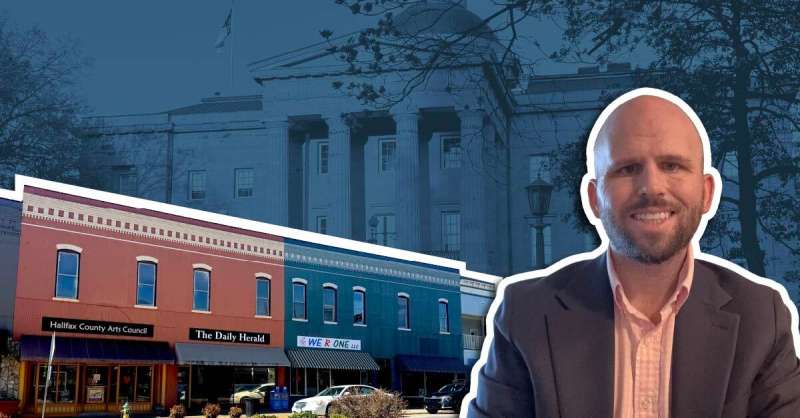
When you visit a place like Roanoke Rapids in Halifax County, the inequality is hard to miss. Residents speak openly about their struggles accessing healthcare, and the disparities between Halifax County and other, wealthier counties in the state is jarring.
A man living in Halifax County has a life expectancy 13 years shorter than a man living in Wake County, the capital county. A Halifax County woman on average, lives nearly a decade less than a woman in Wake County.
These aren’t just statistics. They are lives cut short. Dreams unfulfilled.
I keep thinking about a conversation I had with 77-year old Rufus Whitaker, who grew up in Halifax County in the 1950s and 60s. He recalled people in his family and community dying young.
“I didn’t understand why people were dying at age 49, 51. People had diabetes but they couldn’t get any healthcare, because they couldn’t pay for healthcare,” he said.
Today, Whitaker has good health insurance that helps him pay for medication to treat his Type 2 Diabetes. But that insurance costs him a lot.
“The care that I receive in Halifax County is good because I pay a lot. But a lot of people don’t receive that care because they don’t have health insurance, and they can’t afford to pay $500, $600, $700 a month,” he said.
The median household income in Halifax County is $45,071. In comparison, the median household income in Wake County is more than double that, at around $101,000, and the statewide average is $69,904.
Advances in healthcare, quality medical centers, and medications for manageable diseases like diabetes and others exist—if you can afford them.
As I look back on the stories I’ve told about the state of healthcare in North Carolina, it is clear that people in rural communities in particular face uncertainty about insurance, costs, and the availability of care. The stakes can be life or death.
It’s inspiring to know that we live in an age of incredible advancements in technology that have spearheaded new treatments for diseases once thought incurable, medications that make conditions that were once thought of as a death sentence a manageable illness.
But it’s disheartening to know these advancements aren’t available to all North Carolinians.