North Carolina’s most influential politician, Republican state Senate leader Phil Berger, conceded the primary race for his seat to Sam Page on Tuesday.
RALEIGH, N.C. (AP) — North Carolina government’s most influential politician, Republican state Senate leader Phil Berger, conceded the primary race for his seat to Sam Page on Tuesday, shaking the power structure in the ninth-largest state and likely soon ending Berger’s preeminence as the state’s top conservative architect.
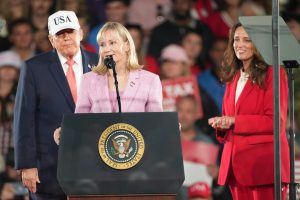
Berger had trailed Page, the Rockingham County sheriff, in their March 3 primary by only 23 votes. He has been Senate leader since 2011 when Republicans took full control over the General Assembly for the first time in 140 years. President Donald Trump had endorsed Berger for reelection, praising him for his policy accomplishments.
Trump’s endorsement came several weeks after the legislature redrew the state’s U.S. House district map in an attempt to flip a Democratic seat as part of the president’s redistricting campaign to retain GOP control of the U.S. House in this year’s midterm elections.
“While this was a close race, the voters have spoken, and I congratulate Sheriff Page on his victory,” Berger said in a news release. “Over the past 15 years, Republicans in the General Assembly have fundamentally redefined our state’s outlook and reputation. It has been an honor.”
A narrow loss for Phil Berger
Unofficial results on primary election night showed Page leading Berger by just two votes out of more than 26,000 counted in the 26th Senate District that includes part of Greensboro and neighboring areas.
Page’s lead expanded as elections boards in the two counties composing the district reviewed provisional, absentee and other ballots. Later recounts were conducted and Berger’s campaign filed formal protests yet to be resolved. But Berger gave up after a hand recount of a small portion of the ballots Tuesday morning showed no change in Page’s razor-thin lead.
[optin-monster slug=”rgdyr2iwoc6i4fjovuok” followrules=”true”]
Page will now advance to the November general election in the GOP-leaning district. He said Berger called him Tuesday to concede.
“I thank him for wishing me the best moving forward,” Page said in a statement. “Now it’s time for our community to come together and focus on winning in November.”
Page was outspent by Berger’s campaign by more than 50-to-1 through mid-February. That doesn’t include several million dollars that a pro-Berger independent expenditure group spent on mailers and advertising.
Berger can remain a senator and Senate leader through year’s end — something that in Tuesday’s concession it sounded like he wished to do. Senators would pick a new chamber leader in early 2027.
Berger, a 73-year-old attorney, has been a force in North Carolina government as the General Assembly implemented a rightward agenda despite opposition from a string of mostly Democrat governors, whose inherent powers are relatively weak.
Page, who was first elected sheriff in 1998, tapped into local voter discontent with a narrative that Berger was more interested in the state rather than in looking out for constituents. Berger’s unsuccessful efforts in 2023 to pass a law that could have brought a casino to Rockingham County also angered social conservatives and gave Page an opening.
While endorsing Berger in December, Trump praised Page and said he wanted the sheriff to instead “come work for us in Washington, D.C.” rather than run against Berger. Page — who had supported Trump’s immigration enforcement policies over the years — declined.
Berger first joined the Senate in 2001 and was minority leader before a GOP sweep in the 2010 elections.
He figured into every conservative policy prescription since, including income tax reductions, private-school vouchers for any family, restrictions on abortion and looser regulations on gun access. Berger’s allies say he’s chartered fueled economic success in the state of 11 million.
With support from the House speaker, Berger also enacted efforts to shift appointment powers away from Democratic Gov. Josh Stein and former Gov. Roy Cooper toward lawmakers and other officials. Despite clashing with Cooper, Berger and then-Speaker Tim Moore ultimately reached a deal with him to expand Medicaid to hundreds of thousands of adults.
Berger’s critics said his agenda benefited the rich, kept down salary increases for state employees and teachers and failed to adequately fund public schools while funneling money to private schools. Democrats also have accused Republicans of eroding rights for women and transgender people.
Given Berger’s longevity and “his ability and willingness to quietly but effectively wield power and you are left with the most powerful politician in North Carolina,” Western Carolina University political science professor Chris Cooper wrote Tuesday in an email.
The General Assembly’s chief work session for 2026 begins in April, when Berger’s top lieutenants will begin jockeying in earnest to succeed him as Senate leader should the GOP maintain a majority in the fall. The chamber’s 50 members pick a leader every two years.