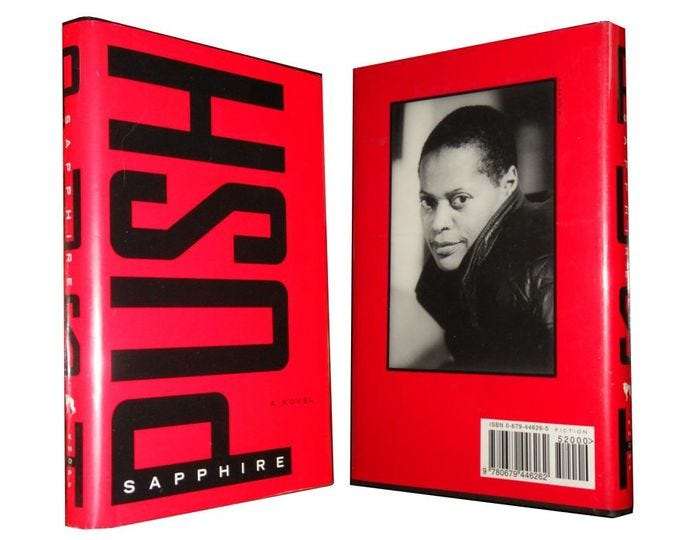
Back in 2023, challenges to school books were nearing a fever pitch nationwide. In Cumberland County Schools, more than 80 books fell under review after challenges by two people. Two books were removed from the libraries: “Push” by Sapphire and “Sex is a Funny Word” by Cory Silverberg.
I wrote then, and believe as strongly now, that our school system gave up ground it should not have. Book bans are bad and are against learning. Historically, the side backing them is never the right side. Don’t take my word for it. Take a cursory walk through history and you’ll see that is the case.
In North Carolina, parents retain full rights to block their own children from reading specific titles available in the library. They just wouldn’t have the right to block mine.
School administrators tend to proceed with caution, as they are dealing with society’s most precious resource: children. So, I get that.
But recent changes in state law suggest that no school system has to bend to the book-banners.
Wake County model resists systemwide book bans
School officials in Wake County have set out a model. The system will no longer entertain challenges to books that are merely sitting on school library shelves for students to check out, if they choose. It will continue to hear challenges raised about books used in curriculum, as the law requires, according to reporting in the Raleigh News & Observer.
Never miss an update from Cardinal & Pine. Get our free, award-winning newsletter here.
Wake is acting based on a change in state law last year related to school books and changes this year in the state budget addressing challenges, the newspaper reported. Last summer’s law required schools to list all their library books online as well as books teachers maintain in their classrooms. (It’s overkill, but that’s a topic for another time.)
Last year’s law, G.S. 115C-98.1, which went into effect July 1, 2025, deals with “Parent access to library books.” It says a school district must: “Allow a parent or guardian of a student to identify any library books that may not be borrowed by the student.”
In the state budget passed this year, in July, the law now requires school districts to form a community advisory committee to consider challenges of instructional and supplementary materials. That body makes recommendations to the school board, which makes the final decision, according to the News & Observer.
Wake’s school board believes the current state of play gives parents the power to restrict access for their own child to particular library books, but does not create a process for removing library books from shelves districtwide.
Book bans are bad and are against learning. Historically, the side backing them is never the right side
Durham’s school system has indicated it will follow suit, the Raleigh paper reports. Because a law firm representing Wake represents other NC school systems, others may adopt similar plans, according to the story.
“Each parent controls their own child’s access to library books,” Neal Ramee, a Wake lawyer, said last August, the News & Observer reported. “No parent has a right or community member has a right to challenge books just sitting on the shelf in a library.”
The school system is reviewing policy; it has received no recent challenges.
In a statement, Dr. Lavette Braswell, assistant superintendent of Cumberland County Schools’ 6-12 Curriculum & Instruction, said Sept. 21 that since the new legislation went into effect, the system had received no formal book challenges.
“Cumberland County Schools (CCS) is currently reviewing Board Policy 3210: Parental Inspection of and Objection to Instructional Materials to ensure full alignment with recent updates to state law under Senate Bill 257,” she wrote in the statement.
She noted that library books available for independent students’ use “are addressed separately from instructional materials,” in accordance with Cumberland County School Board Policy 3200 (Section D) and the state’s G.S. 115C-98.1.
The statement continues: “Pursuant to legislation enacted in 2025, CCS provides families with public online access to school and classroom library holdings. Parents and legal guardians may restrict specific titles from being borrowed by their own child without affecting access for other students.”
She further noted that, pursuant to G.S. 115C-98.5, “formal challenges to instructional or supplementary materials may be submitted by a parent or legal guardian of an enrolled student, a CCS teacher, or a resident of the Cumberland County Schools district. A formal challenge must specifically identify the material in question and outline one or more statutory grounds established by law.”
Black and LGBTQ+ authors are frequent targets
In 2023, in addition to removing two books, Cumberland schools reassigned others to different grade levels and continued review of two more. I found out that the 80 books had arisen from a challenge by two people — who were not necessarily even parents of schoolchildren in the system — like I am. School officials would not say who filed the challenges.
But a quarter of the targeted books were by Black authors and 17% contained LGBTQ+ themes. An additional 8% of books were by Latino authors. The numbers tracked with trends nationwide where titles by minority and LGBTQ+ authors were disproportionately targeted by national groups, like Moms for Liberty, that were pushing their preferences onto local school systems.
Larger school systems were a particular target. In late 2022, nine mothers went so far as to file a criminal complaint against the Wake system.
While the situation has cooled, there are still those who believe — with everything else going on in the world from the dangers of AI to climate change to unsustainably high gas prices to war and famine — that the real problem is books. This year, some Republican lawmakers zeroed in on LGBTQ+ themed books in the Chapel Hill-Carrboro system.
Libraries should expand choices, not shrink them
That is why Cumberland school leaders and its Board of Education, which sets policy, will hopefully continue to protect the libraries of these students. School teachers and administrators properly and repeatedly remind our kids about the importance of reading. It is part of Cumberland County Schools’ daily operations, and good for them.
Removing books would only undermine that important message.
In North Carolina, parents retain full rights to block their own children from reading specific titles available in the library. They just wouldn’t have the right to block mine.
They never had that right, no matter how much they try to take it for themselves.
Commentary by Myron B. Pitts, Fayetteville Observer / The Fayetteville Observer
USA TODAY Network via Reuters Connect